
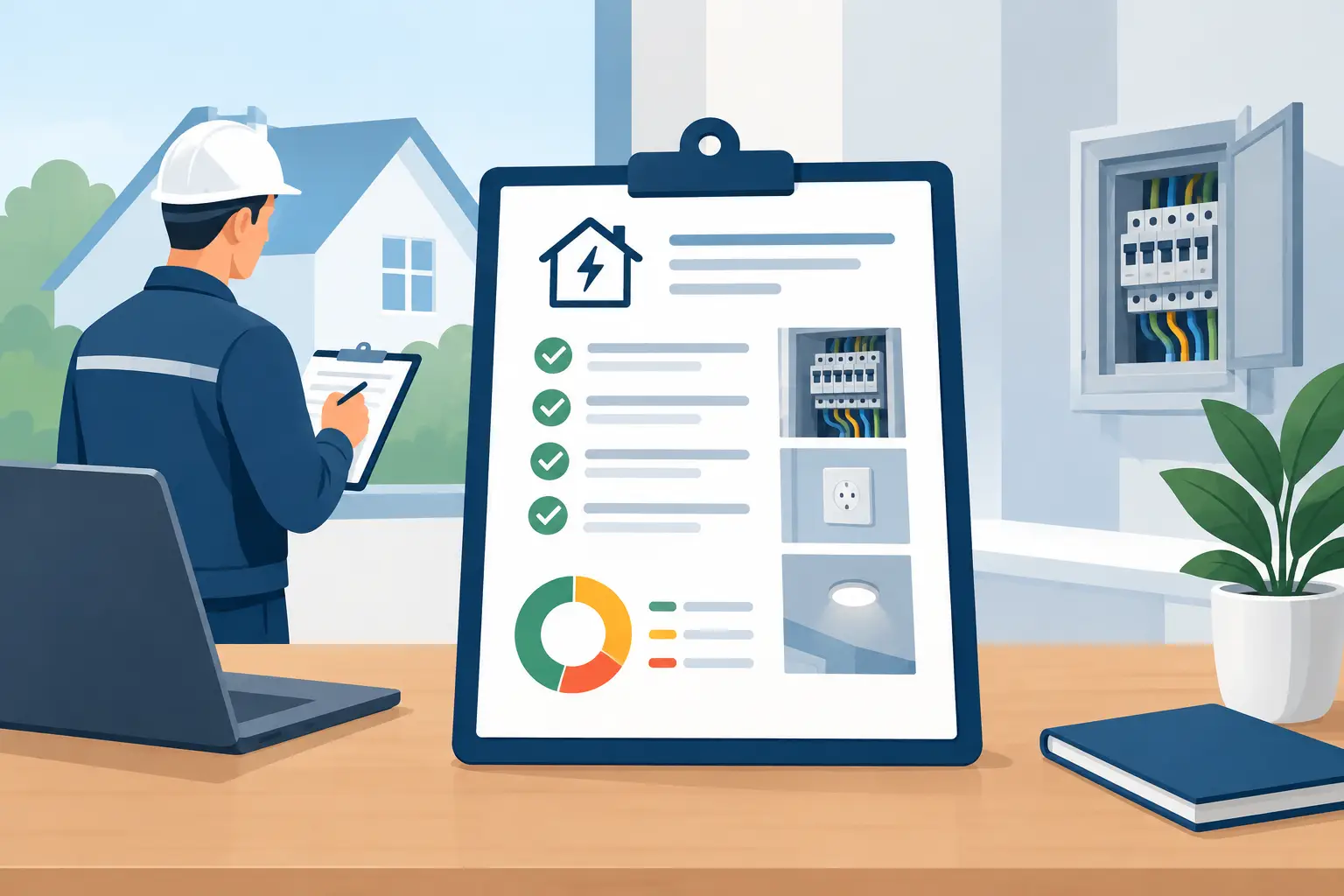
A single line marked “unsatisfactory” can feel alarming, but it does not mean every part of an electrical installation is unsafe or needs replacing. It means the inspection has identified one or more issues that require action before the installation can be judged satisfactory. Understanding EICR report contents helps homeowners, landlords and business owners make the right decisions, prioritise safety and plan any remedial work with confidence.
An Electrical Installation Condition Report, or EICR, is a formal assessment of the condition of an existing electrical installation. It is not a quote for a rewire, and it is not the same as an electrical installation certificate issued for new work. A competent electrician inspects and tests the installation against the requirements of BS 7671, then records what was found, the extent of the inspection and whether the installation is satisfactory for continued use.
What is included in an EICR report?
Although report layouts can vary, the essential information is broadly the same. It provides a clear record of the property, the electrical system inspected, test readings, any defects found and the recommended next steps.
The first pages identify the client, property address, purpose of the report and date of the inspection. They also name the person responsible for the installation, where known, and the electrician or company completing the inspection. This may seem administrative, but accurate details matter. The report needs to relate clearly to one installation at one location, particularly where a landlord, managing agent or facilities team oversees several properties.
The report will then describe the installation and its supply. This usually includes the supply characteristics, earthing arrangement, main switch rating, number and location of consumer units or distribution boards, and details of protective devices. For a commercial or industrial site, it may also refer to plant, machinery circuits, outbuildings, emergency systems or other defined areas within the agreed inspection scope.
The extent and limitations of the inspection
No inspection can assess wiring that cannot be accessed or safely isolated. For this reason, an EICR states the extent of the installation covered and any agreed limitations.
For example, an inspection may exclude sealed equipment, areas above inaccessible ceilings, circuits serving specialist machinery, or a tenanted area where access was not available. A limitation is not automatically a problem, but it must be reasonable and clearly recorded. If significant parts of an installation were unavailable, the report may not give a full picture of its condition.
Before work begins, it is sensible to discuss access, operational constraints and any sensitive equipment with the electrician. In a workplace, some testing may require circuits to be isolated. In a home, it may mean arranging access to the consumer unit, sockets, loft spaces and outbuildings. Good preparation makes the inspection more thorough and avoids unnecessary disruption.
Schedules of inspection and test results
This is the technical core of the report. The schedule of inspections records visible checks, such as the condition of consumer units, enclosures, accessories, bonding, labelling, protective devices and signs of overheating, damage or unsuitable alterations.
The test schedule records measurements taken from circuits and protective devices. Depending on the installation, these can include continuity, insulation resistance, polarity, earth fault loop impedance and RCD performance. These readings help the electrician confirm that protective measures are working as intended and that, if a fault occurs, the supply should disconnect within the required time.
For most customers, individual readings are less useful than the overall professional judgement. However, they remain valuable evidence. They show what was tested on the day and give a reliable baseline for future inspections, maintenance and fault-finding.
EICR report contents: observations and classification codes
The observations section is often the part customers look at first. Each observation describes a condition that does not meet the current safety standard, is potentially unsafe or needs further assessment. The electrician assigns a classification code to show its significance.
A C1 observation means danger is present. Immediate action is required, and the electrician may recommend making the affected part safe straight away, with the client’s agreement. A C2 observation means potentially dangerous. It may not present immediate danger under normal conditions, but urgent remedial work is needed.
A C3 observation means improvement is recommended. These items do not make the report unsatisfactory on their own, but they can be worth addressing while other work is taking place. An FI code means further investigation is required without delay because the electrician cannot determine the safety of an issue during the inspection.
Examples vary widely. A damaged accessory exposing live parts may be coded C1. Missing RCD protection where it is needed, an unsuitable consumer unit condition or poor earthing arrangements may lead to a C2, depending on the circumstances. Older equipment is not automatically a defect simply because standards have changed. The question is whether it remains safe for continued use, not whether every component matches the latest product design.
The report should describe the location and nature of each observation clearly enough for the required work to be understood. If the wording is unclear, ask the electrician to explain what the issue means in practical terms, how urgently it needs attention and what work is proposed.
The overall assessment and recommended actions
Near the end of the report, the electrician gives an overall assessment: satisfactory or unsatisfactory. An EICR will normally be unsatisfactory if it contains a C1, C2 or FI observation. A report containing only C3 recommendations can still be satisfactory.
This distinction helps customers focus their budget correctly. Safety-related remedials should be dealt with first. Improvements can then be planned around refurbishment work, a new consumer unit, a rewire, solar installation or other upgrades where appropriate.
The report may include a recommended date for the next inspection. This is not a one-size-fits-all interval. The appropriate frequency depends on the type of property, its use, the age and condition of the installation, previous findings and the level of wear it receives. A busy workshop, rental property and owner-occupied home are likely to have different inspection needs.
For privately rented homes in England, landlords must generally ensure the installation is inspected and tested at least every five years by a qualified person. They must provide the report to tenants and take required remedial action within the stated timescales, usually 28 days unless the report specifies sooner. Property managers should retain reports and evidence of completed remedials as part of their compliance records.
Commercial and industrial premises also need planned inspection, but the right interval should be based on risk rather than treated as a fixed rule. Sites with machinery, moisture, heat, public access, frequent alterations or demanding operating conditions often need closer attention.
Declaration, signatures and supporting documents
A completed EICR includes a declaration signed by the person carrying out the inspection and, where applicable, the person responsible for the inspection process. This confirms that the report reflects the findings at the time of testing and identifies any limitations that affected it.
If remedial work is carried out afterwards, keep the EICR together with invoices, minor works certificates or electrical installation certificates for the completed repairs. The original report remains a record of the condition found during inspection. Follow-up certification demonstrates that the identified issues have been addressed.
What an EICR does not tell you
An EICR is a thorough condition assessment, but it is not a guarantee that no future fault will occur. Electrical accessories can fail after an inspection, appliances can introduce faults, and later alterations may change the condition of the installation.
It also does not usually test every appliance plugged into the property. Portable appliance testing, emergency lighting inspection, fire alarm testing and specialist machine checks may require separate arrangements. On larger premises, agreeing the scope in advance is particularly important so that there is no uncertainty about what has and has not been examined.
If a report identifies several issues, do not assume that a complete rewire is the only answer. Sometimes targeted repairs, replacement protective devices or improvements to earthing and bonding are sufficient. Equally, where wiring is aged, heavily altered or deteriorated, more substantial work may offer better long-term value and reduce future disruption. The right approach depends on the findings, the building’s use and planned changes to the property.
A well-presented EICR should leave you with more than a pass or fail result. It should give you a clear record of the installation’s condition, straightforward priorities and credible evidence for compliance. If you need an EICR for a home, rental portfolio, workplace or industrial site in the Midlands, a qualified electrician can talk through the scope before testing begins and explain the findings in plain English once the report is complete.