
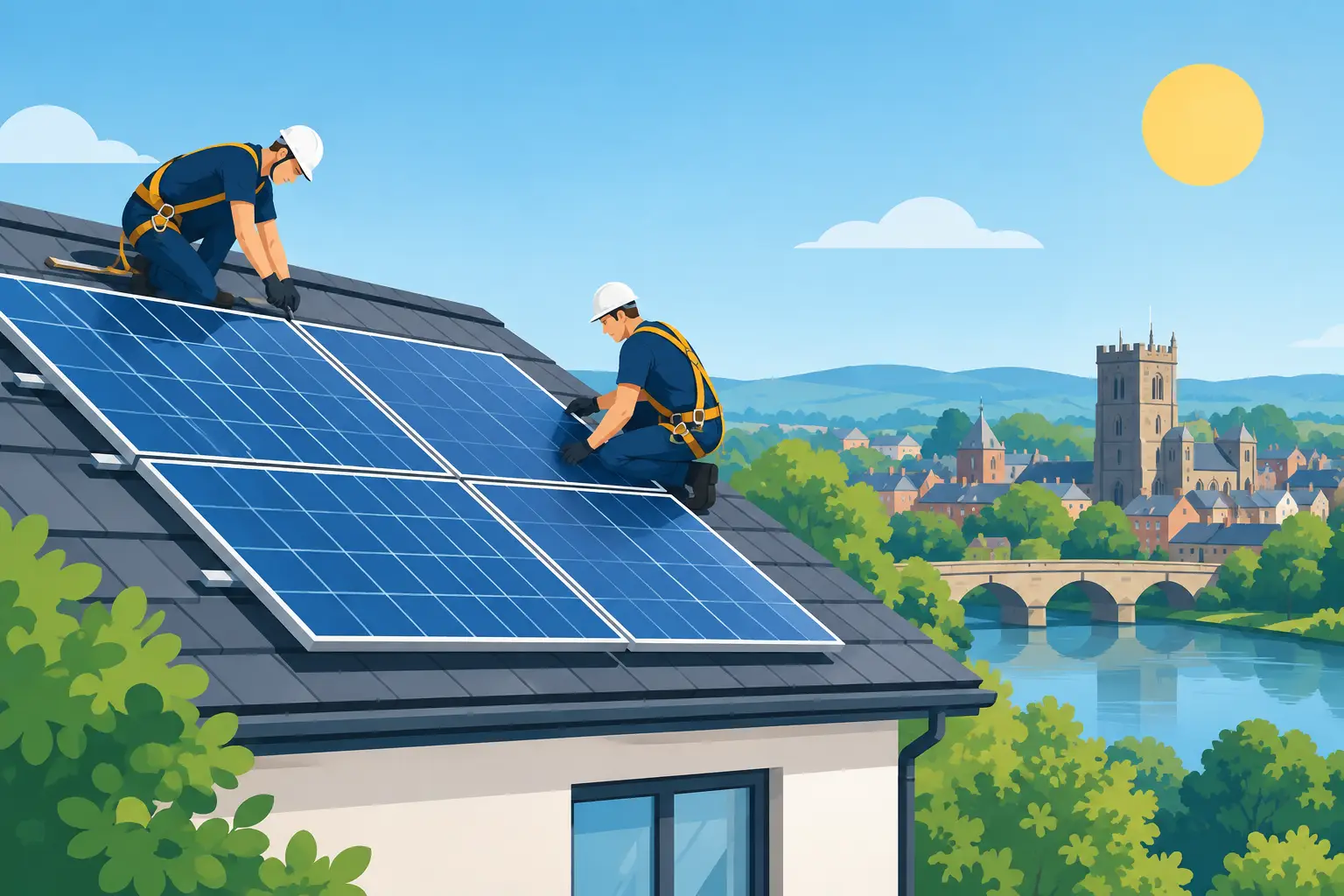
If you are searching for solar panel installation Tamworth, the right starting point is not a headline saving figure. It is a proper assessment of your roof, your electricity use and the condition of the existing electrical installation. A well-designed system can reduce the amount of electricity you buy from the grid, but the best result comes from matching the equipment to the property rather than choosing panels on price alone.
For homeowners, landlords and property managers, solar is a practical long-term upgrade. It can work particularly well alongside an electric vehicle charger, electric heating controls or a battery, but each addition changes the design. A qualified electrical contractor should explain the options clearly, complete the necessary checks and leave you with a safe, compliant installation.
Start with the property, not the panel count
Solar panels need daylight rather than constant bright sunshine, so a system can generate electricity throughout the year. However, roof direction, pitch, shading and available space all affect output. South-facing roofs often provide strong overall generation, while east- and west-facing arrays may be useful where a household uses more electricity in the morning and late afternoon.
Shade deserves careful attention. A chimney, neighbouring building, mature tree or roof dormer can affect one part of an array at certain times of day. This does not automatically rule solar out, but it may influence panel positioning and whether optimisers are appropriate. An accurate survey is far more useful than assumptions based on satellite images alone.
The roof itself also matters. Before work begins, the installer should consider its age, covering and condition, together with safe access for installation and future maintenance. If a roof is close to needing replacement, it is usually sensible to address that work first. Removing and reinstating panels later adds cost and disruption.
What a solar survey should cover
A professional survey for solar panel installation in Tamworth should look beyond the roof. The electrical supply, consumer unit, earthing arrangements and current household demand all help determine how the system can be connected safely.
Older properties may need electrical improvements before a new generation system is installed. This is not an unnecessary extra. Solar equipment must integrate correctly with the property’s wiring, protective devices and meter arrangement. The work should be completed by qualified electricians, with appropriate testing and certification once the installation is complete.
The survey is also the time to discuss how you use energy. A household that is empty during most weekdays has different priorities from one with someone working from home, an electric vehicle or a heat pump. Running appliances when the panels are generating can improve the value gained from self-generated electricity. Timers, smart controls and charging schedules can make this easier without changing day-to-day routines dramatically.
For larger homes, rental portfolios and commercial premises, usage information is even more valuable. Half-hourly consumption patterns can help identify whether solar generation will be used on site or whether battery storage and export arrangements should be considered.
Batteries are useful, but not essential
A battery stores surplus electricity generated during the day for use later, such as during the evening when household demand often rises. For some properties, this increases self-consumption and makes the system more flexible. It can be particularly attractive for households charging an EV overnight or seeking greater control over when they draw electricity from the grid.
That said, a battery is not automatically the right choice. It increases the initial investment, takes up space and should be sized around realistic generation and usage patterns. A smaller solar-only system may be the better first step for a property with modest demand, a limited budget or little surplus generation to store.
It is also worth distinguishing between a standard battery and a system designed to provide backup during a power cut. Not every battery installation supplies power when the grid fails. Backup capability requires suitable equipment, correct design and clear understanding of which circuits will be supported. This should always be discussed before installation rather than assumed afterwards.
Understanding savings, export and payback
Solar savings depend primarily on how much of the electricity generated is used at the property. Every unit used directly reduces the need to buy that unit from the supplier. Electricity exported to the grid may also receive a payment through an available export tariff, although rates, terms and eligibility vary between suppliers.
Generation changes with the seasons. Summer production is generally higher, while winter output is lower due to shorter days and lower sun angles. A realistic proposal should avoid presenting one annual figure as a guarantee. Instead, it should set out expected generation, explain the assumptions behind it and show how changes in household use may affect the financial outcome.
Payback is influenced by installation cost, electricity prices, export payments, future energy use and whether a battery is included. It also depends on the condition of the property. A home with inefficient appliances or high heat loss may benefit from other energy improvements alongside solar. Solar does not replace sensible energy use, but it can make a well-managed home cheaper to run over time.
Permissions, notifications and compliance
Many domestic solar installations can be completed under permitted development rules, but there are exceptions. Listed buildings, conservation areas, unusual roof layouts and ground-mounted systems may require additional checks. A competent installer can advise on the likely position, but property owners should ensure planning considerations are resolved before work proceeds.
The local electricity network operator must also be considered. Smaller systems are commonly notified after installation where they meet the relevant technical requirements, while larger or more complex systems may need approval before connection. This is an important part of delivering a compliant installation, not an administrative detail to overlook.
Certification matters too. Installation documentation provides evidence that the work has been tested and completed correctly. It may also be needed for export arrangements, warranties, insurance queries or a future house sale. Keep all certificates, commissioning information and product manuals together once the project is finished.
What happens on installation day
Most straightforward domestic installations are completed within a few days, depending on the size of the array, roof access, electrical work required and weather conditions. The team will install mounting equipment, secure the panels, route cables carefully and connect the inverter and protection equipment in the agreed location.
There will usually be a short interruption to the electrical supply while final connections and testing are carried out. The work area should be left tidy, and the handover should include an explanation of the system, monitoring app where supplied, shutdown procedure and any maintenance expectations.
Solar panels generally need little routine maintenance, but they should not be forgotten. Periodic visual checks from ground level can identify obvious debris, damage or new shading from nearby growth. If performance appears to drop unexpectedly, seek advice from a qualified electrician rather than attempting electrical checks yourself.
Choosing the right installer
Price is relevant, but it should not be the only deciding factor. A cheaper quotation may exclude electrical upgrades, monitoring, scaffolding, network paperwork or the equipment needed for the performance you expect. Compare proposals on system size, estimated output, panel and inverter specification, warranties, installation scope and certification.
Ask who will carry out the electrical work, how the existing installation will be assessed and what support is available after commissioning. For properties combining solar with an EV charger, battery, rewire or electrical safety inspection, using one capable contractor can simplify planning and ensure the systems are designed to work together.
SDT Electrical Services Ltd provides tailored solar and electrical solutions across Tamworth and the wider Midlands, with qualified electricians focused on safe, compliant delivery. A free, no-obligation quotation gives you the opportunity to discuss your roof, electricity use and plans for the property before committing to a system.
The most useful next step is a straightforward conversation backed by a proper survey. With the right design and clear advice, solar can become a dependable part of how your property uses energy for years to come.