
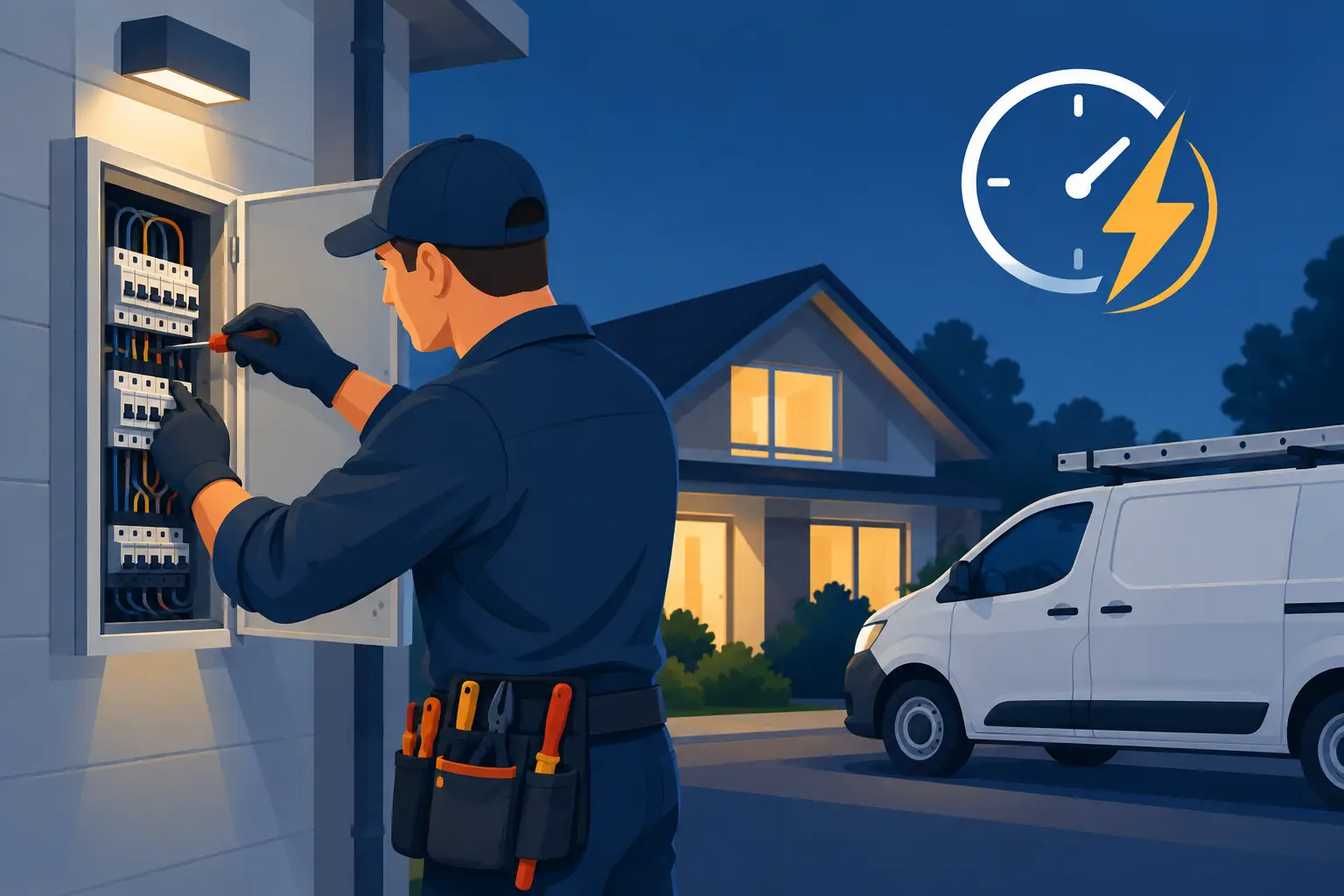
A burning smell from a socket, a consumer unit that will not stop tripping, or a complete loss of power can turn a normal evening into a safety concern quickly. When you need a 24 hour emergency electrician Tamworth property owners, landlords and businesses can rely on, the priority is not simply getting the electrics working again. It is making the property safe, finding the cause of the fault and completing repairs correctly.
Electrical faults do not keep office hours. They can affect a family home after dark, leave a rental property without essential services, or stop equipment and lighting at a commercial or industrial site. Knowing when to call for emergency help, and what to do while waiting for an electrician, can reduce risk and help the visit proceed efficiently.
When is an electrical fault an emergency?
Not every electrical issue requires an out-of-hours call-out. A failed light fitting or one faulty socket may be inconvenient, but can often be isolated and booked in for a planned repair. The decision changes where there is a credible risk of electric shock, fire, water damage, loss of essential power or disruption to a safety-critical business operation.
Call an emergency electrician without delay if you notice burning, scorching, smoke, crackling or a persistent smell of hot plastic around sockets, switches, lighting fittings or the consumer unit. Repeated tripping is also a concern, particularly if the circuit trips immediately after being reset. The protective device is doing its job by disconnecting power, so forcing it back on repeatedly can make a developing fault more dangerous.
Water and electricity are an especially urgent combination. A leak affecting wiring, light fittings, sockets or electrical equipment needs prompt professional attention. Do not touch wet electrical equipment, and do not attempt to investigate a fitting in a damp area. If it is safe to reach the consumer unit without entering the affected area, switch off the relevant circuit or the main supply.
For businesses, an emergency may also include loss of emergency lighting, a fault affecting security systems, a failed distribution board, damaged cables, or machine wiring faults that present a hazard to staff. The right response depends on the site, the equipment involved and whether safe isolation can be achieved.
What to do before the electrician arrives
Your safety comes before diagnosis. If there are signs of fire, smoke or immediate danger, leave the property and contact the emergency services. Do not use water on an electrical fire.
Where there is no immediate fire risk, switch off and unplug the appliance you believe may be causing the problem, but only if it is safe to do so. A damaged lead, a kettle that trips a circuit, or water near an extension lead can sometimes be the clear starting point. Keep people away from the affected area and avoid touching exposed metalwork, damaged cables or the consumer unit if it feels hot.
If a circuit has tripped, you can check whether one appliance is visibly damaged or has recently been connected. However, do not keep resetting breakers to test a theory. Leave the circuit off if it will not remain on, and tell the electrician what was operating when the fault occurred. Details such as recent drilling, a new appliance, storm damage, a leak or renovation work can help narrow down the cause.
For landlords, facilities managers and social housing teams, it is helpful to give the occupant clear instructions on safe isolation and access. Record the property address, the nature of the fault, whether vulnerable residents are present, and whether essential systems such as heating controls, refrigeration, alarms or medical equipment are affected.
What a 24/7 emergency electrical visit should involve
A professional emergency response begins with making the installation safe. This might mean isolating a faulty circuit, securing damaged accessories, disconnecting failed equipment, or confirming that the supply can be restored without creating further risk.
The electrician should then investigate rather than merely reset a breaker. Depending on the fault, this can include visual checks, testing circuits, examining connections, checking the consumer unit and identifying damaged accessories, cables or appliances. Electrical faults are not always visible. A circuit may trip because of moisture, cable damage, insulation deterioration, an overloaded circuit, a loose connection or a faulty appliance.
Where a safe permanent repair can be completed during the call-out, it may be carried out there and then. In other cases, temporary safe isolation is the right solution until further testing, replacement parts or planned remedial work can be arranged. This is not a shortcut. It is a sensible, safety-led approach where a larger repair needs the right materials, access arrangements or a controlled shutdown.
For properties with older wiring or recurring faults, the emergency visit may identify the need for a wider inspection. An Electrical Installation Condition Report, commonly called an EICR, can assess the condition of the installation and highlight work needed to support ongoing safety and compliance. This is particularly relevant for landlords, commercial premises and sites with ageing electrical infrastructure.
Why qualified electrical work matters after an urgent fault
It can be tempting to choose the quickest available option when power is out. Yet electrical emergency work requires the same care as planned installation work. Poor repairs can conceal the original fault, compromise protective devices or leave an installation non-compliant.
A certified, insured electrician brings the test equipment, technical knowledge and practical experience needed to assess the fault properly. Work should be carried out with reference to current electrical safety requirements, including the principles of BS 7671 where applicable. For domestic, commercial and industrial customers, this provides confidence that the repair is based on evidence, not guesswork.
The scale of the issue also matters. A tripped ring circuit in a house may be resolved by identifying one failed appliance. A distribution fault in a shop, warehouse or production area may require a more detailed plan to protect staff, prevent downtime and preserve critical operations. An experienced contractor can respond to the immediate problem while considering the wider installation and the practical needs of the site.
Common faults that need prompt attention
Some call-outs follow patterns, but the cause should always be confirmed through testing. Frequent emergency issues include:
- Consumer units or RCDs that trip repeatedly and cannot be safely reset.
- Burning smells, discolouration, buzzing or heat from sockets, switches or fuse boards.
- Water ingress affecting electrical wiring, lighting or accessories.
- Power loss to essential circuits, including heating controls, refrigeration, security or emergency lighting.
- Damaged cables, exposed wiring or impact damage following building work.
- Electrical faults affecting machinery, control systems or commercial distribution equipment.
A power cut across the local area may be a network supply issue rather than an internal fault. Checking whether neighbours are affected can provide useful context. Even so, if the supply appears normal outside but your property has lost power, or there is any sign of heat or damage within the installation, arrange professional help.
Emergency support for homes, landlords and businesses
Homeowners need clear advice and a safe repair when a fault interrupts everyday life. Landlords and managing agents need responsive attendance, accurate fault reporting and confidence that remedial works can be planned where required. Commercial, industrial and social housing clients often need all of this alongside careful communication, site awareness and minimal disruption.
That is why a contractor with broad electrical capability can be particularly valuable. SDT Electrical Services Ltd provides 24/7 emergency electrical assistance alongside inspections, rewiring, repairs, machine installation, EV charger installation and solar work. A team that understands both urgent faults and planned projects can help customers move from immediate safety to a reliable long-term solution without unnecessary handovers.
Choosing a 24 hour emergency electrician in Tamworth
When calling for help, explain the symptoms plainly and state whether there is smoke, water, loss of essential services or a risk to occupants. Ask whether the electrician is qualified, insured and able to attend your type of property. For commercial or industrial sites, mention any access restrictions, permit procedures, machinery involved and whether a safe shutdown has already taken place.
It is also reasonable to ask what happens after the immediate repair. A dependable service should explain whether the fault has been permanently resolved, whether a circuit has been left safely isolated, and whether further inspection or remedial work is advised. Clear communication matters as much as speed when the safety of people and property is involved.
If an electrical fault is causing concern, do not wait for it to become more serious. Isolate the affected supply where it is safe, keep clear of damaged equipment and arrange qualified emergency assistance. A calm, professional response can protect your property now and provide a safer basis for the work that follows.
1 comment on “24 Hour Emergency Electrician Tamworth Help”