
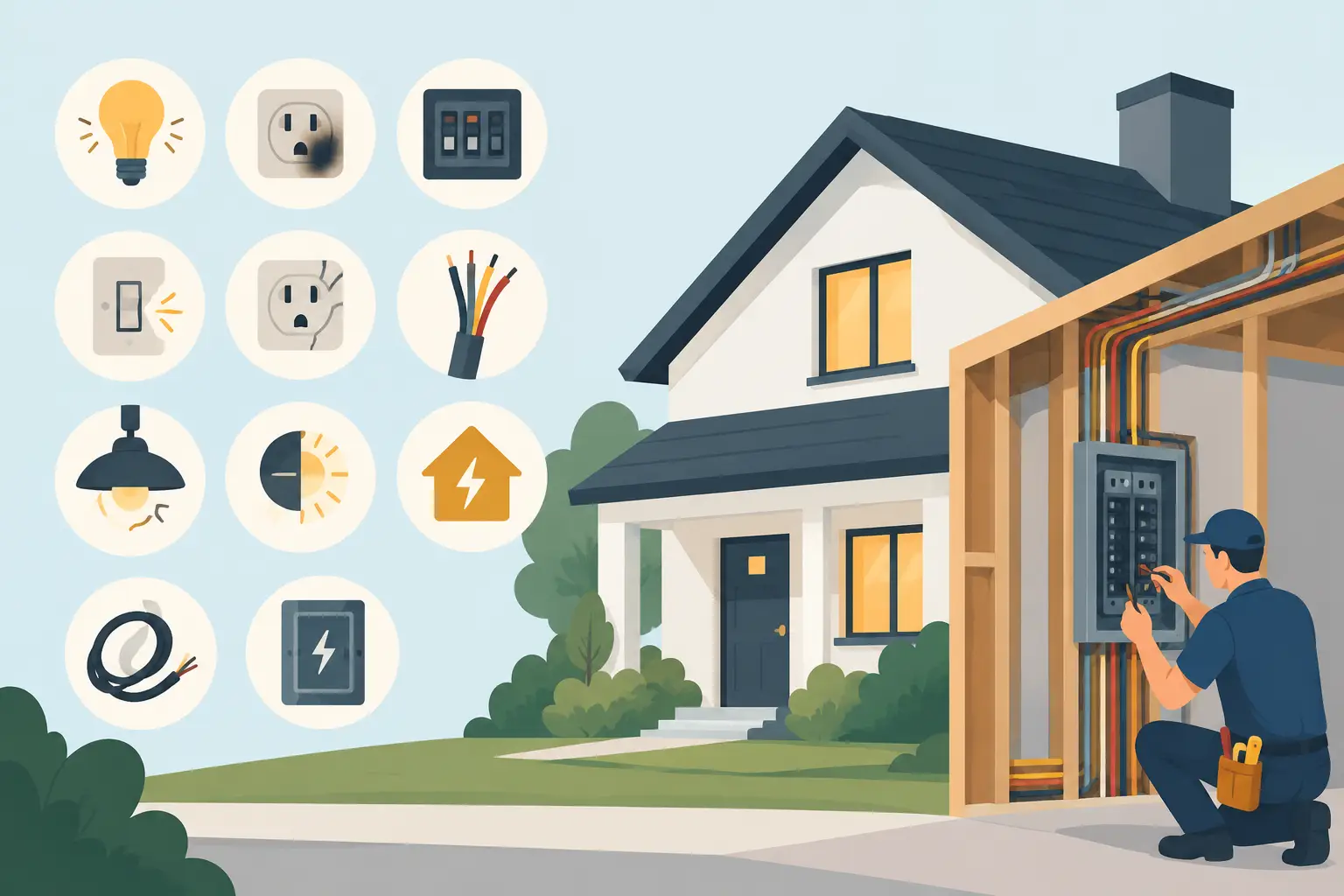
A light that flickers when the washing machine starts may seem like a minor annoyance. In an older property, however, it can be one of the signs your house needs rewiring. Electrical faults do not always announce themselves with a complete loss of power. More often, they appear as small, repeat problems that indicate the installation is struggling to meet modern demand.
A rewire is a significant project, so it should never be recommended simply because a property is old. The condition of the cables, consumer unit, earthing, previous alterations and the way you use the home all matter. A qualified electrician can assess these factors properly and advise whether targeted repairs, an upgrade or a full rewire is the safest, most sensible option.
1. Your consumer unit has old-style fuses
A consumer unit with rewireable fuses, a wooden backing board or no RCD protection is a clear reason to arrange an inspection. Older fuse boards were designed for a very different level of household electricity use. They may not provide the additional protection expected in a modern installation.
Modern consumer units use circuit breakers and RCDs, which can disconnect the supply quickly when a fault is detected. This does not mean every older board automatically requires a full rewire. However, an outdated board often sits alongside ageing cables, limited circuits or historic DIY alterations, so the whole installation should be checked before an upgrade is planned.
2. Circuits trip regularly
An occasional trip can happen when a faulty appliance is plugged in or when a circuit has been overloaded. Repeated tripping is different. It may point to a damaged cable, a loose connection, moisture ingress, an earth fault or a circuit that is carrying more load than it was designed for.
Avoid repeatedly resetting a circuit breaker without investigating why it has operated. Unplugging appliances and identifying whether the fault follows one item can be useful, but if the problem persists, arrange for a qualified electrician to test the circuit. A breaker that trips is doing its job by responding to a possible fault.
3. Lights flicker, dim or behave unpredictably
Lights that dim when other appliances start can suggest voltage drop or an overloaded circuit. Flickering can also be caused by a failing lamp, incompatible dimmer switch or a loose fitting, so it is not always evidence that a full rewire is needed.
The concern increases if several lights are affected, fittings buzz, switches feel warm, or lights brighten and dim without an obvious cause. These symptoms can indicate poor connections within the wiring and should be investigated promptly, particularly in properties with older electrical installations.
4. Sockets, switches or cables show damage
Cracked socket fronts, loose switches, exposed cable, scorch marks and discolouration are not cosmetic issues. They can expose live parts, create poor connections or allow heat to build up. A socket that is hot to the touch should be switched off at the consumer unit if it is safe to do so, then assessed by an electrician.
Pay attention to sockets that no longer hold plugs securely, as well as extension leads that are used permanently because there are too few outlets. Extension leads are useful for temporary use, but a home that relies on them in several rooms may need additional fixed sockets and circuits as part of an electrical upgrade.
5. You notice burning smells, buzzing or electric shocks
A burning smell near a socket, switch, light fitting or consumer unit requires urgent attention. So does a buzzing sound, visible sparking, or even a mild electric shock from a metal appliance or fitting. Stop using the affected circuit where possible and contact an emergency electrician.
Do not remove socket covers or attempt to tighten electrical connections yourself. The source may be hidden behind a fitting or within the cable route, and a repair that appears straightforward can leave the installation unsafe if it is not tested correctly afterwards.
Signs your house needs rewiring after major alterations
A property extension, loft conversion, kitchen renovation or garage conversion changes how electricity is used. New circuits may have been added correctly, but older parts of the installation can remain underpowered or poorly documented. This is particularly relevant where several contractors have worked on a home over many years.
High-demand additions such as induction hobs, electric showers, heat pumps, home offices and EV chargers need properly designed circuits. A solar panel installation may also require changes at the consumer unit and careful consideration of the existing electrical infrastructure. The right answer is not always a full rewire, but the work should begin with a clear assessment of capacity, protection and cable condition.
Watch for poor-quality previous work
Mixed socket styles, inconsistent cable routes, junction boxes hidden in inaccessible places and fittings that appear loosely installed can all suggest that work has been carried out without proper planning. They are not proof on their own, but they are good reasons to request a professional inspection.
An electrician will look beyond what is visible. Testing can identify issues with insulation resistance, earthing, polarity and protective devices that cannot be confirmed by simply looking at sockets and switches.
7. The wiring is very old or uses outdated materials
The age of a property is only a starting point. Some older homes have been fully rewired and maintained, while others still contain original cables that are no longer suitable for safe, reliable use. Older cable types may have insulation that becomes brittle over time, especially where it has been exposed to heat, damp or repeated disturbance.
If you are buying an older house, renovating one, or have no records of electrical work, an Electrical Installation Condition Report, commonly called an EICR, provides a practical starting point. It records the condition of the installation and identifies observations that need improvement or urgent action. For landlords, regular electrical safety checks are also a key compliance responsibility.
8. There are too few sockets for how you live now
Modern homes often run far more equipment than they did when their wiring was installed. TVs, routers, chargers, kitchen appliances, gaming equipment and home-working setups can place steady demand on a small number of circuits.
Overloaded adaptors and daisy-chained extension leads are warning signs that the layout no longer suits the household. Adding sockets may be possible without rewiring every room, depending on the condition and capacity of the existing circuits. Where cables are degraded or circuits are already overloaded, a wider rewire may offer better long-term value and safety.
9. You have no evidence of recent inspection or certification
Electrical installations are largely hidden, which makes assumptions risky. If you do not know when the property was last inspected, have no paperwork for alterations, or have inherited unexplained wiring from a previous owner, arrange an EICR.
The report is not a sales tool for a rewire. It is a structured inspection and testing process that helps establish what is safe, what needs attention and whether the installation is suitable for continued use. It gives you evidence on which to plan repairs or improvements rather than relying on guesswork.
10. Faults keep returning after repairs
Replacing a socket or light fitting can resolve a local fault. But where the same circuit repeatedly develops problems, the underlying cable or connections may be deteriorating. Recurrent faults are one of the clearest signs that piecemeal repairs may no longer be the most reliable approach.
A full rewire is disruptive: walls may need chasing, rooms need access and redecorating may be required afterwards. It is often best coordinated with renovation work. Yet it also provides an opportunity to position sockets properly, add adequate lighting, improve circuit separation and prepare the home for future technologies.
What happens when you arrange an electrical assessment?
A qualified electrician will discuss the symptoms, the age and history of the property, and any planned improvements. They can then inspect the accessible installation and carry out appropriate testing. If rewiring is recommended, the scope should explain what is being replaced, what protective measures will be installed, how disruption will be managed and what certification you will receive on completion.
For homeowners, landlords and property managers across Tamworth, Nottingham and the wider Midlands, SDT Electrical Services can provide inspections, EICRs, repairs and rewiring advice from a qualified, insured team. If something smells hot, sparks, gives a shock or repeatedly trips, treat it as a safety issue rather than a job to put off until the next renovation.