
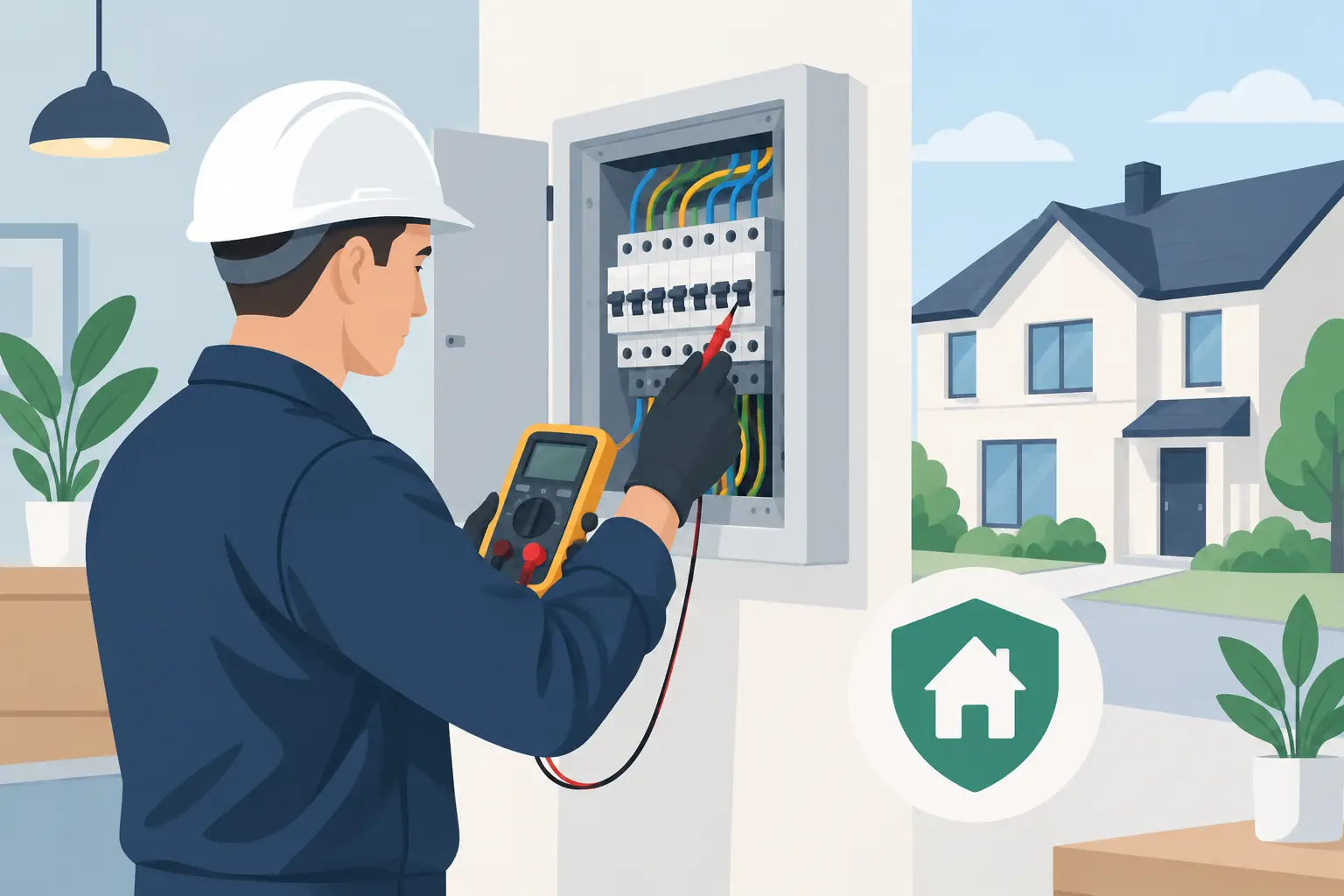
A loose socket, ageing consumer unit or circuit that trips without warning can be more than an inconvenience. EICR testing gives you a clear, professional picture of the condition of an electrical installation before a fault becomes a serious safety issue. For landlords, it is a defined legal duty. For homeowners, businesses and property managers, it is a practical way to plan repairs, protect occupants and demonstrate that electrical safety is being properly managed.
An Electrical Installation Condition Report, usually shortened to EICR, is not a quick visual check or a certificate issued automatically because the lights work. It is a detailed inspection and series of tests carried out by a competent electrician on the fixed wiring and associated equipment in a property.
What does EICR testing involve?
During EICR testing, an electrician assesses the condition of the electrical installation against the relevant requirements of BS 7671, the British Standard for electrical installations. The aim is to identify damage, deterioration, defects, unsafe alterations and any areas where the installation may not be suitable for its current use.
The inspection normally covers the consumer unit, protective devices, fixed cabling, earthing and bonding arrangements, sockets, switches, light fittings and other fixed electrical equipment within the agreed scope. The electrician will look for visible signs of heat damage, unsuitable wiring, missing protection, poor connections and signs that previous work may not meet the required standard.
Testing is equally important. Using calibrated test equipment, the electrician takes measurements to check that circuits can disconnect safely in the event of a fault and that earthing arrangements are effective. This is why an EICR offers more assurance than simply checking that a socket or light fitting appears to operate correctly.
Some interruption to the electrical supply may be needed while circuits are tested. In a home, that may mean arranging the visit around working from home, refrigerated medicines or other essential equipment. In a commercial or industrial setting, testing may need to be planned around operating hours, machinery shutdowns and critical systems. A competent contractor will discuss this before work starts and agree a sensible scope for the site.
When is an EICR required?
For rented homes in England, landlords must have the electrical installation inspected and tested at least every five years by a qualified and competent person. A report must also be obtained earlier if the existing report recommends a shorter interval. Landlords must provide a copy to new tenants before they move in, give existing tenants a copy within 28 days of the inspection, and supply it to the local authority within seven days if requested.
If the report identifies remedial work, landlords must ensure it is completed within 28 days, or sooner where the report specifies a shorter period. Written confirmation of the completed work must then be provided to tenants and, where required, the local authority. These duties make an EICR a key part of maintaining a rented property, rather than an inspection to leave until a tenancy ends.
Owner-occupied homes are not generally subject to the same five-year legal requirement. However, periodic inspection is still strongly recommended, particularly where a property has an older installation, has changed hands, is being extended or refurbished, or has recurring electrical issues. As a guide, many domestic installations are inspected every ten years, although the right interval depends on the property and how the installation is used.
Commercial premises, communal areas, industrial units and social housing buildings also need regular inspection, but the frequency can vary. Offices and shops may have a different risk profile from a workshop with heavy machinery, a kitchen, a school or a property exposed to moisture and public use. The previous report may state the recommended next inspection date, but changes in use, damage, flooding, fire, major alterations or repeated faults can all justify an earlier assessment.
What the EICR report tells you
Once testing is complete, you receive a written report setting out the installation details, the extent and limitations of the inspection, test results and any observations found. The overall outcome will normally be recorded as either satisfactory or unsatisfactory.
An unsatisfactory report does not necessarily mean the entire installation needs replacing. It means one or more issues need attention before the installation can be considered satisfactory. The observations are coded according to urgency:
- C1 indicates danger is present and immediate action is required.
- C2 identifies a potentially dangerous condition that needs urgent remedial work.
- FI means further investigation is required without delay because a safety concern cannot be confirmed or ruled out during the inspection.
- C3 is an improvement recommendation. It does not make the report unsatisfactory on its own, but it can be worth addressing to improve safety or bring parts of the installation closer to current standards.
For example, a damaged accessory exposing live parts may be recorded as C1, while inadequate protective measures in a particular situation could result in a C2. An older but serviceable feature is not automatically a defect simply because regulations have changed since it was installed. This distinction matters. An EICR assesses safety, not whether every part of an installation matches the latest product or design preference.
Common issues found during an inspection
Properties often develop electrical problems gradually. A circuit may have been added without suitable protection, a consumer unit may lack appropriate labelling, or alterations may have left bonding arrangements incomplete. Wear and tear, DIY work, rodent damage, water ingress and overloaded circuits can also create risks that are not obvious in day-to-day use.
In older homes, electricians may find dated fuse boards, wiring with deteriorated insulation, or insufficient socket provision leading to extension leads being used permanently. In workplaces, issues can include damaged accessories, unsuitable equipment connections, poorly managed additions to circuits and wiring affected by heat, vibration or machinery use.
The appropriate solution depends on the finding. A small remedial repair may be all that is needed, while more widespread deterioration could make partial rewiring or a consumer unit upgrade the safer long-term option. The report should help you make that decision based on evidence, budget and the condition of the property, rather than guesswork.
Preparing for an EICR inspection
Good preparation makes the visit more efficient and helps ensure the report reflects the full installation. Provide access to the consumer unit, meter area, rooms, outbuildings and any electrical equipment included in the inspection. Let the electrician know about solar panels, EV chargers, storage heaters, external supplies, machinery or recent alterations, as these may affect the scope of testing.
For landlords and property managers, it is helpful to arrange access with tenants in advance and explain that short power interruptions may occur. For businesses, identify equipment that cannot be switched off easily and discuss whether testing should take place outside normal trading or production hours. Clear planning reduces disruption without compromising the inspection.
Do not attempt to conceal faults or carry out temporary repairs before the appointment. If a circuit trips, a socket sparks, lights flicker or you have noticed a burning smell, tell the electrician. These details can point to faults that require closer investigation.
Choosing the right electrician for EICR testing
An EICR is only as reliable as the inspection behind it. Choose a properly qualified, insured electrical contractor with the experience and equipment to test the type of property involved. This is especially relevant for larger sites, rented portfolios, commercial premises and industrial installations, where the scope can be more complex than a standard domestic inspection.
Ask what is included, whether the quotation allows for the number of circuits and distribution boards on site, and how any remedial work will be explained. A clear report, practical advice and transparent pricing are far more useful than a low headline cost that does not reflect the actual size or condition of the installation.
For property owners and managers across Tamworth, Nottingham and the wider Midlands, SDT Electrical Services Ltd can carry out condition reporting and advise on any remedial work required. With qualified electricians available for planned inspections, repairs and urgent faults, the focus is on helping you understand the condition of your electrical installation and take the right next step with confidence.
If your report is due, your tenancy is changing, or an installation has begun showing signs of trouble, arranging an inspection now gives you time to deal with issues properly rather than reacting to an avoidable electrical emergency.