
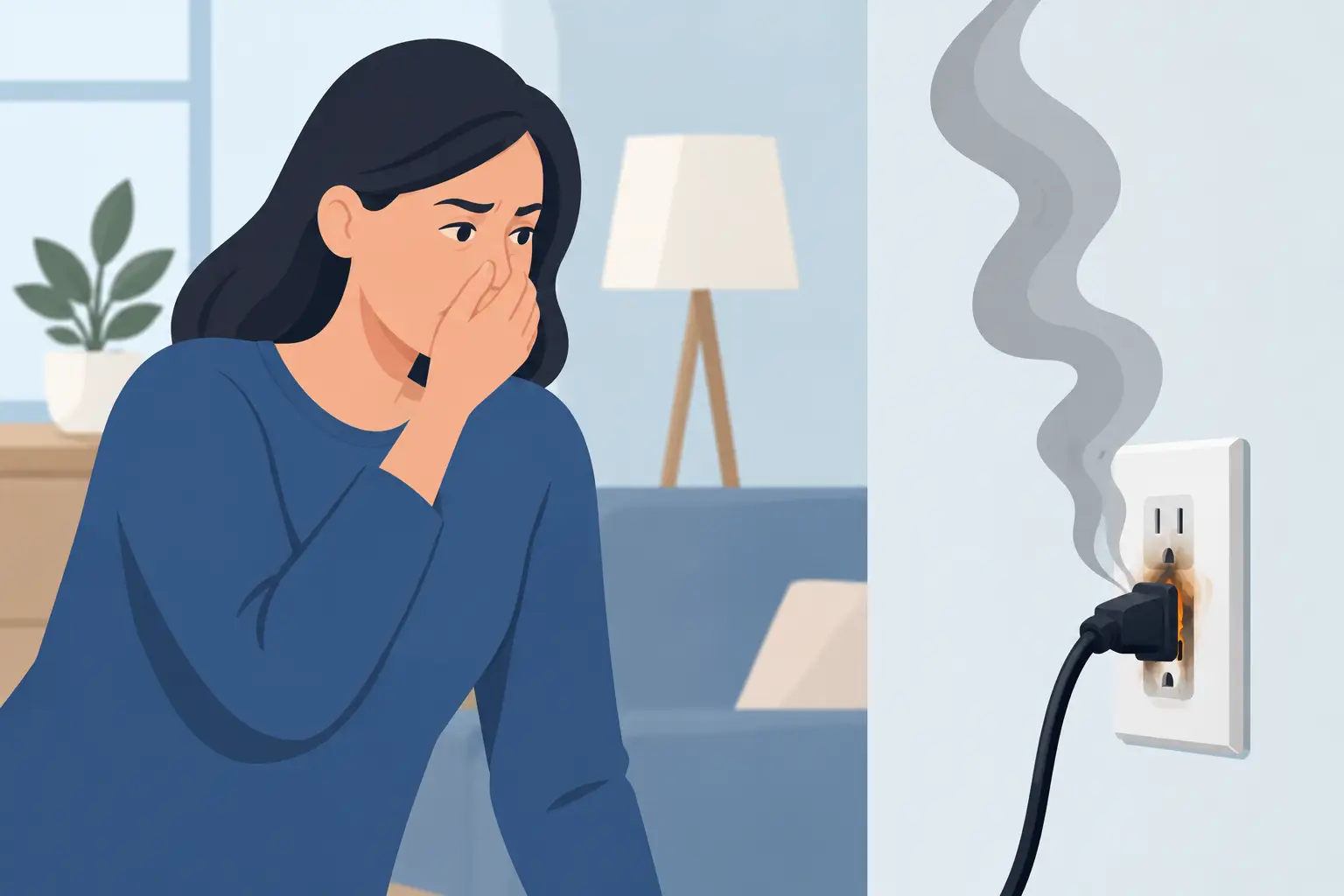
A faint electrical burning smell near a socket, consumer unit or appliance is not something to wait and see about. It can be caused by overheating insulation, a loose connection, damaged wiring or a failing electrical component. Some faults develop slowly, while others can create a fire risk without much warning.
The safest response is to treat the smell seriously, reduce the immediate risk where it is safe to do so, and arrange for a qualified electrician to investigate. For homeowners, landlords, facilities managers and industrial operators, prompt action can protect people, property and essential equipment.
What does an electrical burning smell smell like?
People describe it in different ways: hot plastic, melting rubber, fishy odour, scorched dust or an acrid smell around electrical equipment. A smell may be brief, particularly when a rarely used heater or appliance first warms up, but it should never be dismissed if it returns, strengthens or is accompanied by other warning signs.
The location matters. A smell coming from a plug, socket or extension lead points to a different set of possible faults than one coming from a fuse board, electric heater, light fitting, machinery control panel or EV charger. Do not put your face close to equipment to investigate it. Keep a safe distance and use the surrounding signs to guide your next step.
When an electrical burning smell is an emergency
Call 999 immediately if there is smoke, visible sparking, flames, a crackling sound, a glowing socket, or a strong and worsening burning smell. Get everyone out of the affected area first. Do not attempt to tackle an electrical fire with water, and do not re-enter a property until it is safe to do so.
If there is no visible fire but you suspect an active electrical fault, switch off the supply at the consumer unit only if you can reach it safely and there is no smoke, heat or damage around it. If turning off one circuit is clearly labelled and safe, that may limit disruption. Where there is any doubt, leave the supply alone and seek emergency help.
You should also act promptly if you notice any of the following:
- a socket, plug, switch or cable feels hot to the touch
- lights flicker, dim or trip a circuit breaker when equipment is used
- plastic has discoloured, melted or become brittle
- an appliance produces smoke, buzzing or repeated burning smells
- machinery stops unexpectedly or electrical controls show signs of overheating
A burning smell may fade after power is removed, but that does not prove the issue has gone away. The failed connection or damaged component remains a potential hazard until it has been properly tested and repaired.
Common causes of electrical burning smells
Loose or deteriorating connections
Connections can loosen over time through normal use, vibration, poor original installation or thermal movement. Electricity passing through a loose connection creates resistance, and resistance produces heat. This can damage terminals, cable insulation and the accessory itself before a protective device has a chance to operate.
Older properties and heavily used commercial premises can be particularly vulnerable, especially where electrical installations have been altered over the years. A qualified electrician can inspect the affected circuit, test connections and identify whether wider remedial work is required.
Overloaded sockets and extension leads
Plugging several high-load appliances into one outlet can overload an extension lead or adaptor. Portable heaters, kettles, tumble dryers, microwave ovens and power tools all draw significant current. The risk is greater with damaged, coiled, poorly rated or low-quality extension leads.
Avoid using multi-way adaptors to compensate for too few sockets. The right solution may be additional fixed outlets on an appropriately designed circuit, rather than another extension lead under a desk or behind a television unit.
Failing appliances and chargers
Sometimes the building wiring is sound and the fault is inside an appliance. Frayed flexes, damaged plugs, worn heating elements, defective motors and failed power supplies can all create an electrical burning smell. Unplug the item if it is safe to do so, do not use it again, and have it assessed or replaced.
The same principle applies to phone chargers, laptop adaptors and battery-powered equipment. Cheap, damaged or unsuitable chargers can overheat. Use equipment designed for the device and avoid charging batteries on soft furnishings, beds or near combustible materials.
Problems at the consumer unit or distribution board
A burning smell near the consumer unit needs urgent professional attention. Possible causes include overheated circuit breakers, loose terminals, damaged busbars or faults within connected circuits. Do not remove the cover or attempt to tighten anything yourself. There are live parts inside, even when some circuits are switched off.
For commercial and industrial sites, a smell from a distribution board, control panel or machine isolator should be treated as a maintenance and safety issue. Isolate equipment in line with site procedures, keep staff away from the affected area and arrange a competent electrical inspection before restarting operations.
Lighting, heaters and fixed equipment
A new light fitting can sometimes give off a short-lived smell as manufacturing residues burn away, but this should disappear quickly and must not be accompanied by smoke, flickering or heat at the switch. Repeated smells from lights, extractor fans, electric showers, storage heaters or underfloor heating require investigation.
Dust can also cause a brief odour when an electric heater is used for the first time after a long period. Even so, switch it off if the smell is strong, persists beyond a short time or comes with unusual noise, overheating or discolouration.
What you can do safely before the electrician arrives
Start by keeping people away from the suspected source, particularly children, tenants, visitors and staff who may not recognise the risk. If an appliance is involved and the plug, socket and cable are cool with no visible damage, switch it off at the wall and unplug it by holding the plug, not the cable.
Make a note of what was running when the smell began, whether a circuit breaker tripped, where the odour was strongest and whether the problem has happened before. This information can help an electrician diagnose an intermittent fault more efficiently. Do not keep turning a tripping circuit back on to test it, and do not cover a damaged socket or cable with tape as a repair.
In a rented home, report the issue to the landlord or managing agent straight away, while taking the same immediate safety steps. Landlords have ongoing electrical safety duties and may need to arrange remedial work following an inspection. Property managers should record the report, isolate the hazard where appropriate and use a competent contractor rather than relying on temporary fixes.
Why inspection and testing matter
An electrical burning smell is a symptom, not a diagnosis. The visible accessory may be damaged, but the underlying issue could be further along the circuit, within the consumer unit or connected to an appliance. Proper fault-finding involves inspection, electrical testing and a clear assessment of what needs repairing or replacing.
For ageing installations, recurring faults, frequent tripping or signs of deterioration, an Electrical Installation Condition Report can provide a broader picture of the system’s condition. It is particularly useful for landlords, commercial premises and property owners planning refurbishment, new machinery, solar panels, EV chargers or increased electrical demand.
The required work depends on the findings. It might be as contained as replacing a damaged socket and correcting a loose connection. In other cases, overloaded circuits, obsolete components or degraded wiring may justify a partial rewire, consumer unit upgrade or redesigned installation. A reliable electrician should explain the issue plainly, identify any immediate safety concerns and provide a clear scope for the remedial work.
Get a suspected fault checked without delay
Electrical faults are rarely improved by continued use. If you can smell burning plastic, overheated wiring or scorching around electrical equipment, stop using the affected item or circuit where safe and arrange professional help. SDT Electrical Services provides qualified electrical fault finding, repairs, inspections and 24/7 emergency electrical assistance across the Midlands, helping customers make safe decisions before a small warning sign becomes a more serious incident.