
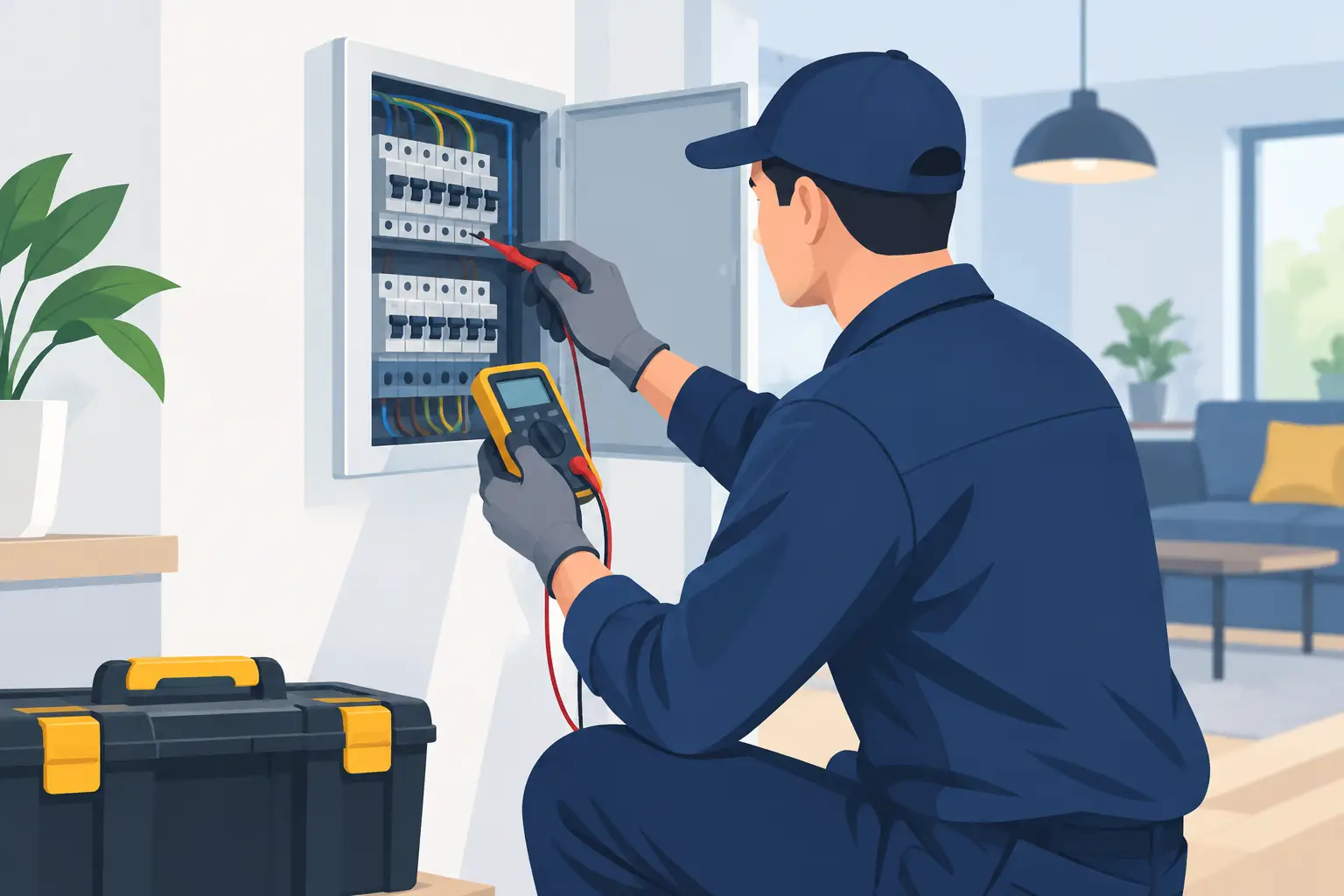
A circuit that keeps tripping, lights that flicker without warning or sockets that suddenly stop working can quickly turn from an inconvenience into a safety concern. A professional electrical fault finding service identifies the cause of the problem rather than simply resetting a breaker or replacing a visible fitting. That means safer repairs, less disruption and greater confidence that your electrical installation is working as it should.
For homeowners, landlords, facilities managers and industrial operators, the priority is usually clear: find the fault quickly, make the property safe and restore the affected circuit with the right repair. The way this is done matters. Electrical faults can sit behind walls, beneath floors, inside equipment or within a distribution board, so a qualified electrician must test methodically before deciding what needs to be repaired.
What does an electrical fault finding service involve?
Fault finding is a structured process of inspection, testing and diagnosis. An electrician starts by discussing what has happened, when the issue began and whether anything has changed recently. A new appliance, water ingress, building work, a damaged cable or an overloaded circuit can all provide useful clues.
They will then inspect the relevant parts of the installation and carry out appropriate electrical tests. Depending on the fault, this may include checking circuit continuity, insulation resistance, polarity, earthing arrangements and the operation of protective devices such as RCDs and circuit breakers. The aim is to isolate the fault safely and establish whether it is in the fixed wiring, a fitting, an accessory, an appliance or connected equipment.
A reliable diagnosis should not be based on guesswork. Repeatedly resetting a tripped breaker may restore power temporarily, but it does not explain why the device operated in the first place. Protective devices trip to reduce the risk of electric shock, fire or equipment damage. If the cause is still present, the circuit may trip again or create a more serious hazard.
Signs you should arrange electrical fault finding
Some faults are obvious, while others develop gradually. If electrical equipment is behaving differently from normal, it is sensible to have it checked before a small issue becomes a costly repair.
Common warning signs include:
- A circuit breaker or RCD trips repeatedly, particularly when a particular appliance or area is used.
- Sockets, switches or light fittings feel warm, make crackling sounds or show discolouration.
- Lights flicker, dim unexpectedly or fail in one part of the property.
- There is a burning smell, buzzing from electrical equipment or visible sparking.
- Power is lost to part of a building, machine or outbuilding with no clear explanation.
A burning smell, signs of overheating, smoke, sparking or an electric shock should always be treated as urgent. If it is safe to do so, switch off the affected circuit or main supply and keep people away from the area. Do not remove covers, touch damaged equipment or attempt a temporary repair. Emergency electrical assistance is the right response where there is an immediate safety risk or significant loss of power.
Why faults are not always where they appear
The point where a problem becomes visible is not always the point where it started. A kitchen socket may stop working because of a loose connection elsewhere on the circuit. A lighting fault may be caused by water entering an external fitting. A tripping RCD could be linked to a faulty appliance, deteriorated cable insulation or moisture affecting an outdoor circuit.
This is why replacing the nearest socket or light fitting can be a false economy. It may appear to solve the problem, only for the fault to return later. Proper testing allows the electrician to narrow down the affected circuit and identify the actual cause before recommending remedial work.
There is also a difference between a one-off nuisance trip and a recurring fault. For example, an RCD may operate during extreme weather if water has entered an external accessory. However, regular tripping when normal loads are connected needs investigation. The appropriate repair depends on the test results, the age and condition of the installation, and how the circuit is used.
Fault finding in homes, rental properties and workplaces
The underlying approach is similar across properties, but the practical priorities vary.
In a home, fault finding often involves lighting circuits, socket outlets, cookers, showers, consumer units, external supplies, garages and garden electrics. Older properties may have ageing wiring or additions made over many years. Newer homes can also develop faults through damaged cables, failed accessories, condensation or issues with connected appliances.
For landlords and property managers, an electrical fault can affect tenant safety, heating, hot water, security systems and the ability to use essential appliances. Prompt attendance is valuable, but so is clear communication about the fault, the repair required and whether further work is advisable. An Electrical Installation Condition Report, or EICR, may be appropriate where the wider condition of the installation needs assessing.
Commercial and industrial sites bring additional considerations. A fault may interrupt trading, affect emergency lighting, disable equipment or stop a production process. Machine wiring and control circuits require particular care because the issue may involve both the building supply and the equipment itself. In these settings, a contractor needs the experience to work safely around operational requirements while keeping downtime to a minimum.
What happens after the fault is found?
Once the source of the issue has been identified, the electrician should explain the findings in clear terms. Some repairs can be completed during the visit, such as replacing a damaged accessory, repairing a connection or removing a faulty item from a circuit. Other situations require planned work, particularly if cables need replacing, a circuit requires upgrading or access is needed behind finishes or within equipment.
A good recommendation distinguishes between what is essential for safety and what would be sensible as an improvement. If a consumer unit is old but operating safely, a full replacement may not always be the immediate answer. Equally, where protective devices, earthing arrangements or wiring condition are inadequate, a more substantial upgrade may be necessary. The correct scope should follow the evidence, not a one-size-fits-all approach.
For significant repairs or alterations, certification and testing are part of the job. This provides a record of the work carried out and helps demonstrate that the installation has been checked after repair. Property owners and duty holders should keep this paperwork with their electrical records.
How to help an electrician diagnose the issue faster
You do not need technical knowledge to provide useful information. Before the visit, make a note of which rooms, circuits or items are affected and whether the issue happens at a particular time. It is helpful to know whether a breaker trips immediately, only when a certain appliance is used, or after rain or cleaning.
Avoid repeatedly switching a tripped device back on. If it trips again, leave it off where possible. Keep access clear to the consumer unit, affected sockets, fittings or equipment, and let the electrician know about recent decorating, drilling, leaks, alterations or new electrical additions. These details can reduce diagnostic time and help protect the property from further damage.
Preventing repeat electrical problems
Not every fault can be predicted, but regular inspection and sensible maintenance reduce the chance of surprises. An EICR can identify deterioration, overloaded circuits, damaged accessories and departures from current safety requirements before they become urgent. This is particularly valuable for landlords, commercial premises, social housing portfolios and older properties.
It is also worth using electrical installations as intended. Avoid overloading extension leads, do not run cables where they can be crushed or damaged, and use suitably rated outdoor equipment. If you are planning a kitchen upgrade, EV charger, solar installation, machine installation or extension, make sure the existing supply and distribution arrangements are assessed as part of the project.
When a fault disrupts your property, the quickest-looking solution is not always the safest one. A qualified electrician who tests carefully, explains the issue plainly and completes the right repair gives you a safer route back to dependable power. For properties across the Midlands, SDT Electrical Services can provide practical advice, planned repairs and 24/7 emergency electrical assistance when the situation cannot wait.