
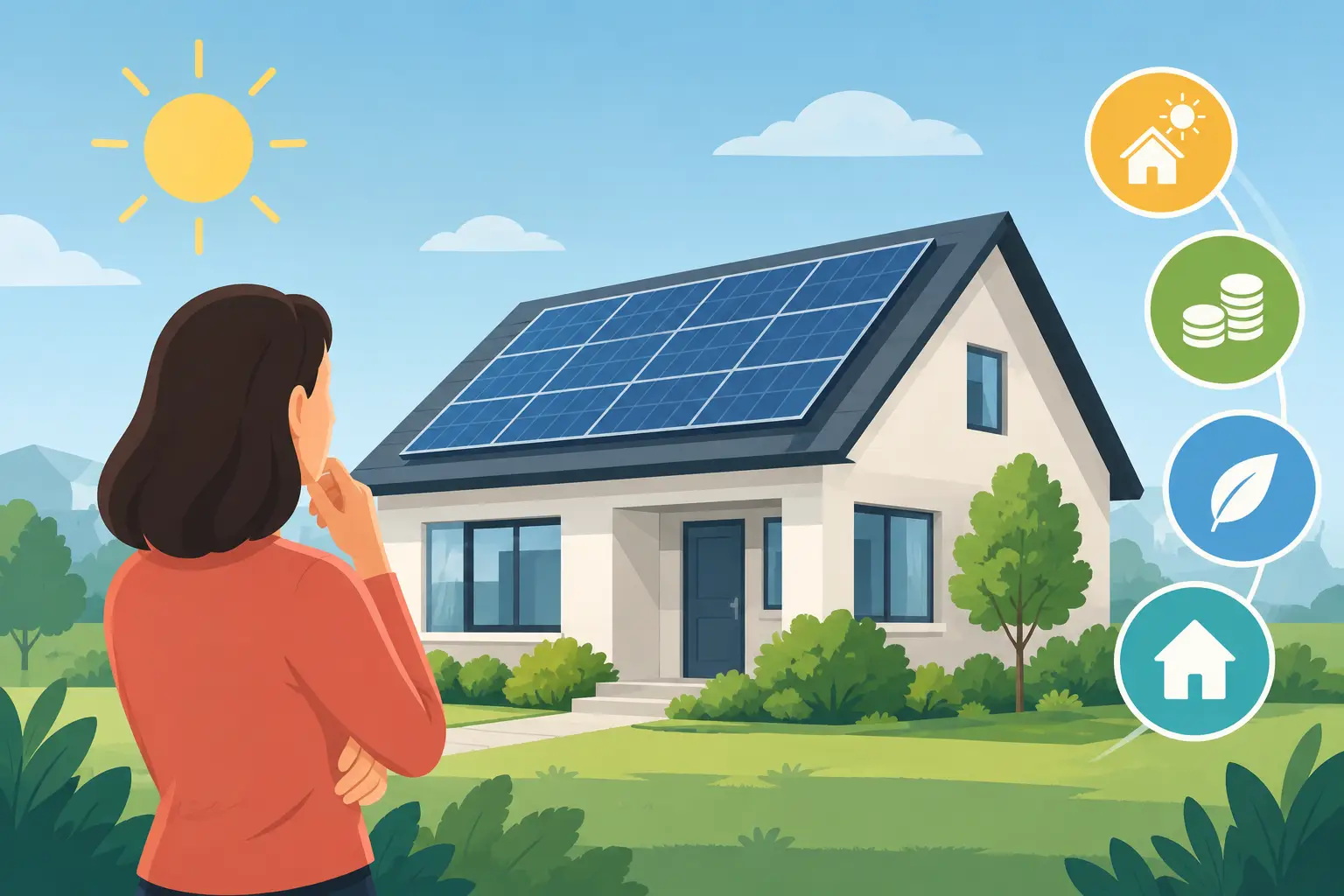
A solar installation should fit the way your household uses electricity, not simply fill every available part of the roof. Knowing how to choose home solar means looking beyond a panel price and considering your roof, daytime electricity use, future plans and the condition of the electrical installation that will support it.
For homeowners, solar can reduce reliance on imported electricity and provide greater control over energy costs. The best result comes from a properly designed system, installed safely by qualified professionals, with realistic expectations of what it will generate and save.
Start with your electricity use
Your electricity bills are a useful starting point, but annual consumption alone does not tell the full story. A household that uses most of its power during the day can use more of the electricity its panels generate directly. A household that is empty from morning until evening may still benefit from solar, but could need to consider a battery, smart tariff or timed appliances to improve the amount of solar power used at home.
Look at how your routine may change over the next few years. An electric vehicle, heat pump, home office or growing family can significantly alter demand. Equally, if you are planning to replace an older boiler with a heat pump, a solar system designed around current usage alone may not be the right long-term choice.
A good survey should turn these details into a sensible proposed system size. Larger is not automatically better if a substantial amount of generation will be exported at a lower rate than the cost of buying electricity. However, restricting the system too heavily can mean missing a practical opportunity to generate more power from a suitable roof.
Check whether your roof is suitable
South-facing roofs generally produce the highest overall annual output, but east and west-facing roofs can be an excellent option. An east-west arrangement spreads generation more evenly across the morning and afternoon, which may suit households that use electricity before work and after returning home.
Roof pitch, shading and usable area all affect performance. Chimneys, dormers, nearby trees and neighbouring buildings can cast shade that reduces output, particularly at key times of day. Modern panel and inverter technology can help manage some shading issues, but it should not be treated as a substitute for an honest site assessment.
The roof itself matters just as much as the direction it faces. Its covering, age, structure and access arrangements should be assessed before installation. If re-roofing is likely in the near future, it is usually more cost-effective to complete that work first rather than remove and refit panels later.
Planning requirements also need checking. Many domestic solar installations fall within permitted development rules, but there are exceptions, including certain listed buildings, conservation areas and properties with particular restrictions. A competent installer should identify whether further permissions or approvals are needed before work begins.
How to choose home solar system size
Solar is usually described by its peak generating capacity in kilowatts peak, or kWp. This is not the amount of electricity it will produce every hour. Actual output changes with season, weather, orientation, shading and panel temperature. A clear proposal should show an estimated annual generation figure and explain the assumptions behind it.
When comparing sizes, ask how the design has been matched to the available roof space and your expected demand. A proposal should identify the number and type of panels, their proposed location, inverter capacity, estimated generation and likely export. It should also make clear whether any panels are placed on separate roof aspects and how that affects the system design.
Do not judge competing quotations by panel count alone. A lower-cost quote may use fewer panels, a different inverter, limited monitoring or reduced allowance for roof access and electrical work. A more expensive design is not automatically the better one either. The value lies in whether the components, workmanship, guarantees and projected performance are appropriate for your property.
Decide whether a battery suits your household
A battery stores surplus solar generation for use later, rather than exporting it immediately. It can be particularly useful where occupants are away during sunny hours and use more electricity in the evening. It may also help households take advantage of suitable off-peak electricity tariffs, depending on the tariff terms and how the system is configured.
There is a trade-off. Batteries add substantial upfront cost, have a finite usable capacity and will not make a home fully independent of the grid. Their financial benefit depends on generation, household habits, electricity prices, export rates and the battery’s charging strategy.
Ask for battery capacity in usable kilowatt-hours, not only the headline figure. Check the warranty terms, expected throughput, monitoring features and whether the system can be expanded later. If backup power is important, clarify exactly what will remain powered during a power cut. Many battery systems do not provide whole-home backup as standard, and additional equipment may be required.
Make sure the electrical installation is ready
Solar panels may be on the roof, but the installation depends on safe electrical work throughout the property. The inverter, isolators, cabling, earthing arrangements and consumer unit all need to be assessed and installed correctly.
Older consumer units, limited spare ways, unsuitable protective devices or existing electrical defects may need attention before solar can be connected. This is not unnecessary extra work. It helps ensure the new system is safe, compliant and capable of operating as intended. Where the condition of an installation is uncertain, an Electrical Installation Condition Report can provide useful evidence before major electrical upgrades are planned.
Your installer should also manage the necessary network notification or application process with the local Distribution Network Operator. Smaller systems often follow a straightforward notification route, while larger or more complex installations may require approval before connection. This should be discussed early, particularly if you are adding a battery, EV charger, heat pump or other high-demand equipment.
Choose the installer as carefully as the equipment
Panels and inverters matter, but installation quality has a lasting effect on safety, performance and warranty support. Choose an installer with appropriate qualifications, insurance and experience of domestic solar work. Ask who will carry out the electrical installation, whether the work is completed by a qualified team and what certification you will receive once the job is finished.
For many homeowners, using an MCS-certified installer is a sensible consideration, particularly where access to export arrangements or recognised installation standards is relevant. Check what accreditation applies to the proposed work rather than relying on broad claims. The contractor should also provide electrical certification and clear handover information for the completed system.
A detailed quotation should state what is included. This normally covers the system specification, scaffolding or access, roof mounting equipment, electrical connection work, monitoring, commissioning, certification and any allowances for consumer unit upgrades. Be cautious of vague quotes that leave essential work to be priced later.
It is also worth asking who will support you after installation. You should know the workmanship warranty, product warranties, what happens if the monitoring app reports a fault and whether there is a clear route for advice or repairs. A dependable local electrical contractor can be valuable when solar is part of a wider home upgrade, alongside EV charging, electrical alterations or safety inspections.
Compare proposals on lifetime value
A sound proposal should give you enough information to compare like for like. Look at projected annual generation, expected self-consumption, export assumptions, equipment warranties and the total installed price. Be wary of savings figures presented as guarantees, since weather, tariffs and household behaviour cannot be guaranteed.
Consider the practical details too. Will the panel layout look acceptable from the street? Is the inverter location accessible but not intrusive? Can you understand the monitoring system? Can the installer explain, in plain language, what you need to do after commissioning?
For properties in Tamworth, Nottingham and across the wider Midlands, an on-site survey is the right opportunity to raise these questions. It allows the installer to inspect the roof, cable routes and consumer unit rather than designing a system from satellite images and assumptions alone.
The right solar system is one you can understand and use with confidence. Take time to ask for a tailored design, clear certification and a free, no-obligation quotation before committing. A careful decision at the beginning gives your home the best chance of safe, dependable generation for years to come.