
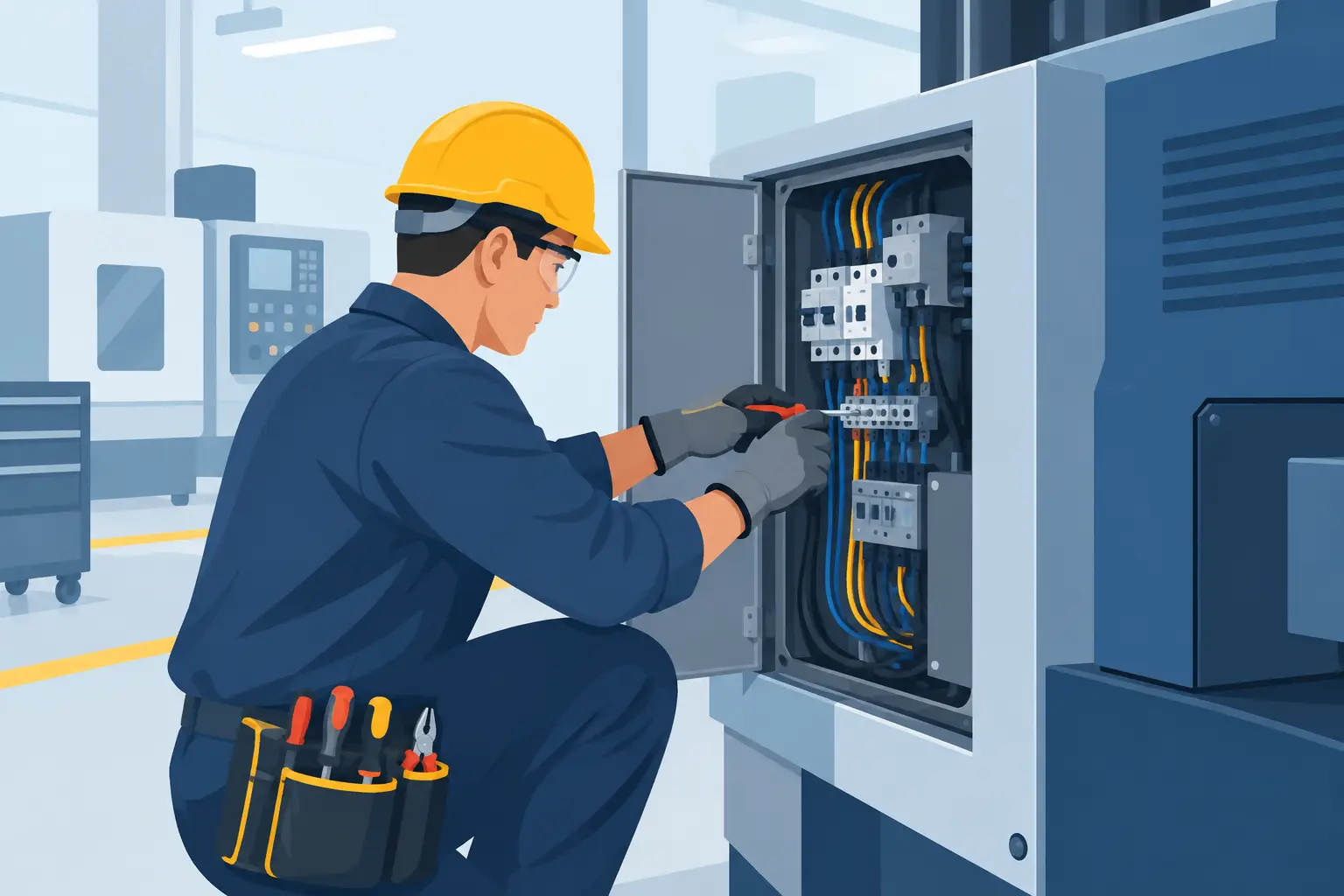
A new machine is only productive when its electrical installation is correct. A machine installation electrician provides the specialist planning, wiring, protection, testing and commissioning needed to bring equipment into service safely. Whether you are fitting a single workshop machine or expanding a production area, the electrical work must support the machine, the people operating it and the wider premises installation.
Poorly planned machine wiring can lead to unreliable starts, nuisance tripping, damaged components, production downtime and avoidable safety risks. Getting the right electrical contractor involved before equipment arrives gives you a clearer route from delivery through to safe operation.
Why machine installation needs specialist electrical planning
Industrial and commercial machinery is rarely a case of connecting a plug and switching on. Machines may need three-phase supplies, dedicated distribution equipment, correctly rated isolators, control wiring, emergency stop circuits, containment and local protective devices. The installation also needs to account for the machine manufacturer’s requirements and the capacity of the existing electrical supply.
A machine installation electrician begins by establishing what the equipment requires. This includes its voltage, current demand, starting characteristics, load type, cable route and the environment in which it will operate. A machine in a clean workshop has different considerations from equipment installed in a dusty unit, food production area, warehouse or outdoor yard.
The existing installation matters just as much as the new equipment. If the distribution board, earthing arrangement or incoming supply cannot safely support the additional load, simply adding a circuit can create bigger problems. Early assessment allows appropriate upgrades or alterations to be planned before installation work begins.
What a machine installation electrician will assess
The most reliable projects start with a site survey and a practical conversation about how the machine will be used. This is the point to identify access restrictions, delivery dates, operating hours and any need to keep other areas live during the works.
A qualified electrician will normally review the machine specification, the available supply, cable routing options and the condition of the relevant distribution equipment. They will also consider isolation arrangements, protective devices, earthing and bonding, and how operators can safely access emergency controls.
For larger or more complex equipment, coordination with the machine supplier, mechanical installation team and site manager is often essential. The supplier may have specific requirements for supply type, fuse ratings, terminal connections or commissioning sequence. Clarifying these details in advance helps prevent last-minute alterations once a machine is already in position.
Load capacity and power quality
Electrical demand is not always shown by a simple headline power figure. Motors, drives, heaters, welders and compressors can place very different demands on a supply. Some machines draw a high starting current, while others are sensitive to voltage drop or require a stable, clean supply for electronic controls.
The electrician should calculate circuit requirements and select suitable cable sizes and protective devices. Where appropriate, they may recommend a dedicated supply or changes to the distribution arrangement. This protects the installation and reduces the risk of a new machine affecting lighting, office circuits or other critical equipment.
Safe positioning and cable containment
Cable routes need to be safe, protected and practical to maintain. Cables run across walkways, exposed to impact or installed too close to heat, moisture or moving equipment can become a fault risk. Suitable trunking, tray, conduit or other containment helps protect cables while keeping the work orderly and accessible.
Positioning is also about operation and maintenance. Isolators and emergency stop controls must be available where they are needed, not hidden behind equipment or blocked by stored materials. Small decisions at installation stage can make a significant difference when staff need to respond quickly to a fault.
The installation process from supply to commissioning
Once the design and scope are agreed, installation can be scheduled around your operational needs. For an active business, this may mean completing work outside normal hours, isolating only the required area or phasing the project to limit disruption. The best approach depends on the machinery, the premises and how critical continuous operation is to your business.
The work may involve installing a new circuit from a distribution board, fitting a local isolator, running protected cabling, connecting the machine supply and completing any agreed control or ancillary wiring. Ancillary equipment can include extraction systems, pumps, local lighting, interlocks, sensors or remote controls.
Before the machine is handed over, the electrical installation must be inspected and tested. Testing checks that protective measures operate correctly and that the circuit is safe for use. Depending on the scope of work, certification will be provided for the installation, giving you a clear record of the completed electrical work.
Commissioning should then be carried out in line with the machine supplier’s instructions. This may involve confirming rotation on motors, checking control functions, verifying emergency stops and observing the machine under normal operation. Electrical commissioning does not replace the manufacturer’s mechanical or process commissioning, but both elements should work together before production starts.
Compliance is more than a certificate
Electrical certification is a key part of a machine installation, but safe compliance is not achieved by paperwork alone. The installation must be designed, installed and tested to recognised electrical standards, with appropriate consideration given to the equipment and its working environment.
For employers, machine safety duties also extend beyond the electrical connection. Guarding, training, maintenance arrangements and safe systems of work all play a role. A competent electrical contractor can ensure the supply and wiring aspect is completed professionally, but site management should make sure the overall machine installation is assessed before operators begin using it.
If the work involves alterations to an older installation, it may be sensible to consider an Electrical Installation Condition Report at the same time. An EICR can highlight defects or deterioration in the wider system that could affect safety or reliability. This is particularly useful where a property has changed use, machinery has been added over several years or records are incomplete.
Common issues that delay machine installation
The most common problem is discovering that the available supply is insufficient after the machine has arrived. Another is receiving incomplete machine information, particularly where equipment has been bought second-hand or imported. Missing manuals, unclear terminal markings and unknown alterations can all increase the time needed to install safely.
Access and programme pressures can also cause difficulties. A machine may be delivered before the final location is ready, or a contractor may be asked to work around other trades in a restricted space. Rushing electrical connections to meet a production deadline is a false economy. Proper testing and commissioning are what provide confidence that the equipment can operate safely from day one.
It is also worth avoiding a narrow focus on the machine itself. Consider future access, likely maintenance, possible relocation and whether further equipment may be added later. Allowing sensible capacity in the design can be more cost-effective than repeated alterations as the business grows.
Choosing the right electrical contractor
Look for a qualified, insured contractor with experience of commercial and industrial electrical work, not simply general domestic installations. Ask how they will assess supply capacity, manage isolation, test the completed work and coordinate with the machine supplier where needed. A clear scope of work and quotation should explain what is included, along with any assumptions that need confirming before work starts.
For businesses across Tamworth, Nottingham and the wider Midlands, SDT Electrical Services Ltd can support planned machine installation and wiring work with certified electricians, practical site advice and a dependable approach to compliance. With a larger team available, projects can be planned around operational requirements while maintaining the standard of workmanship your premises demand.
A machine installation should leave you with more than a connected piece of equipment. It should give your operators a safe, usable workplace and give you confidence that the electrical supply is ready for the demands ahead.