
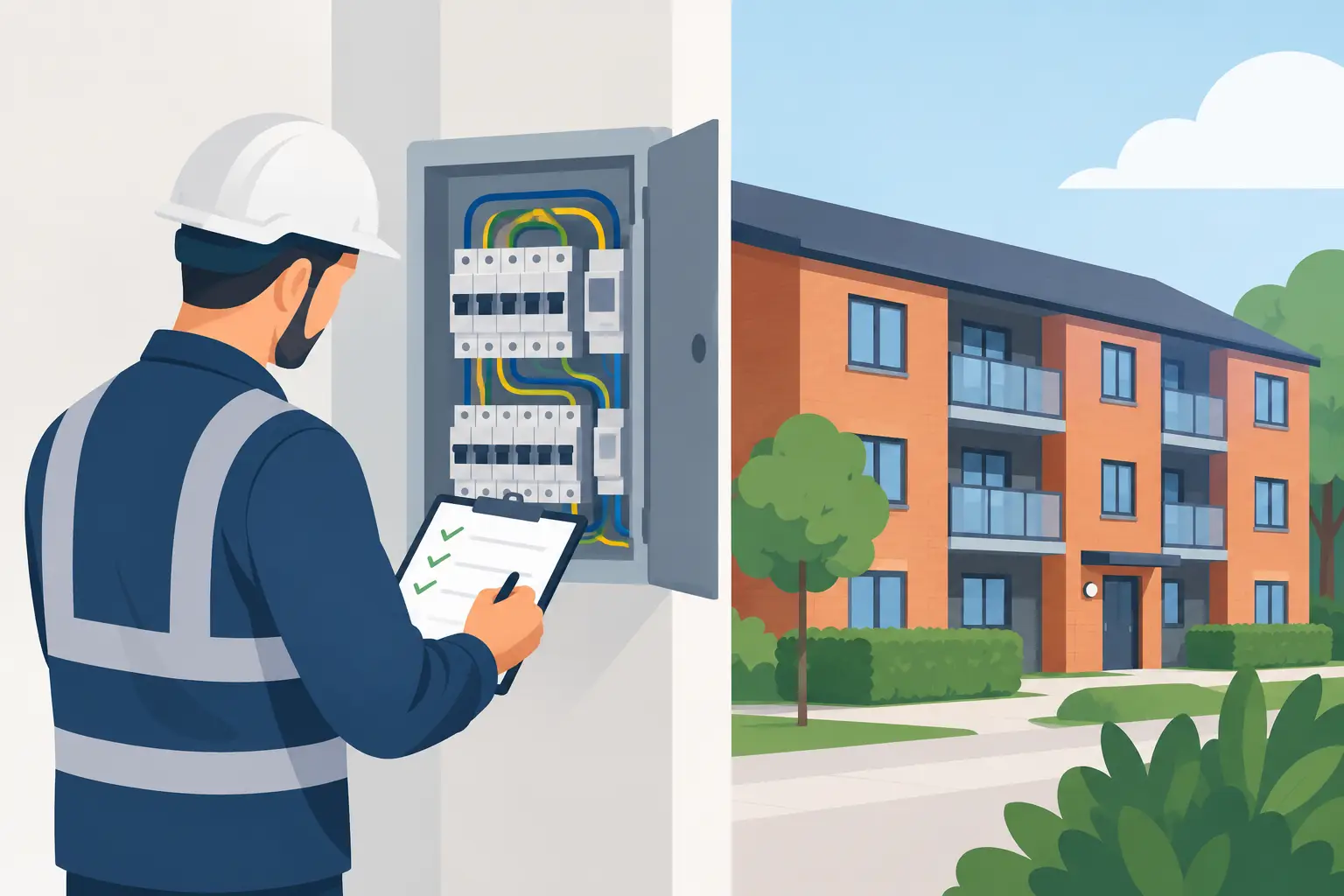
A missed inspection date can quickly become more than an administrative issue. For social housing providers, electrical safety affects residents, property teams, planned maintenance budgets and the ability to demonstrate that homes are being managed responsibly. Reliable social housing electrical compliance services bring inspections, certification, remedial works and responsive support into one clear, accountable programme.
Electrical compliance is not simply about producing a certificate. It is about understanding the condition of each installation, prioritising risk, communicating clearly with residents and completing the necessary work to a recognised standard. This is particularly important across occupied homes, where access, vulnerable residents and ageing electrical systems can all affect how work needs to be planned.
What Electrical Compliance Means in Social Housing
Electrical compliance starts with a competent assessment of the fixed electrical installation. An Electrical Installation Condition Report, commonly known as an EICR, examines items such as consumer units, circuits, earthing arrangements, sockets, switches and fixed wiring. The purpose is to identify deterioration, damage, overloading, unsafe alterations or other conditions that could create a risk.
For housing associations, local authorities and managing agents, the report is a valuable record of the property’s electrical condition at a particular point in time. It also helps create a practical plan for any remedial work. The most useful compliance service does not stop at identifying faults. It provides clear coding, sensible priorities, a defined scope of work and the certification needed once repairs or upgrades are complete.
Requirements and inspection intervals can differ according to the type of property, tenancy arrangements, organisational policy and applicable regulations. A well-managed programme should therefore be based on current legal duties, recognised electrical standards and the actual condition of the housing stock rather than a one-size-fits-all approach.
Why EICRs Need More Than a Tick-Box Approach
An EICR can identify immediate danger, potentially hazardous conditions and issues that need improvement. However, the real value lies in how the findings are handled. A report that sits unresolved does not reduce risk for residents or protect the provider when compliance records are reviewed.
Properties often have a varied history. One home may have modern wiring and a recent consumer unit, while the next may contain ageing accessories, undocumented alterations or signs of repeated circuit overloading. Common problems can include damaged sockets, missing protective devices, poor earthing, overloaded circuits and unsuitable work carried out by previous occupants or contractors.
A capable electrical contractor will explain the findings in plain language and separate urgent safety matters from planned improvements. This enables property teams to direct resources where they are needed most, while keeping a clear audit trail of inspections, quotations, authorisations, completed works and certificates.
Social Housing Electrical Compliance Services for Occupied Homes
Working in residents’ homes requires more than technical ability. Appointments must be communicated properly, electricians need to work respectfully in lived-in spaces, and any disruption should be kept to a minimum. The same applies when access is difficult or when a resident needs additional support to understand what is happening in their home.
A planned visit should confirm the scope of work before attendance wherever possible. If a fault requires the electricity supply to be isolated, the resident should understand why, how long this may take and what will happen next. For larger remedial works, such as a consumer unit replacement or partial rewire, good planning can reduce repeat visits and avoid leaving a home without essential facilities unnecessarily.
There is a balance to strike. Fast completion matters where safety is concerned, but rushing inspection or repair work can lead to poor records, missed defects and avoidable return visits. A provider needs a contractor that can respond promptly without compromising testing procedures, workmanship or resident communication.
From Inspection to Remedial Work
The most efficient compliance programmes use one suitably qualified contractor for inspection, remedial works and certification. This avoids delays caused by handing reports between separate companies and reduces the risk of differing interpretations of the original findings.
Following an EICR, remedial work may be minor, such as replacing damaged accessories or correcting loose connections. In other cases, it may involve upgrading a consumer unit, improving earthing and bonding, installing suitable protective devices or rewiring sections of a property. Each job should be tested on completion, with the correct documentation supplied for the provider’s records.
This joined-up approach is especially valuable for high-volume housing portfolios. It helps teams monitor outstanding actions, identify repeated issues across particular property types and make better decisions about planned investment.
Building a Manageable Compliance Programme
A workable compliance programme needs accurate property data, realistic scheduling and clear ownership at every stage. It should be able to show which homes are due for inspection, which appointments have been completed, where access has not been gained and which remedials remain outstanding.
Four practical elements make a major difference:
- A current property register with previous EICRs, installation dates and known electrical concerns.
- A risk-based process for dealing with urgent observations and tracking remedial completion.
- Clear resident contact arrangements, including appointment reminders and follow-up for no-access visits.
- Secure, organised certification that can be retrieved quickly for internal reviews, residents or regulators.
No-access properties deserve particular attention. Repeated missed appointments can leave a provider with an expired report and an unknown level of risk. A sensible process combines clear communication, flexible appointment options where possible and escalation procedures that reflect the seriousness of the situation.
It is also worth reviewing patterns in the data. If several homes of a similar age show deteriorated wiring, overloaded circuits or obsolete consumer units, a planned upgrade programme may offer better value and less disruption than reacting to individual failures one property at a time.
Emergency Faults and Compliance Are Closely Connected
Compliance work is planned, but electrical faults do not always wait for a scheduled visit. Loss of power, burning smells, damaged equipment, repeated tripping or signs of overheating need a swift response from a qualified electrician. Emergency attendance can make a home safe, identify the likely cause and determine whether further repair or inspection is required.
Not every tripping circuit indicates a fault in the fixed installation. It may be linked to an appliance, a damaged extension lead or an overloaded socket. Even so, it should be investigated properly rather than repeatedly resetting the circuit breaker. Where an issue is connected to the installation, the repair and any follow-up certification should be integrated into the property’s wider compliance record.
For social housing providers, this link between planned compliance and emergency support is important. One contractor who understands the property history can provide more informed advice, reduce duplicated diagnostics and help prevent temporary repairs becoming long-term unresolved issues.
Choosing the Right Electrical Contractor
The lowest quotation is not always the lowest overall cost. A contractor may appear competitive at the inspection stage but create delays if they cannot deliver remedial works promptly, provide complete certification or communicate effectively with residents and housing officers.
Look for a qualified, insured team with relevant accreditations, experience of domestic electrical installations and the capacity to manage both planned and reactive work. Reporting should be clear enough for property managers to act on without needing to interpret technical terminology, while still giving the detail required for compliance records.
Local coverage also has practical value. For providers across Nottingham, Tamworth and the wider Midlands, a nearby team can support planned testing programmes while remaining available for urgent faults. SDT Electrical Services Ltd combines EICRs, remedial work, rewiring and 24/7 emergency electrical assistance, helping housing teams use one dependable point of contact for routine and urgent electrical requirements.
A safe home depends on the details that residents may never see: correctly tested circuits, clear records, prompt repairs and electricians who treat every visit with care. The right compliance partner helps turn those details into a programme that protects people, supports property teams and keeps standards where they need to be.