
A void property can look ready to let long before it is electrically safe to hand over. Social housing void electrical inspections give housing providers a clear, documented view of the installation’s condition between tenancies, helping to protect incoming residents, meet internal standards and avoid avoidable repairs after move-in.
For teams managing multiple properties, the challenge is rarely simply arranging an electrician. It is coordinating access, inspections, remedial work, certification and handover without allowing an empty home to sit vacant for longer than necessary. A planned, consistent electrical process makes that work more predictable.
What is included in a void electrical inspection?
A void electrical inspection assesses the fixed electrical installation after a tenant leaves and before a new tenancy begins. The extent of work should reflect the property’s history, the age and condition of the installation, previous inspection records, planned refurbishment work and the housing provider’s void standard.
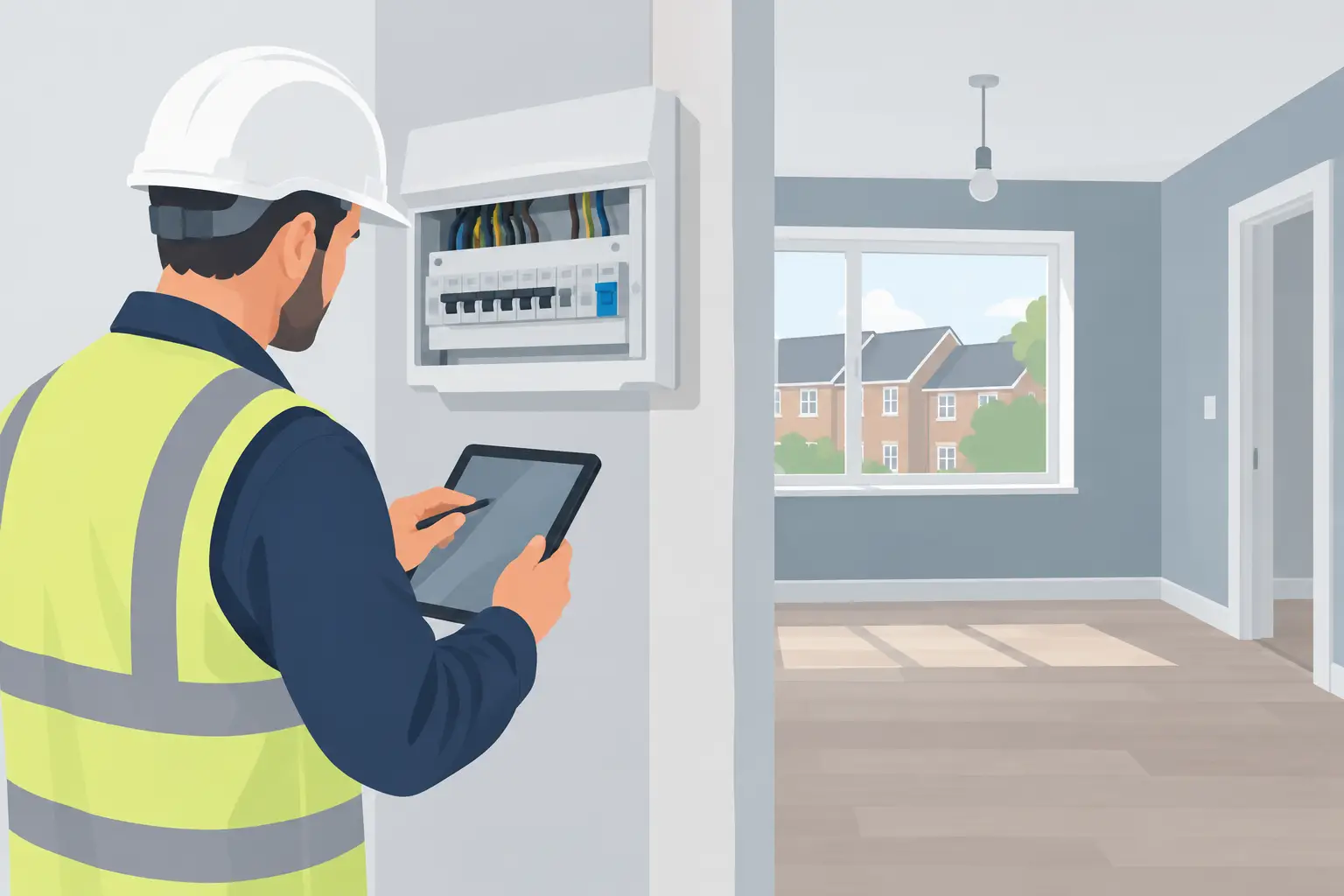
In many cases, this involves an Electrical Installation Condition Report, commonly known as an EICR. This is a formal inspection and test of the installation, rather than a quick visual check. A qualified electrician examines the consumer unit, circuits, earthing and bonding arrangements, protective devices, socket outlets, switches, light fittings and accessible wiring. Testing is used to identify faults that cannot be seen from the surface.
The inspection may also identify changes made by previous occupants, such as unsuitable alterations to wiring, damaged accessories or unauthorised connections. Empty properties can reveal issues that were hidden by furniture or belongings during an occupied visit.
An EICR is not the same as a portable appliance test. Where white goods or other appliances are supplied with the property, these may need separate checks under the provider’s own procedures. Likewise, fire detection, emergency lighting in communal areas, door entry systems and electric heating may require specialist inspection or functional testing alongside the main electrical installation.
Why void inspections need more than a visual check
A visual inspection has a place during an initial void survey, particularly for spotting obvious damage, missing covers, exposed cables or signs of overheating. It cannot, however, confirm that circuits disconnect safely under fault conditions, that earthing arrangements are effective or that insulation resistance remains satisfactory.
This distinction matters in social housing. A property may have working lights and sockets while still containing a potentially dangerous defect. Loose connections, deteriorated cables and unsuitable protective devices do not always produce an immediate failure. Testing allows an electrician to assess the condition behind the accessories and within the consumer unit.
A thorough inspection also creates a reliable starting point for the next tenancy. Rather than relying on assumptions or incomplete historic records, the housing provider has clear findings, observations and recommendations to act on. That can be particularly valuable where properties have experienced repeated repairs, damp, vandalism, unauthorised alterations or long void periods.
Understanding EICR observations and remedial priorities
An EICR records observations using classification codes. The codes help a housing provider understand the urgency of the finding, but the report should always be read alongside the electrician’s explanation and the condition of the property.
A C1 observation indicates danger is present and immediate action is required. A C2 observation identifies a potentially dangerous condition that needs urgent remedial work. FI means further investigation is required without delay, as the inspector cannot confirm safety until the issue has been explored. These outcomes mean the installation cannot simply be signed off as satisfactory.
A C3 observation is an improvement recommendation. It does not necessarily mean the installation is unsafe, but it may be sensible to complete the work while the property is empty. Whether to proceed can depend on cost, the remaining life of the installation, planned refurbishment works and the provider’s asset management strategy.
The key point is that a satisfactory report should not be treated as a guarantee that no work will ever be needed. It confirms the installation’s condition at the time of inspection, within the limitations stated on the report. Good void management uses that information to make proportionate decisions, not to postpone known issues indefinitely.
A practical process for social housing void electrical inspections
The most efficient void programmes begin before the electrician arrives. The provider should supply property details, access arrangements, known repair history and the previous EICR where available. This helps the electrician plan the correct scope and identify whether testing is due, whether previous observations remain outstanding and whether specialist systems are present.
During the visit, the electrician should safely isolate and test circuits as required, record limitations clearly and raise defects in a format that the voids team can act on. Clear reporting matters. A vague note about a faulty socket can slow down approval; a precise description of the location, defect, risk and recommended work enables a quicker repair decision.
Where remedial work is required, it is usually more efficient to obtain a defined schedule of works promptly and complete it before decorating, flooring or kitchen installation begins. Electrical repairs carried out too late can mean lifting new finishes, delaying other trades or returning after a resident has moved in.
Once the work is complete, the provider should receive the relevant certification and retain it with the property compliance records. If a new consumer unit, circuit or other notifiable work has been installed, the appropriate installation documentation should also be provided. A final handover check can confirm that accessories are secure, circuits are labelled and no outstanding electrical actions remain.
Balancing speed, cost and safety between tenancies
Reducing void turnaround time is a legitimate operational priority, but speed must not reduce the standard of electrical assessment. Skipping proper testing may appear to save time at the start of a void, only to create an emergency repair, complaint or safety concern after the new resident moves in.
There is also a balance to strike on upgrades. Rewiring every older property during a routine void is not always necessary. An installation that meets the required safety standard and tests satisfactorily may be suitable to retain, particularly where major refurbishment is not planned. Conversely, a property with recurring faults, dated wiring, limited circuits or a consumer unit that no longer supports the required level of protection may justify a more substantial upgrade while vacant.
The right approach depends on the report findings, the property type, anticipated tenancy needs and planned investment. A qualified electrician can advise whether targeted repairs offer a sensible solution or whether a partial or full rewire will provide better long-term value.
Common void issues that delay reletting
Some defects occur repeatedly across void properties. Damaged socket outlets and switches, missing blanks at consumer units, loose light fittings and failed extractor fans are common examples. So are signs of overheating at accessories, poor circuit identification and inadequate earthing or bonding.
Vacant homes can also suffer damage caused by water ingress, vandalism or unauthorised entry. If there has been a leak, electrical testing should not be limited to the visibly affected area. Moisture can affect connections, fittings and concealed wiring routes, and the extent of inspection should reflect the circumstances.
Alterations by former tenants require particular care. DIY extensions, altered lighting, disconnected equipment and outdoor supplies may not comply with current standards or may have been installed without suitable protection. These should be assessed rather than assumed safe because they appear to work.
Choosing an electrical contractor for void work
A social housing electrical contractor needs more than technical competence. They must be able to work to agreed appointment processes, provide consistent reporting, communicate remedial priorities clearly and respond when an issue threatens a handover date.
Ask whether the contractor uses qualified, insured electricians, provides EICRs and remedial certification, and can manage both planned void work and urgent electrical faults. Capacity matters too. A contractor with an established team can help maintain continuity when multiple properties require inspection or when follow-on works are identified.
For housing providers across Tamworth, Nottingham and the wider Midlands, SDT Electrical Services Ltd provides inspection, remedial and emergency electrical support through a qualified team focused on safe, compliant delivery. The aim is straightforward: give voids teams the information and workmanship needed to let homes with confidence.
A well-managed void inspection is not an administrative hurdle at the end of a tenancy. It is the point at which a property’s electrical condition is properly understood, risks are dealt with and the next resident is given a safer start in their new home.