
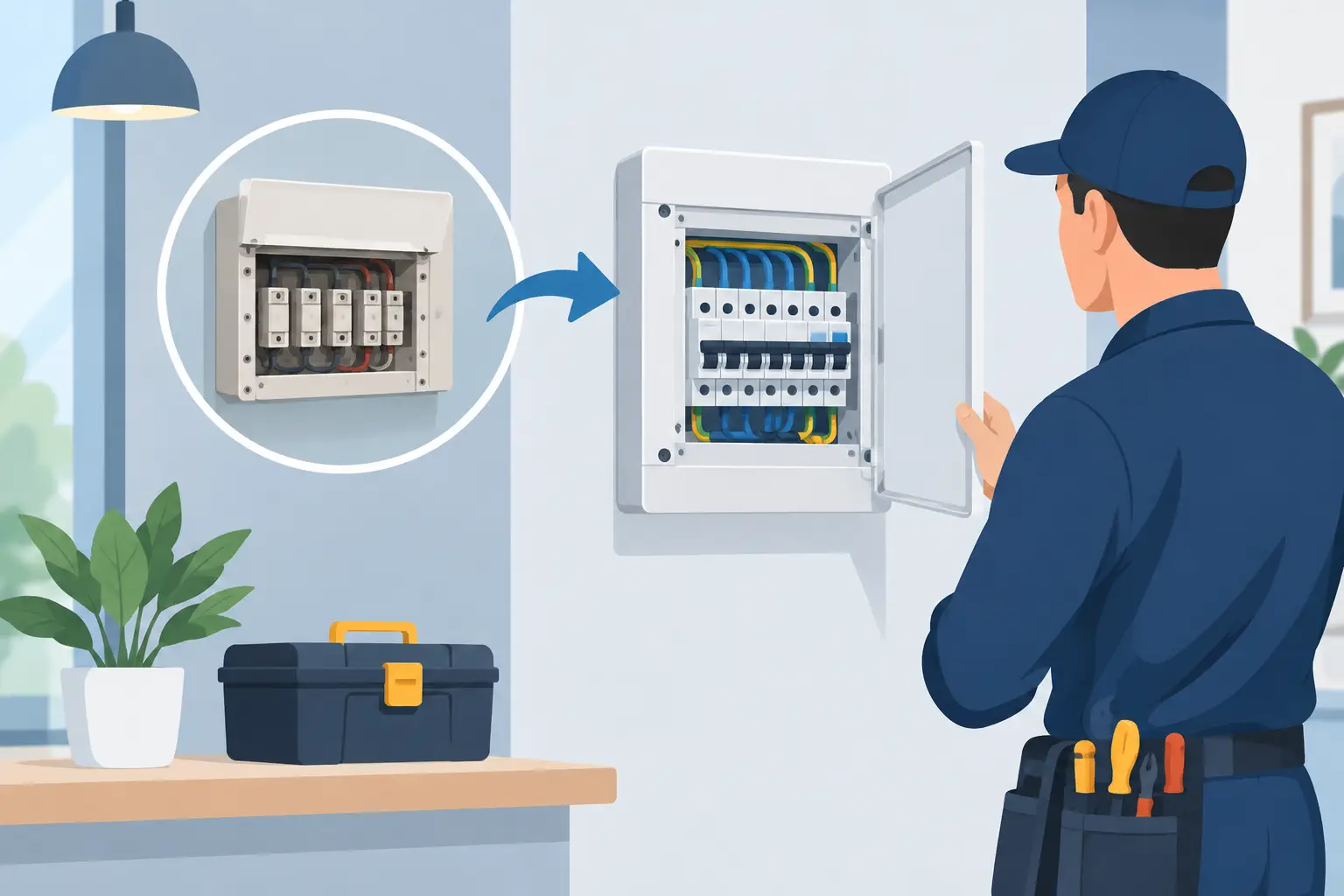
A fuse board is easy to overlook until a circuit keeps tripping, a report identifies a safety concern, or you need to power new equipment. A professional fuse board replacement is not simply an upgrade for convenience. It is an opportunity to improve protection, assess the condition of the wider installation and make sure your property is equipped for the way electricity is actually used.
Older fuse boards were designed for a different level of demand. Modern homes may have induction hobs, electric showers, home offices, heat pumps, solar panels and EV chargers. Commercial and industrial premises can add machinery, IT equipment or new production areas over time. The board at the centre of the installation must be suitable for those loads and provide appropriate protection if something goes wrong.
What a fuse board does
Often called a consumer unit, a fuse board distributes electricity around a property through individual circuits. These may supply lighting, sockets, cooking appliances, showers, fixed equipment or outbuildings. It also contains protective devices designed to disconnect a circuit when it detects a fault, overload or potentially dangerous imbalance in the electrical supply.
A modern consumer unit commonly uses circuit breakers and residual current device protection, often referred to as RCD protection. Some installations may benefit from RCBOs, which provide individual protection for each circuit, or surge protection devices that help protect sensitive electronic equipment from voltage spikes.
The right arrangement depends on the property, the existing wiring, the electrical load and the intended use of each circuit. Replacing a board without considering these details can leave an installation poorly planned. This is why an initial inspection matters as much as the new unit itself.
Signs a fuse board replacement may be needed
Age alone does not automatically mean a consumer unit is unsafe. However, some older boards lack the protective features expected in modern installations. Rewireable fuses, exposed live parts, damage to the enclosure, missing circuit labels and no RCD protection are all reasons to arrange an assessment.
Frequent tripping also deserves attention. A circuit breaker that trips is doing its job, but repeated trips should not be ignored or continually reset. The cause could be a faulty appliance, a damaged cable, moisture ingress, an overloaded circuit or an underlying fault elsewhere in the installation. A qualified electrician should identify the cause before deciding whether a new board is necessary.
Other situations that often prompt a replacement include a major rewire, an extension, a kitchen refurbishment, solar panel installation, an EV charger installation or the addition of high-load equipment. Landlords and property managers may also receive observations through an Electrical Installation Condition Report, or EICR, that indicate remedial work is required.
For commercial premises, a fuse board upgrade can be part of planned maintenance rather than a reaction to failure. This can reduce disruption, support changes in occupancy or equipment, and help maintain a safe, compliant workplace.
Why replacing a fuse board is not a DIY job
A consumer unit is connected to the incoming electrical supply and is one of the most safety-critical parts of an installation. Work in this area carries serious risk if it is not carried out correctly. It must be designed, installed, tested and certified by a competent electrician.
There is also a wider point: fitting a new unit does not repair faulty wiring hidden in walls, ceilings or floors. Before and during the work, electricians test circuits to establish whether the existing installation is suitable to be connected to new protective devices. Old cables, poor connections or circuits with inadequate insulation resistance may need repair before the installation can be safely energised.
A responsible contractor will explain any limitations clearly. In some properties, a straightforward replacement is possible. In others, the testing may reveal that rewiring or targeted remedial work is the safer and more cost-effective route. Honest advice at this stage prevents a quick fix becoming a recurring problem.
What happens during a fuse board replacement?
The process begins with a discussion about the property, your electrical usage and any concerns you have noticed. For a home, that might include planned EV charging, solar generation or a new extension. For a business, it could involve machinery, changes to layout, additional workstations or critical equipment that cannot be without power for long.
The electrician then assesses the existing installation and plans the new consumer unit, circuit protection and any required upgrades. Circuit schedules should be clear and accurate, so occupants and facilities teams can identify what each circuit supplies.
On installation day, the power will normally need to be isolated. The length of the interruption varies according to the condition and complexity of the installation, but it is sensible to plan for a period without lighting, sockets and internet access. Businesses should arrange the work around operating hours where possible and identify any equipment that needs controlled shutdown.
Once the unit has been fitted, the electrician carries out electrical testing to verify that circuits, protective devices and earthing arrangements operate correctly. The completed work should be certified, with the relevant documentation supplied for your records. Keep this paperwork safe – it can be useful for landlords, insurers, future property sales and ongoing maintenance.
Choosing the right protection for the property
Not every fuse board replacement is identical. A small flat, a family home with an EV charger, a rental portfolio and a workshop all have different demands. The goal is not to install the largest board or add features that are not required. It is to provide a safe, properly designed installation with capacity that makes sense for foreseeable changes.
RCD and RCBO arrangements are an example of this. Separate RCD-protected groups can be suitable in some settings, while RCBOs may reduce the chance of one fault taking out several circuits. That can be particularly useful where continuity matters, such as for refrigeration, security systems, office equipment or essential lighting. The best option depends on the circuit design and budget, not a one-size-fits-all rule.
Surge protection may also be considered, especially where a property contains valuable electronics, controls, solar equipment or EV charging infrastructure. An electrician can advise whether it is appropriate based on the installation and current requirements.
Cost, disruption and the value of a proper survey
The cost of replacing a fuse board varies because properties vary. The number of circuits, the type of protective devices, the condition of existing wiring, access, required remedial work and whether the supply needs attention all affect the quotation.
Be cautious of quotes that treat every property as identical. A low headline price may not include testing, certification, upgrades to earthing and bonding, or repairs identified once the work begins. A clear survey and written scope give you a more reliable basis for comparison.
For landlords, commercial owners and facilities managers, planned replacement can offer better value than waiting for an urgent fault. It allows time to notify occupants, protect sensitive equipment, coordinate access and complete any associated repairs properly. Emergency assistance remains essential when safety is at risk, but planned work usually provides more control over timing and cost.
Questions to ask before booking
Ask whether the electrician will inspect and test the existing circuits, what certification will be provided, and whether the quotation includes all required materials and protective devices. It is also worth asking how any faults found during testing will be handled, particularly in older properties where the condition of wiring is uncertain.
For business and industrial sites, discuss downtime, isolation procedures and the need to keep particular systems operational. A capable electrical contractor will help plan the work around practical site requirements rather than treating the consumer unit as an isolated task.
SDT Electrical Services provides fuse board assessments and replacement work across the Midlands, backed by qualified electricians, testing and certification. Whether you are responding to EICR observations, modernising an older home or planning new electrical equipment, a clear inspection is the right place to start. A free, no-obligation quote can turn uncertainty about your electrical installation into a safe, practical plan.