
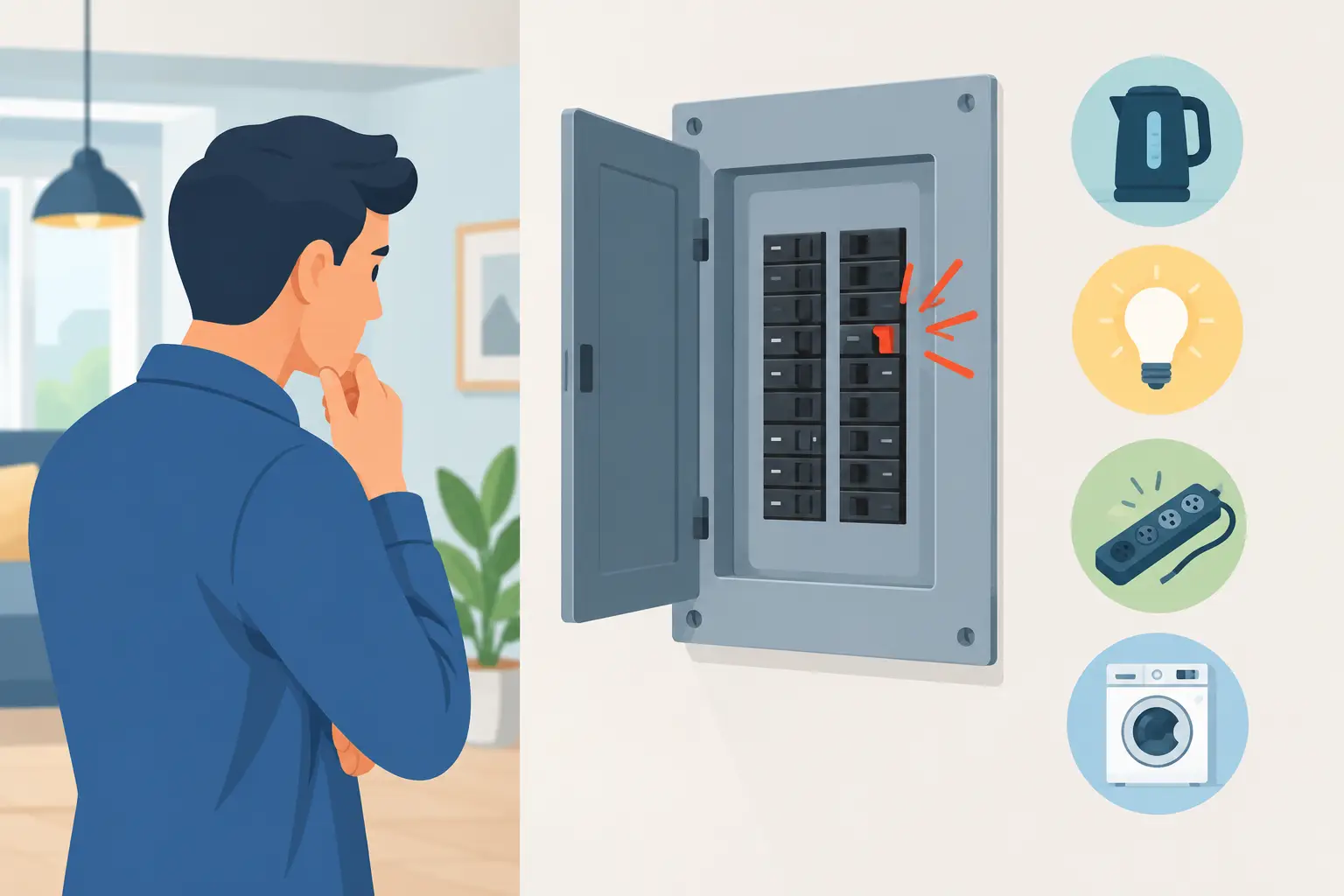
A sudden loss of power is more than an inconvenience when you are cooking dinner, working from home or managing a rental property. If your fuse box keeps tripping, it is usually doing exactly what it was designed to do: disconnecting the electricity when it detects a fault or potential danger. The priority is not simply getting the power back on. It is finding out why the protective device operated in the first place.
In many properties, the term “fuse box” refers to a modern consumer unit containing circuit breakers and RCDs. Older properties may still have rewireable fuses or cartridge fuses. Whatever is fitted, repeated tripping should be treated as a warning sign, particularly if it happens as soon as you reset the switch.
Why a fuse box keeps tripping
A circuit breaker trips when a circuit is drawing more current than it is designed to carry, or when there is a fault on that circuit. An RCD, or residual current device, trips when it detects electricity leaking to earth. This protection can help reduce the risk of electric shock and fire.
The switch that has moved to the off position offers a useful clue. A single circuit breaker may point to a problem with a particular area, such as sockets upstairs, the kitchen ring circuit or lighting. If the main RCD has tripped, the fault may be linked to any circuit protected by it. A qualified electrician can test the installation to identify the cause accurately rather than relying on trial and error.
An overloaded circuit
Overloading is common in older homes, offices and workshops where electrical demand has grown over time. Plugging several high-load appliances into one circuit can cause its breaker to operate. Kettles, heaters, tumble dryers, washing machines, air fryers and power tools all use significant current, especially when used together.
An overload may be temporary, but it can also reveal that the property needs additional circuits or a more suitable electrical upgrade. Extension leads and multi-plug adaptors can appear to solve the immediate problem, yet they should not become a permanent answer to insufficient socket capacity.
A faulty appliance or lead
If the power trips when you use a particular appliance, stop using it and unplug it. Damaged flexes, moisture inside an appliance, worn heating elements and internal component failures can all cause a breaker or RCD to trip.
This is particularly common with appliances that produce heat or use water, including kettles, washing machines, dishwashers, ovens and outdoor equipment. Do not continue resetting the consumer unit just to keep a suspect appliance running. A fault can worsen and may create a risk of electric shock, overheating or fire.
Damaged wiring or a loose connection
Electrical cables can deteriorate through age, accidental damage, DIY work, rodent activity or repeated strain. Loose connections may overheat, while damaged insulation can allow current to leak to earth. These faults are not always visible at the consumer unit, and they can occur behind walls, under floors or within accessories such as sockets and light fittings.
Warning signs include a burning smell, buzzing, discolouration around a socket, flickering lights or a breaker that trips without any appliance being used. Turn off the affected circuit where possible and arrange professional assistance promptly.
Water and outdoor electrical faults
Moisture is a frequent cause of RCD tripping. It may affect external sockets, garden lighting, garage supplies, bathroom equipment, boiler controls or cables exposed to poor weather. Condensation can also cause intermittent faults, meaning the circuit may appear to work normally until conditions change.
Outdoor equipment should be installed and maintained correctly for its environment. If an RCD trips after heavy rain or when external lighting is switched on, avoid using the circuit until it has been inspected.
What to do when your fuse box keeps tripping
Start by staying calm and avoiding shortcuts. If you smell burning, see smoke, notice scorching or hear crackling from the consumer unit, do not touch it. Move people away from the area where safe to do so and seek urgent help from a qualified emergency electrician. If there is an immediate danger, contact the emergency services.
Where there are no signs of damage or overheating, you can carry out a basic check safely. First, identify which switch has tripped. Unplug appliances connected to the affected circuit and turn off fixed items on that circuit where accessible, such as lights or an extractor fan. Reset the breaker or RCD once.
If it remains on, reconnect appliances one at a time. When the device trips again, the last item connected may be the cause. Leave it unplugged and arrange repair or replacement as appropriate. This process can be useful, but it is not a substitute for electrical testing, especially if the issue returns with no appliance connected.
If the switch will not reset, immediately trips again, or you cannot identify what is on the affected circuit, leave it off. Repeatedly forcing a breaker or RCD back on can mask a serious fault and may damage equipment. Never replace a fuse with one of a higher rating or interfere with the wiring inside a consumer unit.
When the problem needs an electrician
Some causes are straightforward, such as a failed kettle or an overloaded extension lead. Others require specialist test equipment and a methodical inspection. An electrician can carry out insulation resistance testing, continuity tests and RCD testing to locate faults without guesswork. They can also check whether the protective devices are correctly rated and whether the installation remains suitable for how the building is used.
Professional investigation is advisable when tripping is frequent, affects more than one circuit, happens overnight, follows building work, or involves a consumer unit that is old or lacks modern protection. It is also the right step for landlords and property managers, who have legal responsibilities to keep electrical installations safe and maintain a valid Electrical Installation Condition Report where required.
Commercial and industrial premises need particular care. A tripping circuit could affect IT systems, emergency lighting, refrigeration, machinery or production equipment. The cause may be an appliance fault, but it could also involve equipment start-up current, damaged cabling or unsuitable circuit design. Isolating the right equipment and arranging a prompt inspection can limit downtime without compromising safety.
Could an old consumer unit be the issue?
An older fuse box is not automatically unsafe, but age, condition and lack of modern protective devices matter. Rewireable fuse boards and some older consumer units may not provide the level of RCD protection expected in a modern installation. They can also make fault-finding and safe isolation more difficult.
A replacement consumer unit may be recommended if testing identifies defects, if the existing board is damaged, or if the installation is being significantly altered for a rewire, electric vehicle charger, solar panels or additional circuits. However, changing the board alone will not cure faulty wiring elsewhere in the property. The installation should be assessed as a whole before any upgrade is specified.
An EICR provides a clear picture of the condition of fixed wiring, accessories, earthing and protective devices. It can be especially valuable before purchasing a property, after repeated electrical faults, or when planning improvements that increase electrical demand.
Preventing further trips
Good electrical habits reduce avoidable problems. Use high-load appliances directly from suitable wall sockets rather than overloading extension leads. Check plugs and leads for damage, keep electrical equipment dry and use outdoor sockets and fittings designed for external conditions.
If your household has added an EV charger, home office equipment, electric heating, solar technology or a new kitchen, consider whether the electrical installation has kept pace. What was adequate ten years ago may no longer suit the way the property operates now.
For homeowners, landlords and businesses across Tamworth, Nottingham and the wider Midlands, SDT Electrical Services Ltd can investigate recurring trips, carry out safety inspections and provide practical recommendations for repairs or upgrades. A qualified electrician can help restore power safely while addressing the cause, not just the symptom.
A consumer unit that trips once may have prevented a problem. One that keeps tripping is asking for attention. Leave a circuit switched off when it will not reset, protect the people using the property, and have the fault properly diagnosed before normal use resumes.