
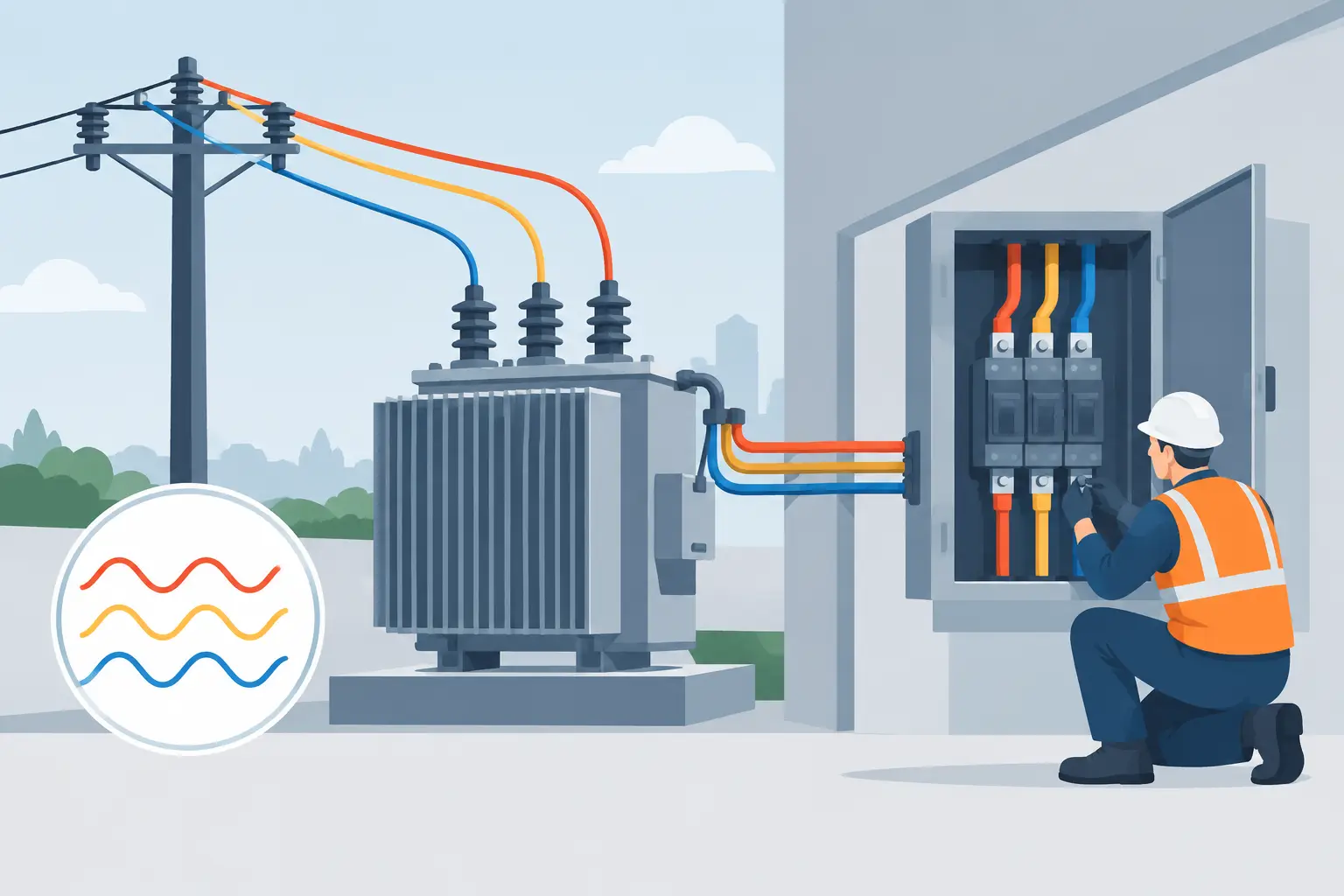
A single piece of equipment can expose the limits of an existing electrical supply. A new commercial oven, vehicle lift, large EV charging provision, workshop compressor or production machine may need more power than a standard single-phase supply can provide safely. A three phase power installation is often the right answer, but it is not simply a matter of fitting a different socket or distribution board.
The work must start with the equipment, the building’s available supply capacity and the way electricity will be used day to day. A properly designed installation gives a business or property the capacity it needs without creating avoidable safety, reliability or compliance problems.
When is a three phase power installation needed?
Most homes are served by a single-phase supply, which is suitable for normal domestic lighting, sockets and appliances. Three-phase electricity provides three live conductors operating in sequence. This allows larger loads to be shared more effectively and enables equipment designed for a 400V three-phase supply to operate as intended.
It is commonly required in industrial premises, workshops, commercial kitchens, retail units, farms and larger multi-use buildings. It can also be relevant to domestic properties with unusually high demand, such as substantial EV charging requirements, heat pumps, outbuildings or renewable-energy equipment. However, high electricity use alone does not automatically mean three phase is necessary. Load calculations and the characteristics of the proposed equipment should guide the decision.
Signs that an upgrade may be worth investigating include frequent nuisance tripping when machinery starts, plans to install three-phase machinery, insufficient capacity for new equipment, or an existing electrical installation that has grown through several uncoordinated alterations. Where a tenant or contractor has specified a three-phase connection, the required voltage, current, starting arrangement and protective requirements should be confirmed before work is priced.
The first step: assess the supply and the load
A reliable project begins with a site survey. An electrician will inspect the existing intake position, meter arrangement, earthing system, main switchgear, distribution equipment and cabling routes. They will also consider access, containment, fire stopping and whether the building’s current arrangement is suitable for future maintenance.
The key question is not simply how much power a machine states on its rating plate. The assessment should establish the maximum demand of the whole installation, allowing for diversity where appropriate. Electric motors can draw significantly more current during starting, while equipment such as welders, compressors and commercial catering appliances may have specific supply requirements.
For a three-phase installation, loads should be distributed as evenly as practicable across the phases. Good phase balancing helps reduce unnecessary loading on one conductor and can improve the performance of the installation. It also matters when a property retains single-phase circuits, because these need to be allocated carefully alongside new three-phase loads.
A qualified electrician can identify whether the current supply has spare capacity or whether the Distribution Network Operator, often called the DNO, needs to alter the incoming service. The DNO controls the network supply up to the point of connection. Your electrical contractor can design and install the customer-side works, but cannot independently upgrade the network service or meter.
Supply upgrades may involve more than electrical wiring
Where three phase is not already available, the DNO may need to provide a new service cable, alter the cut-out or arrange changes to the meter installation through the relevant supplier. Timescales, costs and practical constraints vary by site. A remote meter position, restricted excavation route, shared access or listed-building considerations can all affect the programme.
This is why it is sensible to establish supply feasibility early, particularly before ordering expensive machinery or committing to a fit-out date. A capable electrical contractor can help gather the technical information needed for the application and plan the installation around the network provider’s work.
What does the installation work include?
Once the design and supply arrangements are agreed, the electrician can install the appropriate distribution equipment and final circuits. This may include a three-phase distribution board, main switchgear, isolators close to machinery, suitably rated cables, containment and clearly labelled protective devices.
The exact cable type and installation method depend on the environment. Cables running through a clean office ceiling have different protection needs from cables serving a workshop, external plant area or food-production setting. Mechanical damage, heat, moisture, chemical exposure and future access must all be considered. For industrial machinery, local isolation and emergency stopping arrangements may also form part of the wider installation plan.
Protective devices must be selected and coordinated correctly. This involves more than choosing a breaker with a high enough current rating. Fault protection, cable capacity, prospective fault current, disconnection times, RCD requirements and discrimination with upstream devices all need consideration. Poor coordination can mean a minor fault shuts down an entire premises rather than only the affected circuit.
Clear labelling is equally valuable. Distribution boards, isolators and circuits should identify their purpose, phases and source of supply. This supports safer maintenance, faster fault finding and less disruption when future work is required.
Compliance, testing and certification
Three-phase electrical work must be designed, installed and verified in accordance with BS 7671, commonly known as the IET Wiring Regulations. Depending on the premises and scope of work, other duties may apply, including workplace health and safety requirements, building regulations and landlord responsibilities.
Testing is not a final formality. It verifies that the completed installation is safe and that protective measures work as designed. Typical testing includes continuity, insulation resistance, polarity, earth fault loop impedance, RCD operation and functional checks. Phase sequence testing is particularly relevant for three-phase motors, as an incorrect phase rotation can cause equipment to run in the wrong direction.
On completion, the customer should receive the appropriate electrical installation certificate, schedules of inspections and test results. These documents are useful for insurers, facilities records, future alterations and planned maintenance. They also provide a clear baseline for later Electrical Installation Condition Reports.
An EICR is not a substitute for proper design, testing and certification of a new installation. It is an inspection of the condition of an existing installation at a point in time. Both services matter, but they serve different purposes.
Planning around downtime and safety
For occupied commercial and industrial sites, the best installation is one that causes the least practical disruption. This may mean carrying out changeover work outside operating hours, separating work areas, programming shutdowns with equipment suppliers and making temporary arrangements for essential circuits.
Safety controls should be agreed before work starts. Where isolation is needed, circuits must be identified correctly, locked off where required and proven dead by competent electricians. In premises with generators, solar PV or battery storage, alternative sources of supply require particular attention to prevent backfeeds and unsafe assumptions about a circuit being dead.
The value of using one experienced contractor is coordination. The electrician can work with the DNO, meter operator, equipment supplier, building manager and other trades so that cable routes, bases, access panels and final connections are ready in the right order. This reduces the risk of a new machine arriving before its supply is available or being connected to an unsuitable circuit.
Choosing the right contractor
A three-phase project should be carried out by qualified, insured electricians with experience of the type of premises and equipment involved. Ask how the load assessment will be completed, whether the existing supply capacity has been checked, what certification will be issued and how the work will be planned around business operations.
For projects across Tamworth, Nottingham and the wider Midlands, SDT Electrical Services Ltd can provide practical advice on new three-phase supplies, distribution upgrades, machine wiring and the testing needed to put an installation into service safely. A clear survey and no-obligation quotation give you a sound basis for planning before the work begins.
If your next equipment purchase is likely to change how your building uses power, arrange the electrical assessment before delivery dates are fixed. It is the most reliable way to protect your programme, your equipment and the people who use it.