
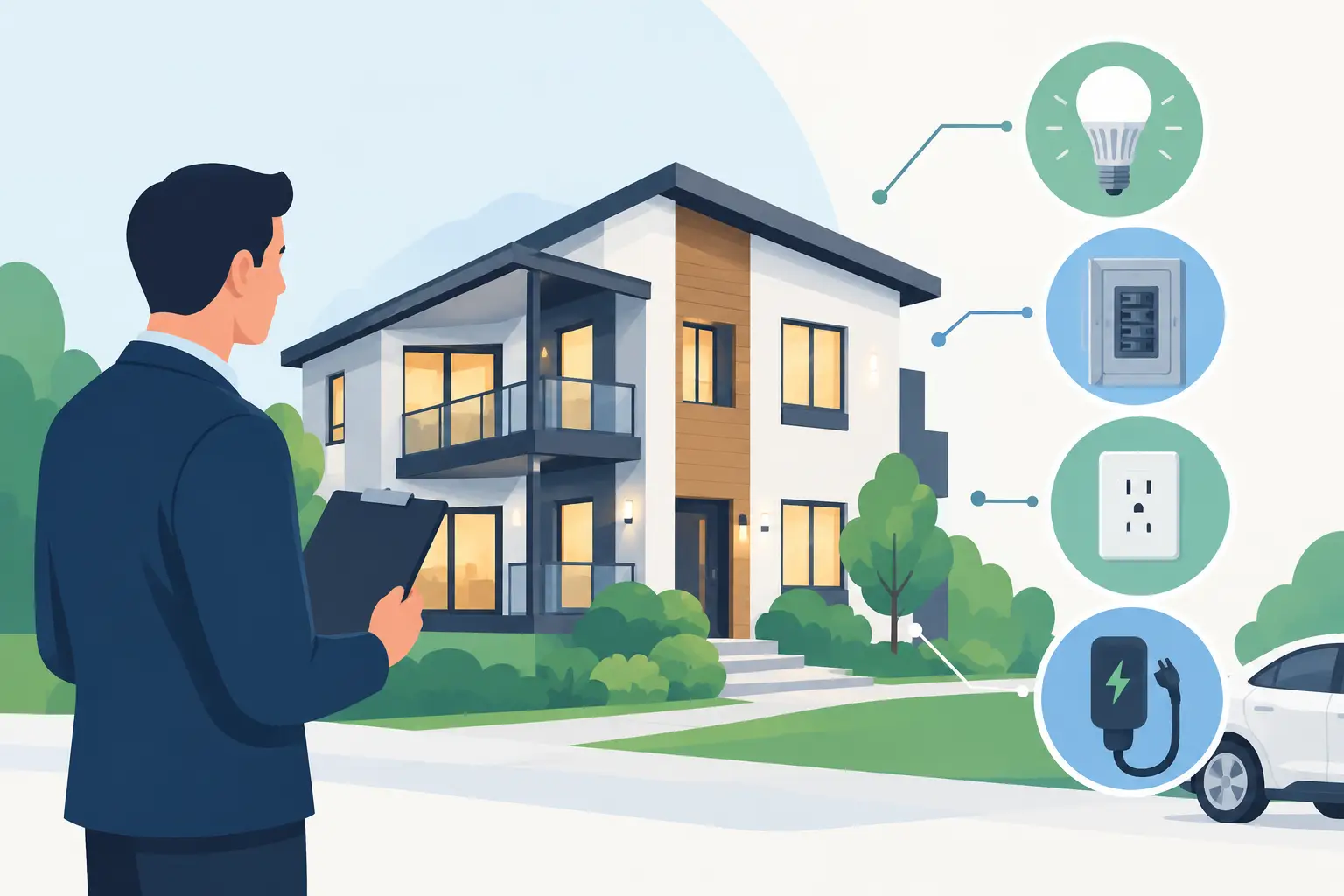
A failed consumer unit, repeated tripping circuit or outdated wiring can quickly turn a routine tenancy into an expensive emergency. The best electrical upgrades for landlords are not always the most visible ones. They are the improvements that reduce safety risks, support compliance, make a property easier to let and prevent avoidable call-outs later.
For landlords, property managers and social housing providers, the right priority depends on the age and condition of the installation, the type of tenants, the property’s energy performance and any planned refurbishment work. A qualified inspection is the sensible starting point, rather than choosing upgrades based on appearance alone.
Start with an EICR and a clear remedial plan
Before commissioning new fittings or technology, establish whether the existing installation is safe. In England, private rented properties require a satisfactory Electrical Installation Condition Report, or EICR, at least every five years, or more frequently where the report recommends it. A new report may also be needed when there is a change of tenancy or after significant electrical work.
An EICR identifies deterioration, defects and non-compliance in the fixed wiring. It can reveal issues such as damaged cables, inadequate earthing, overloaded circuits, unsuitable accessories and older protective devices. These are matters that should be addressed before spending budget on convenience upgrades.
If remedial work is needed, ask for it to be set out clearly. Urgent observations should be dealt with promptly, while advisory improvements can be planned alongside a void period, kitchen replacement or wider refurbishment. This approach helps landlords control costs while keeping safety and legal responsibilities at the forefront.
Upgrade older consumer units and circuit protection
A modern consumer unit is one of the most worthwhile electrical improvements in an older rental property. Older fuse boards may not provide the level of protection expected in a modern home, especially where circuits have been altered over several decades.
Current consumer units can incorporate RCD and RCBO protection, which disconnects power quickly when a fault is detected. RCBOs can offer a particular advantage because a fault on one circuit is less likely to switch off the entire property. If a problem occurs on a lighting circuit, for example, essential sockets and appliances may remain available while the issue is investigated.
This is not an upgrade to treat as a like-for-like box swap. The electrician should assess the condition of the wiring, earthing and bonding arrangements before specifying the new unit. A new consumer unit can expose existing faults that were previously hidden, so it is best planned as part of a properly tested installation rather than a cosmetic improvement.
Consider a partial or full rewire where wiring is ageing
Decorating around old cables does not make them safer. Properties with ageing rubber, lead or fabric-insulated wiring, persistent faults, limited socket provision or extensive unrecorded alterations may need more than minor repairs. In these cases, a partial rewire or full rewire can be the more responsible long-term option.
A full rewire causes disruption, which is the main trade-off. Chasing walls, lifting floors and making good afterwards can be inconvenient in an occupied property. For that reason, void periods and major refurbishment projects are often the best time to complete the work. It also gives landlords the opportunity to reconsider socket locations, kitchen circuits, lighting and data requirements in one planned project.
A partial rewire can be appropriate where only a defined area, such as an extension or new kitchen, requires upgrading. However, it should connect safely with the retained installation. A qualified electrician can advise whether a partial approach genuinely represents value or simply postpones wider work.
Improve lighting for lower running costs and fewer maintenance calls
LED lighting is a simple upgrade with practical benefits. Compared with older halogen and incandescent lamps, quality LED fittings use less electricity and generally last far longer. Communal areas, stairwells, external entrances and kitchens are particularly good places to start because lights in these spaces are often used frequently.
For landlords, integrated LED fittings can reduce the number of lamp changes, but there is a balance to consider. When an integrated fitting eventually fails, the whole fitting may need replacing. In locations where easy, low-cost maintenance is the priority, fittings that accept standard replaceable LED lamps may be a better choice.
Occupancy sensors and photocells can make sense in communal corridors, bin stores and external paths. They prevent lights being left on unnecessarily while improving visibility where tenants arrive home after dark. Correct positioning and settings matter, though. Poorly configured sensors can be frustrating for residents and can lead to needless reports of faults.
Fit reliable smoke and carbon monoxide alarm systems
Fire safety arrangements need to be considered separately from an EICR, but electrical upgrades can strengthen them significantly. Hard-wired, interlinked smoke alarms offer a dependable solution in many rental properties. When one alarm activates, the others sound too, providing earlier warning throughout the home.
The appropriate alarm layout depends on the property type, number of storeys, fuel-burning appliances and local risk assessment. Carbon monoxide alarms should also be considered where required, particularly near fixed combustion appliances. Battery back-up is valuable because the alarms can continue operating during a power cut.
Avoid treating alarms as a fit-and-forget measure. They need regular testing, and tenants should understand what the different alarm signals mean. Clear handover information after installation can prevent confusion and support safer occupation.
Add the capacity for modern living
Tenants now expect more from a property’s electrical installation than a single socket in each room. Home working, streaming equipment, kitchen appliances and charging devices can place greater demand on older circuits. Adding sockets in sensible locations can reduce reliance on multi-way adaptors and extension leads, both of which are commonly associated with overheating and damage when misused.
Kitchen upgrades deserve careful planning. A modern kitchen may need dedicated circuits for ovens, hobs, dishwashers or other high-load appliances. The final design depends on the appliance specification and the existing supply capacity, so this should be reviewed before cabinets and worktops are fitted.
External power can also add value. A weatherproof socket may be useful for gardening equipment or maintenance, provided it is correctly protected and installed for the environment. In flats or houses with shared spaces, landlords should also consider who will control and pay for electricity used in communal areas.
EV charging: valuable where off-street parking exists
An EV charge point can make a rental property more attractive, especially where it has a driveway or allocated parking. It is not automatically the right investment for every landlord. Demand will vary by location, tenant profile and parking arrangements, while leasehold properties may require freeholder consent.
The electrical supply must be assessed before installation. An electrician will check the consumer unit, earthing arrangement, load capacity and cable route, then specify a suitable charge point and protective equipment. Smart charging features can help manage demand and allow users to schedule charging around lower-cost tariffs.
For blocks of flats, shared car parks and commercial-style developments, the planning is more involved. Future capacity, metering arrangements, ownership and access all need to be addressed before installing one-off chargers. A phased design can be more cost-effective than repeatedly altering the installation as demand grows.
Solar panels and battery storage for longer-term value
Solar panels can reduce the electricity drawn from the grid, particularly in properties with good roof orientation and regular daytime consumption. Battery storage may increase the proportion of solar electricity used on site. For landlords, however, the financial benefit depends on who pays the energy bills and how the tenancy is structured.
Where tenants pay their own bills, solar can still improve the appeal of the property and support lower running costs, but the landlord’s return is less direct. In communal buildings, landlord-supplied electricity for shared lighting or services may offer a clearer case. Roof condition, shading, planning considerations and future maintenance access should all be reviewed before committing.
Choose upgrades that can be maintained safely
The most successful landlord upgrades are specified for the real conditions of the property, not just the initial installation cost. Cheap fittings in busy communal areas, poorly placed external accessories or technology with no clear maintenance plan can create repeat costs and tenant frustration.
Keep certification, test results and circuit information together after every electrical project. Accurate records make future EICRs, repairs and improvements faster, safer and easier to manage. They also give contractors a clearer picture when an urgent fault occurs.
A practical first step is to arrange an EICR and discuss the findings with a qualified electrician. For landlords across Tamworth, Nottingham and the wider Midlands, SDT Electrical Services can help turn inspection results into a sensible, phased upgrade plan that protects tenants and the property alike.