
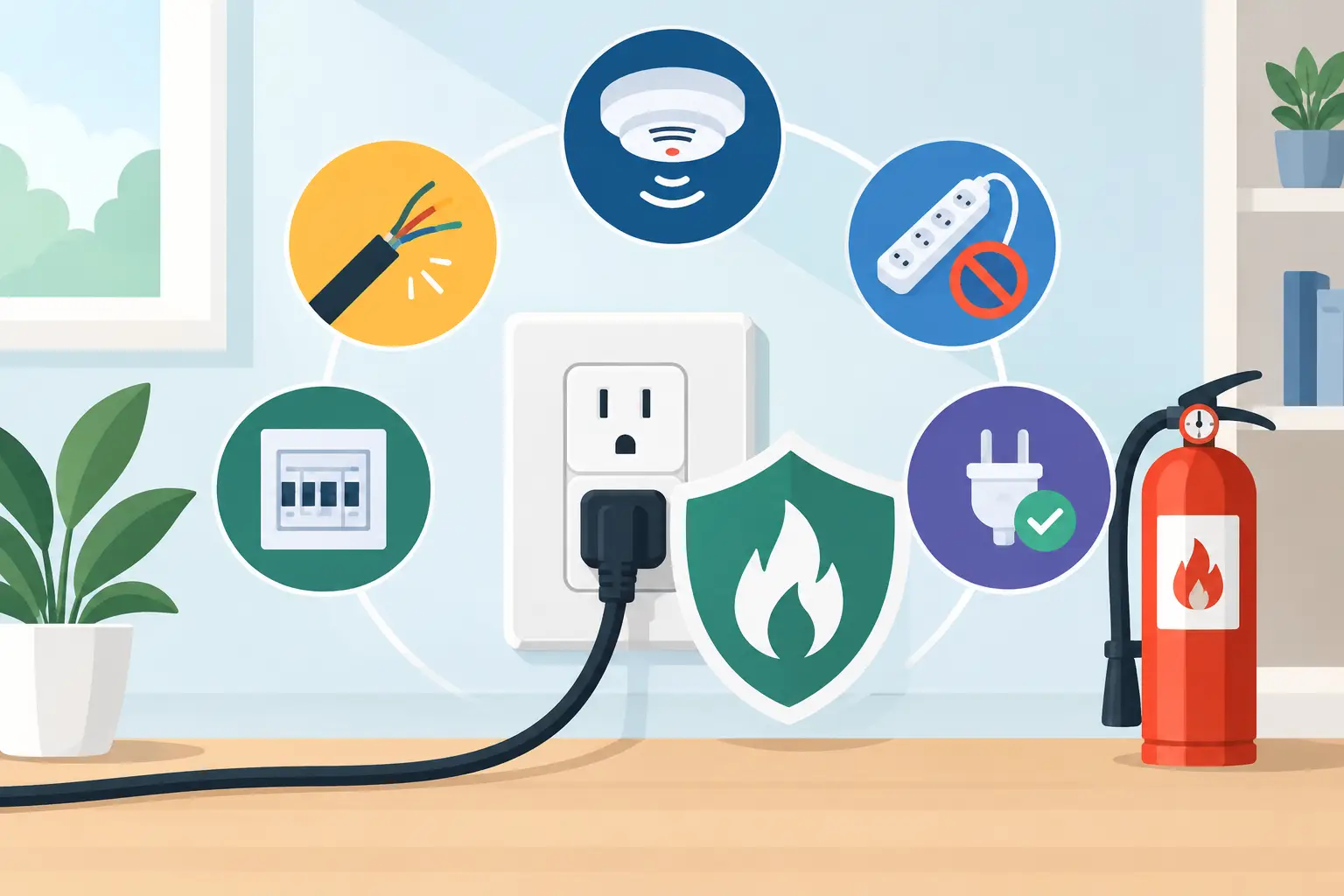
A warm plug, a breaker that trips repeatedly, or lights that dim when equipment starts are not small inconveniences to ignore. They can be early warning signs of a fault developing behind a socket, within a consumer unit or in fixed wiring. The best ways prevent electrical fires start with recognising those warnings, using electrical equipment properly and bringing in a qualified electrician before a defect becomes dangerous.
Electrical fires often result from overheating, damaged cables, overloaded circuits, loose connections or ageing installations. The risk is different in every property: a family home may rely heavily on extension leads, a rental property may have old accessories, while a workplace may have high-demand machinery or IT equipment. Good prevention is therefore a combination of sensible daily habits and professional inspection.
Best ways to prevent electrical fires in any property
1. Do not overload sockets or extension leads
Plugging too many appliances into one socket can cause cables, plugs and adaptors to overheat. High-wattage items such as kettles, microwaves, portable heaters, tumble dryers and irons need particular care. A multi-way extension lead is not automatically unsafe, but it must be suitable for the load placed on it.
Avoid connecting one extension lead to another, known as daisy chaining. It is a common short-term workaround in homes, offices and workshops, but it can overload the first lead in the chain and make faults harder to spot. If sockets are regularly in short supply, additional fixed outlets installed by a competent electrician are the safer long-term solution.
2. Check plugs, leads and sockets before using them
Damage is often visible before it becomes a serious fault. Look for cracked plugs, frayed cable insulation, scorch marks, loose sockets, bent pins, damaged extension leads and appliances that feel unusually hot. Stop using any item that shows these signs.
Do not attempt a makeshift repair with tape, and do not force a plug into a socket. Replace damaged equipment or arrange a professional repair where appropriate. In commercial and industrial settings, regular visual checks should sit alongside a planned inspection and maintenance routine, especially where leads are exposed to movement, dust, vibration or moisture.
3. Give heat-producing appliances room to breathe
Portable heaters, chargers, kitchen appliances and entertainment equipment all produce heat. Fires can start when that heat cannot escape or when equipment is placed too close to bedding, curtains, paper, packaging or furniture.
Keep ventilation openings clear on televisions, computers, games consoles and chargers. Place portable heaters on a level, stable surface away from anything combustible, and never cover them to dry clothes. Switch off and unplug appliances that do not need to remain on, particularly overnight or when a property is empty.
Chargers deserve attention too. Use the charger supplied with the device or a suitable reputable replacement, avoid charging on beds or sofas, and remove the charger once the device is fully charged where practical. A battery or charger that swells, smells unusual, becomes excessively hot or makes a hissing sound should be disconnected if it is safe to do so and replaced.
4. Treat repeated tripping as a warning, not a nuisance
A circuit breaker or RCD is designed to disconnect the supply when it detects an overload or a potentially dangerous fault. Resetting it once after identifying an obvious cause may be reasonable. Resetting it repeatedly without understanding why it has operated is not.
Frequent tripping can indicate a faulty appliance, moisture ingress, damaged wiring or a circuit that no longer suits the demands being placed on it. Unplug appliances on the affected circuit where safe, but arrange for a qualified electrician to investigate if the problem continues. Never bypass a protective device or fit a larger fuse to stop it operating.
5. Keep electrics away from water and damp
Water increases the risk of electric shock and can damage electrical connections, leading to corrosion and overheating over time. Bathrooms, kitchens, utility rooms, plant rooms and outdoor areas require equipment designed and installed for the environment.
Use outdoor-rated sockets and suitable protection for garden tools, lighting and EV charging equipment. If you notice water near a consumer unit, socket, light fitting or appliance, do not touch the installation. Isolate the supply only if it is safe to do so, keep people away from the area and call for professional assistance.
6. Do not hide cables under rugs or trap them in furniture
Cables need to remain visible enough to inspect and free from pressure, heat and sharp edges. Running a lead under a rug can trap heat and conceal damage. Pinching cables behind furniture, in doors or under castor wheels can gradually break the insulation or internal conductors.
Where equipment needs a permanent power supply in an awkward location, a properly installed socket is usually safer and neater than relying on a trailing extension lead. This is particularly relevant for home offices, retail displays, communal areas and workstations that have evolved over time.
7. Arrange periodic electrical inspections
Many electrical faults are hidden. Loose connections, deteriorated insulation, inadequate earthing and overloaded circuits may not be apparent during day-to-day use. An Electrical Installation Condition Report, or EICR, assesses the condition of fixed wiring and identifies issues requiring attention.
For landlords, electrical safety checks are a legal duty in rented homes in England and must be carried out at the required intervals. For homeowners, an EICR is especially worthwhile when buying an older property, planning a major refurbishment, noticing persistent electrical issues or inheriting an installation with no clear history. Commercial, industrial and social housing properties also benefit from inspection intervals based on the building, its use and the condition of the installation.
An EICR does not replace sensible use of appliances, and portable appliance testing does not assess fixed wiring. Both may be appropriate, depending on the property and equipment involved.
8. Upgrade old or unsuitable wiring
Older wiring is not automatically unsafe simply because of its age. However, installations may no longer meet the needs of modern living or working. More appliances, electric showers, induction hobs, home offices, EV chargers, solar systems and machinery can place demands on circuits that were not designed for them.
Warning signs include old-style fuse boards, lack of RCD protection, fabric-covered cables, burning smells, flickering lights, discoloured accessories and sockets that feel loose or hot. A qualified electrician can assess whether a targeted repair, consumer unit upgrade, new circuit or full rewire is appropriate. The right option depends on the test results, the building’s condition and future electrical demand.
9. Use competent, certified installers for alterations
Electrical work is not an area for shortcuts. New circuits, consumer unit changes, rewiring, outdoor supplies, EV chargers and solar installations must be correctly designed, installed, tested and certified. Poor connections can create resistance, heat and arcing, all of which increase fire risk.
Before work starts, ask what testing and certification will be provided. For landlords, property managers and businesses, keep certificates and reports organised so future inspections, insurance queries and planned maintenance are easier to manage. A documented electrical history also helps electricians diagnose faults efficiently.
10. Know what to do when something feels wrong
Burning smells, crackling sounds, smoke, sparks or a hot consumer unit require immediate action. If it is safe, switch off the electricity at the main isolator and move people away from the affected area. Do not use water on an electrical fire.
Call 999 if there is fire, smoke or an immediate threat to life. Once the emergency is under control, do not restore power or use the affected circuit until it has been checked. Prompt emergency electrical assistance can identify the cause and make the installation safe before normal use resumes.
Prevention is easier when electrical safety is planned
The most effective approach is not waiting for an obvious fault. Build electrical checks into property maintenance, review power demands when layouts or equipment change, and act early on damaged accessories or repeated tripping. For facilities teams, landlords and industrial operators, this should include clear reporting arrangements so staff and occupants know how to raise concerns quickly.
For homeowners, small changes can make a meaningful difference: remove overloaded adaptors, replace worn extension leads and book an inspection if the installation is ageing or behaving unpredictably. Where new circuits, rewiring, an EV charger or solar installation are planned, an experienced electrician can make sure the wider installation is ready for the additional load.
SDT Electrical Services Ltd provides inspection, installation, repair and 24/7 emergency electrical assistance across the Midlands. If an electrical issue is causing concern, seeking qualified advice early is a practical step towards a safer property and greater peace of mind.