
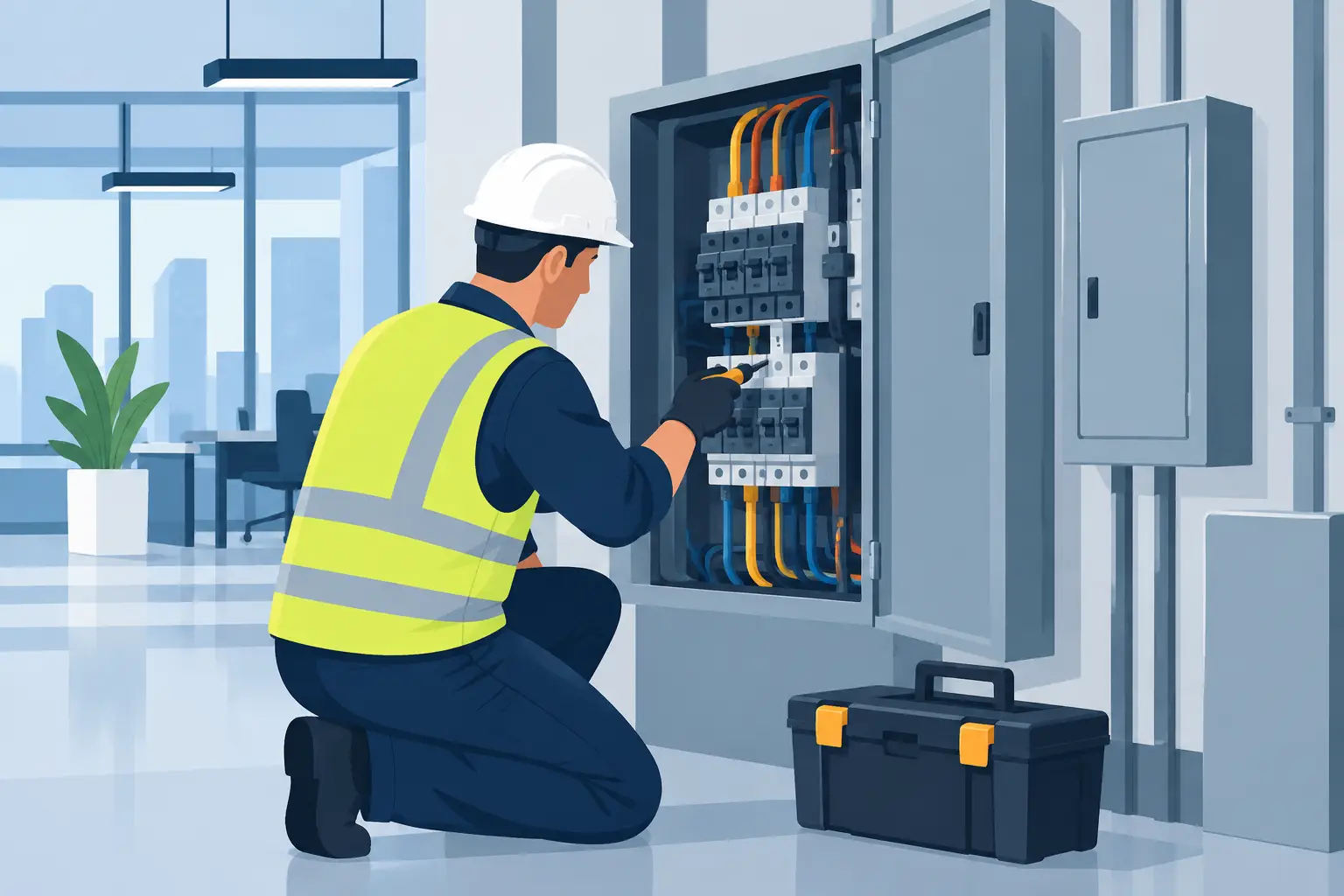
A tripped circuit before opening time, an overheating distribution board or a machine that will not start can quickly become more than an inconvenience. For a shop, office, warehouse or managed property, electrical faults can interrupt trading, affect staff safety and create expensive disruption. Commercial electrical maintenance gives businesses a planned way to find and address risks before they become urgent call-outs.
The right maintenance plan is not simply a calendar reminder to change a lamp or test an emergency light. It is a practical, risk-based approach to keeping electrical installations, equipment and safety systems in safe working order. It should reflect how your premises operate, the age and condition of the installation, and the consequences if power is lost.
What commercial electrical maintenance covers
Commercial electrical maintenance can include routine visual checks, testing, repairs and upgrades across the electrical systems that keep a premises running. The precise scope varies between a small office, a retail unit, a school, a multi-let property and an industrial site, but the objective is the same: prevent danger, minimise disruption and maintain dependable electrical performance.
Typical work may involve checking distribution boards, circuits, sockets, lighting, emergency lighting, fire alarm interfaces, isolators and electrical equipment. In industrial environments, it may also include machine wiring, control systems and the safe connection or relocation of production equipment.
A planned programme should not be confused with an Electrical Installation Condition Report, or EICR. An EICR is a formal inspection that assesses the condition of an electrical installation and identifies observations that need attention. It is an essential part of compliance management, but ongoing maintenance between inspections is what helps prevent deterioration and faults from being left unnoticed.
Why planned commercial electrical maintenance matters
Waiting until something fails can appear cheaper in the short term. In practice, emergency repairs often cost more because the fault has developed further, access is more difficult or the loss of power has already affected operations. Planned maintenance gives facilities managers and business owners more control over when work is carried out.
Reduced downtime and fewer surprises
Electrical issues rarely arrive at a convenient time. Loose connections can generate heat, overloaded circuits can trip repeatedly, and ageing components can fail without warning. Regular checks allow a qualified electrician to spot warning signs such as discolouration, damaged accessories, unusual heat or recurring circuit faults before they stop part of the building from operating.
There is a trade-off. A more detailed maintenance schedule requires time, access and budget, particularly where testing must take place outside normal operating hours. However, arranging work around quieter periods is usually far less disruptive than responding to a fault in the middle of a busy day.
Safer premises and clearer compliance records
Employers, landlords and those responsible for commercial premises have duties to ensure electrical systems are maintained so far as necessary to prevent danger. The Electricity at Work Regulations 1989 place particular focus on safe systems and competent working practices.
Maintenance records help demonstrate that electrical risks are being managed responsibly. They also create a useful history of repairs, test results and recurring faults. This is valuable when planning refurbishments, responding to insurer queries or managing multiple sites.
Portable appliance testing may be appropriate for equipment that is moved, frequently used or exposed to demanding conditions, but it is not a substitute for maintaining the fixed installation. Similarly, an EICR identifies the condition at a point in time, while routine maintenance deals with the day-to-day reliability of the wider system.
Better energy performance
Maintenance can also reveal avoidable energy waste. Old lighting, poor controls, damaged fittings and equipment left operating unnecessarily can all add to running costs. Upgrading selected areas to LED lighting, fitting suitable controls or reviewing load distribution can improve efficiency without requiring a complete electrical redesign.
The best option depends on the building and its use. A warehouse with long operating hours may see a strong case for lighting upgrades, while an office may benefit more from controls that match occupancy. A qualified electrician can assess the installation rather than recommending a one-size-fits-all solution.
Building a maintenance plan that fits your premises
Start with an accurate picture of what is installed and how it is used. This includes distribution boards, main supplies, emergency systems, fixed wiring, specialist equipment and any areas where water, dust, heat or heavy use place additional stress on electrical components.
Your previous EICR, electrical certificates and records of past faults are a useful starting point. If documentation is incomplete, an initial inspection can establish priorities and identify where labels, circuit schedules or protective devices need attention. Clear labelling may seem minor, but it makes isolation safer and reduces delays when faults occur.
Next, agree inspection and testing intervals that reflect risk. High-traffic retail areas, commercial kitchens, workshops and industrial facilities usually need closer attention than lightly used office space. Equipment that is critical to security, safety or production should have planned checks that recognise the impact of failure.
A good programme also separates urgent remedial work from improvements that can be budgeted over time. Issues that present immediate danger should be dealt with promptly. Other recommendations, such as replacing ageing lighting or improving capacity for future equipment, can be scheduled alongside refurbishment works or planned shutdowns.
Signs your electrical system needs attention sooner
Do not wait for the next planned visit if there are signs of a developing fault. Frequent tripping, flickering lights, a burning smell, buzzing from electrical equipment, damaged sockets, exposed wiring or warm switches and consumer units all require professional assessment.
Repeated extension lead use can also point to a capacity or layout issue. It may be a temporary solution during a fit-out, but permanent reliance on extension leads and multiway adaptors can increase the risk of overloading, damage and trip hazards. Installing additional correctly designed circuits or socket outlets is usually the safer long-term answer.
Changes to how a building is used should prompt a review too. New machinery, EV chargers, air conditioning, server equipment or a reconfigured workspace can alter electrical demand. A supply that was suitable several years ago may no longer provide the capacity, protection or resilience the business needs.
Choose a contractor who understands operational pressures
Commercial electrical work should be completed by qualified, insured electricians with the competence to work safely in occupied and operational premises. Ask how the contractor will manage access, isolation, testing, communication and reinstatement, especially where a shutdown could affect staff, customers or production.
It is also worth choosing a contractor who can support both planned and reactive work. When the same team understands your installation, previous findings and priorities, faults can often be diagnosed more efficiently. For businesses across Tamworth, Nottingham and the wider Midlands, SDT Electrical Services Ltd provides planned electrical support alongside 24/7 emergency electrical assistance when an urgent issue cannot wait.
Before work begins, make sure the scope is clear. You should understand what is being inspected, what testing is included, how findings will be reported and which certificates or records will be provided. Transparent recommendations allow you to make informed decisions about immediate safety work and future investment.
When emergency support is the right response
Planned maintenance reduces risk, but it cannot eliminate every fault. Water ingress, accidental damage, equipment failure and unexpected supply problems can still occur. If there is smoke, overheating, electric shock, visible damage to live parts or a loss of power affecting critical operations, isolate the affected area only if it is safe to do so and contact a qualified emergency electrician.
Avoid repeatedly resetting a breaker without investigating why it has tripped. Protective devices operate for a reason, and repeatedly restoring power may worsen damage or expose people to danger. A competent electrician can test the circuit, identify the cause and advise whether a repair, replacement or wider inspection is needed.
A well-maintained electrical installation is quieter in the best sense: it allows people to work, trade and manage property without giving the power system a second thought. Put a proportionate maintenance plan in place now, keep accurate records and seek qualified advice when the way your premises operates changes.