
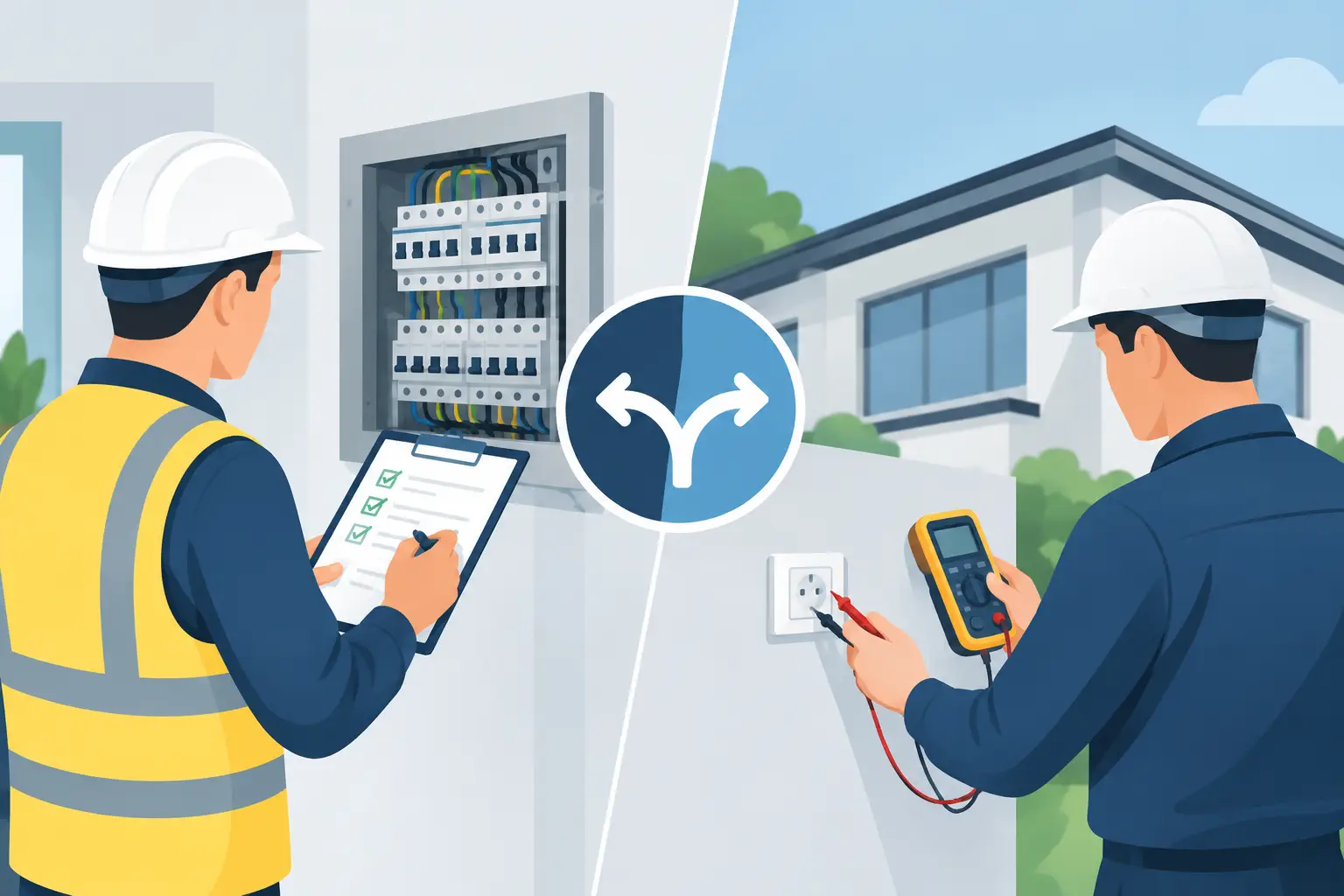
A consumer unit may look tidy, the lights may work and sockets may show no obvious damage – yet faults can still exist within fixed wiring, connections and protective devices. That is why the distinction between EICR versus electrical inspection matters. One term can describe a range of checks; the other is a formal report with a defined purpose, testing process and documented outcome.
For homeowners, landlords and businesses, choosing the right service means avoiding unnecessary disruption while making sure electrical safety and compliance are properly addressed. The right answer depends on the property, its use and what you need the inspection to achieve.
What is an electrical inspection?
“Electrical inspection” is a broad term. It may refer to anything from a visual check of a damaged socket to a planned assessment of electrical equipment, circuits or fixed wiring. The scope should always be agreed before work starts.
For example, an electrician may inspect a tripping circuit, examine wiring before fitting a new EV charger, assess the condition of a consumer unit during a home survey, or check machinery supplies in an industrial setting. These inspections are valuable for finding faults, planning upgrades and confirming whether further work is needed.
However, an inspection is not automatically an EICR. A visual inspection alone cannot confirm the condition of concealed cabling or prove that protective devices operate correctly. It may identify visible concerns, but it does not normally include the testing and formal certification required for a condition report.
EICR versus electrical inspection: the key difference
An Electrical Installation Condition Report, usually called an EICR, is a structured inspection and test of an existing fixed electrical installation. It is carried out by a competent, qualified electrician and records whether the installation is satisfactory for continued use at the time of assessment.
The electrician inspects accessible parts of the installation and performs appropriate tests on circuits, earthing, bonding, insulation resistance, protective devices and other safety measures. Some testing may require circuits to be isolated temporarily. This is planned carefully, particularly in occupied homes, offices, shops, factories and social housing properties where downtime must be managed.
The finished EICR provides a formal record of the installation’s condition, any limitations that affected the inspection and the observations requiring attention. An ordinary electrical inspection may result in advice, photographs, a quotation or a repair record. An EICR results in an Electrical Installation Condition Report.
Put simply, an electrical inspection can be a useful targeted check. An EICR is the recognised condition-reporting process for the fixed wiring installation.
What an EICR does not cover automatically
An EICR is not a general check of every electrical item in a building. Portable appliances such as kettles, computers, extension leads and power tools may need separate inspection or testing where appropriate. Likewise, a gas boiler, fire alarm system, emergency lighting installation, solar PV system or EV charger may need service-specific checks in addition to the building’s fixed-wiring EICR.
The report scope matters. A qualified electrician should explain what is included, what cannot be accessed and whether any specialist systems need their own inspection plan.
When is an EICR the right choice?
An EICR is usually the appropriate service when you need a documented assessment of an installation’s ongoing safety. It is particularly relevant for rented properties, properties with ageing wiring, change-of-use projects, commercial premises and buildings where an insurer, client, managing agent or procurement process requests evidence of electrical condition.
In England, private landlords must have the electrical installation inspected and tested at least every five years by a qualified person. A copy of the report must also be provided to tenants and, when requested, the local authority within the required timescales. If the report identifies remedial work, that work must be completed within 28 days, or sooner if the report specifies a shorter period.
For owner-occupied homes, there is not usually the same legal requirement for a periodic EICR. It is still a sensible step where the installation is older, you are purchasing a property, you have noticed recurring faults, or you are planning substantial alterations such as a rewire, solar installation or EV charger.
Commercial and industrial properties have no single interval that suits every site. Employers and duty holders must maintain electrical systems so they do not create danger, and an EICR is often central to demonstrating that fixed installations are being managed responsibly. The appropriate frequency depends on the environment, equipment use, building condition and previous report findings.
Typical industry guidance may suggest five years for many commercial premises, three years for industrial locations and ten years for a domestic owner-occupied property. These are starting points, not a substitute for professional judgement. A busy workshop, a damp environment, a property with frequent alterations or a site with previous unsatisfactory observations may require more frequent inspection.
When a targeted inspection may be enough
Not every concern calls for a full EICR. If one socket has become loose, a circuit is tripping, lights are flickering or a new appliance is causing a problem, a fault-finding visit is normally more practical. The electrician can investigate the affected circuit, make it safe and advise whether the issue suggests a wider problem.
A targeted inspection can also be useful before a project. If you are considering a home EV charger, solar panels, new machinery or additional power for an extension, an electrician may assess capacity, earthing arrangements, consumer unit suitability and cable routes. This helps establish what works are required before issuing a quotation.
That said, a localised fault can expose a wider issue. If the electrician finds degraded insulation, overloaded circuits, poor earthing or signs of unsuitable previous work, they may recommend an EICR to establish the overall condition of the installation.
Understanding EICR observations
An EICR does not simply say that a property “passes” or “fails”. It records observations using recognised codes, which help property owners and duty holders prioritise action.
A C1 observation identifies danger present and calls for immediate action. A C2 observation identifies a potentially dangerous condition that requires urgent improvement. FI means further investigation is required without delay because the inspector cannot determine the safety of the issue at the time. Any C1, C2 or FI observation will normally make the overall report unsatisfactory.
A C3 observation means improvement is recommended. It does not necessarily make the report unsatisfactory, but it should not be ignored. C3 items can be an opportunity to improve safety, modernise protection or address installations that no longer reflect current best practice.
If a report is unsatisfactory, it does not mean the entire installation needs replacing. Remedial work should be proportionate to the observations found. In some properties, this may involve straightforward repairs or replacement accessories. In others, particularly where wiring is significantly deteriorated or repeatedly altered, a partial or full rewire may be the safer long-term option.
Why the right scope protects your budget
Requesting an EICR when you only need a repair can add unnecessary cost and disruption. Equally, relying on a quick visual check when formal evidence of condition is required can leave you without the documentation needed for a tenancy, insurance query, property handover or compliance file.
Clear information helps an electrician recommend the right route. Explain whether the property is rented, owner-occupied, commercial or industrial; whether you have an existing report; whether circuits are tripping; and whether you need certification for a particular purpose. For businesses, it is also useful to discuss operating hours, sensitive equipment and access restrictions so testing can be planned with minimal interruption.
A professional inspection should be transparent about limitations. Furniture, locked rooms, fixed finishes, live operational equipment and inaccessible cables may prevent full inspection of every element. Those limitations should be recorded rather than overlooked.
Choosing a competent electrician
Whether you need an EICR or a focused electrical inspection, use a properly qualified, insured electrician with experience in the type of property involved. Domestic, commercial and industrial installations have different risks, and a report is only as useful as the quality of the inspection behind it.
SDT Electrical Services Ltd provides condition reporting, repairs, rewiring and installation work across the Midlands, so any remedial recommendations can be discussed clearly and managed by one dependable team. For urgent faults, 24/7 emergency electrical assistance may be the right first step before arranging a wider inspection.
If you are unsure which service you need, start with the reason for the visit: a known fault, a planned installation, a legal landlord requirement or confidence in an older electrical system. A short conversation with a qualified electrician can establish the right scope and give you a clear, practical next step.