
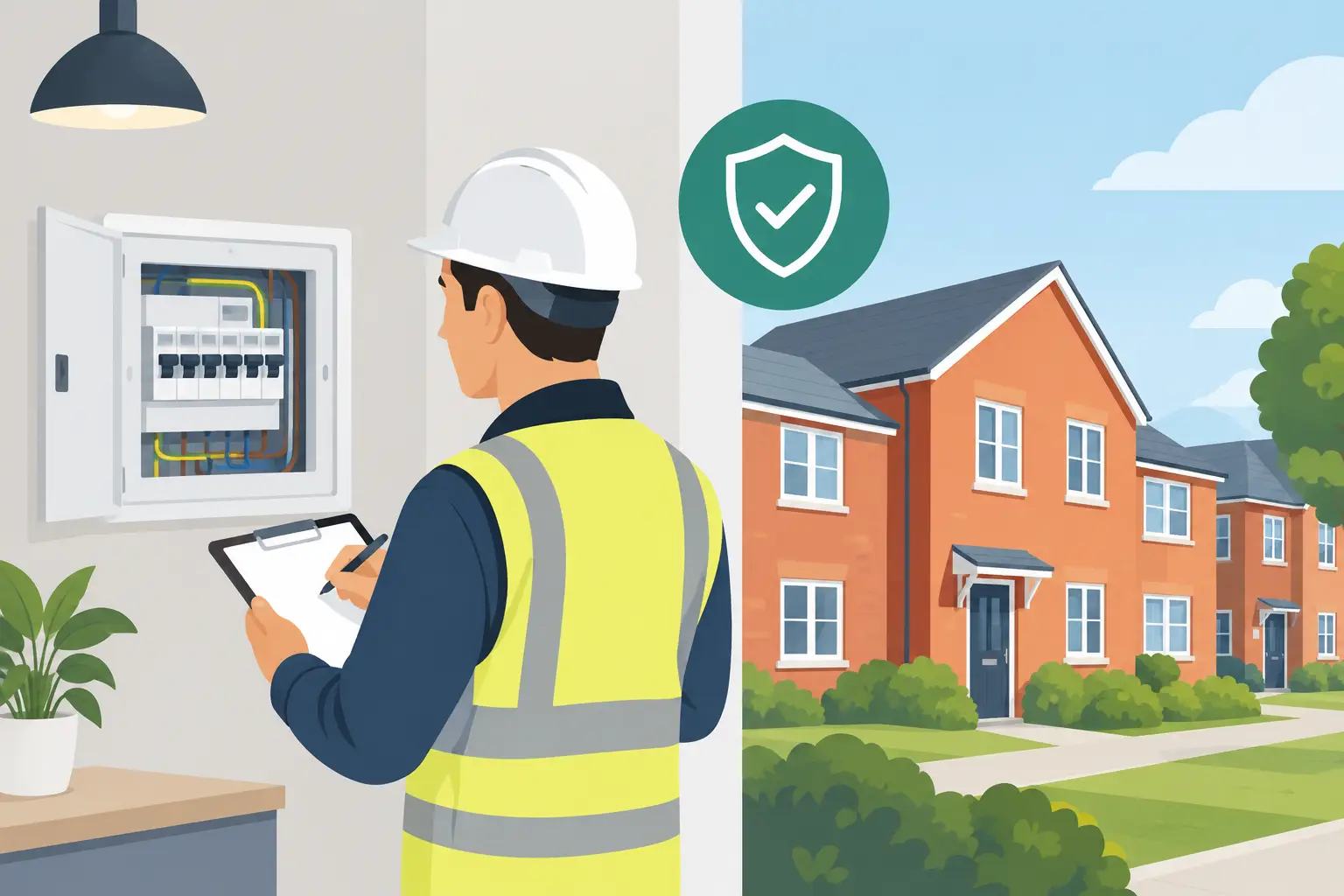
A loose socket in a tenant’s kitchen is rarely just a small repair. In social housing, one reported fault can indicate a wider issue: ageing wiring, damaged accessories, unsuitable previous work or a household that needs clearer safety support. This electrical safety social housing guide sets out how housing providers can manage those risks practically, protect residents and keep electrical assets in safe working order.
The most effective approach is not simply to react quickly when something fails. It combines planned inspection, clear records, competent remedial work and respectful communication with residents. That is particularly valuable across mixed portfolios, where property age, occupancy needs and the condition of existing installations can vary considerably.
Electrical safety social housing guide: start with the real risk
Electrical risk is not always obvious from a visual walk-through. A consumer unit may appear tidy while circuits behind it are overloaded, protective devices are unsuitable, or cables have deteriorated through age, alterations or accidental damage. Equally, a frequent tripping circuit may be caused by a faulty appliance rather than the fixed installation. A qualified electrician should investigate before conclusions are drawn.
Prioritisation should be based on risk, not just the order in which jobs arrive. Signs that need prompt professional assessment include burning smells, scorch marks, shocks or tingling from fittings, repeated loss of power, exposed cables, damaged sockets, water ingress near electrical equipment and a consumer unit that is hot, buzzing or visibly damaged. These reports should be treated seriously, with arrangements made to make the situation safe and, where necessary, attend as an emergency.
For a managing agent or housing provider, a simple repair pathway helps avoid uncertainty. Residents need to know who to contact, what information to provide and what to do while waiting for an electrician. They should never be asked to remove covers, reset equipment repeatedly or attempt a repair themselves.
Build planned inspections around the property portfolio
An Electrical Installation Condition Report, commonly known as an EICR, is the foundation of a planned electrical safety programme. It assesses the condition of the fixed installation, identifies defects and records whether further work is required. It does not replace day-to-day maintenance, nor does it test every resident-owned appliance, but it gives the provider a clear view of the installation’s condition at the point of inspection.
Inspection frequency depends on the tenancy type, the organisation’s policies, previous findings, property use and applicable legal duties. In England, private rented homes generally require electrical installation inspection and testing at intervals of no more than five years under the Electrical Safety Standards in the Private Rented Sector (England) Regulations 2020. Social housing providers should not assume that the same rule applies in precisely the same way to every home in their stock. They must meet their own legal, regulatory and health and safety responsibilities, while following a documented inspection programme informed by competent advice.
A five-year cycle is often used as a useful planning benchmark for occupied dwellings, but it is not a reason to ignore warning signs between inspections. Properties with a history of damage, moisture, unauthorised alterations or repeated faults may need earlier investigation. Communal areas, plant rooms, emergency lighting and landlord-controlled supplies also require their own inspection and maintenance schedules.
A good EICR programme starts with accurate asset information: property address, consumer unit location, supply type, inspection due date, previous report, remedial actions and evidence of completion. Without this, it is easy for overdue inspections or unresolved observations to disappear during void periods, staff changes or contractor transitions.
Understand the report before approving work
EICRs use observation codes to explain the seriousness of defects. A C1 observation indicates danger is present and urgent action is required. C2 means a potentially dangerous condition has been identified and urgent remedial work is needed. FI means further investigation is required without delay. C3 observations are improvements recommended to bring the installation closer to current standards, but they do not alone make a report unsatisfactory.
The distinction matters when budgets are under pressure. Not every recommendation requires an immediate full rewire, and not every old installation is automatically unsafe. However, C1, C2 and FI observations need a clear, tracked response. A competent electrician can explain the scope, isolate danger where needed and provide certification for completed remedial work.
Treat remedial work as part of compliance, not an afterthought
A report is only useful if its findings lead to action. Housing providers should agree responsibilities for raising works, accessing homes, authorising repairs and checking certification. The process should show when an issue was identified, how it was assessed, when it was made safe and what evidence confirms completion.
Common remedial works include replacing damaged accessories, correcting poor connections, upgrading earthing and bonding, fitting suitable circuit protection, repairing damaged wiring and replacing an outdated consumer unit where its condition or limitations justify it. The right solution depends on the installation. Replacing one accessory may be sufficient in a modern property; in an older home with widespread defects, a partial or full rewire may offer the safer long-term outcome.
Temporary repairs have a place when they remove immediate danger and allow time to plan more extensive work. They should not become a permanent substitute for an identified safety upgrade. Residents deserve clarity about what has been done, whether any circuits remain isolated and when follow-on work will take place.
Make access and communication part of the safety plan
Missed appointments are not merely an operational frustration. They can leave a safety inspection overdue or prevent urgent remedial work from being completed. Clear, accessible communication improves the chances of gaining access and helps residents understand why the visit matters.
Give reasonable notice, confirm the appointment through the resident’s preferred channel where possible, and explain what the electrician will need to do. For vulnerable residents, this may mean arranging a convenient time, coordinating with a support worker or allowing extra time for questions. Electricians should carry identification, explain the work in plain language and leave the home safe, tidy and with any relevant paperwork.
It is also sensible to distinguish between installation safety and everyday appliance use. Residents can be encouraged to avoid overloading extension leads, to stop using damaged chargers and to report loose fittings promptly. The message should be practical rather than blame-focused. Many households rely on multiple devices, especially in smaller homes, so providers should consider whether there are enough safe, well-positioned socket outlets before simply advising residents to use fewer extensions.
Plan for voids, upgrades and changing demand
Void periods are a valuable opportunity to inspect the electrical installation, complete outstanding works and review whether the property is ready for modern usage. Consumer units, sockets, lighting and ventilation controls may all need attention before a new tenancy begins. Completing this work while a property is empty can reduce disruption and avoid repeated access visits later.
Demand is changing too. More residents use home-working equipment, electric cooking appliances and mobility devices that require charging. Some properties may eventually be considered for solar PV or EV charging, but these installations need proper design, adequate supply capacity and suitable protective measures. They should be planned as part of the property’s electrical strategy, not added without checking the existing installation.
For larger programmes, consistency matters. Using a qualified, insured electrical contractor that can carry out EICRs, remedials, rewires, planned upgrades and urgent attendance creates a clearer chain of accountability. SDT Electrical Services supports social housing and property teams across the Midlands with certified electrical work and responsive 24/7 emergency assistance where an urgent fault cannot wait.
Keep evidence that stands up to scrutiny
Electrical safety is easier to manage when records are complete, legible and available to the people who need them. Retain EICRs, minor works certificates, Electrical Installation Certificates, emergency call-out reports, photographs where appropriate, access attempts and evidence that remedial actions have been closed.
Good records help with more than compliance. They reveal repeat faults, show where investment is needed and allow property teams to identify patterns across an estate. If several homes have the same type of consumer unit, repeated water ingress or similar failed accessories, a targeted programme may be more efficient and safer than dealing with each report in isolation.
The strongest social housing electrical safety arrangements are built around residents, not paperwork alone. When concerns are easy to report, inspections are planned properly and qualified electricians complete and document the right work, providers can make safer homes a reliable part of everyday service.