
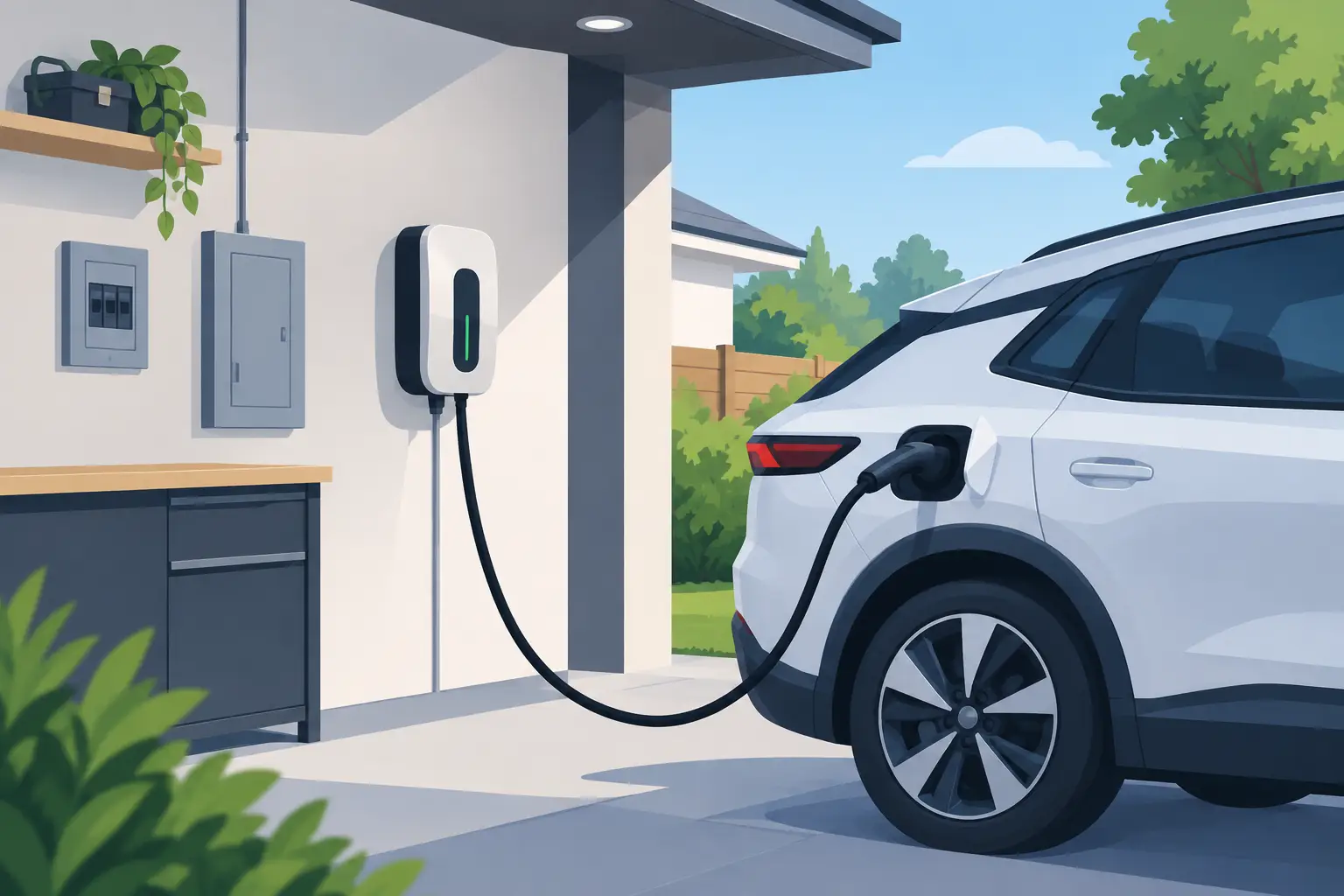
A home charge point can turn EV charging into the simplest part of owning an electric vehicle: park up, plug in and wake to useful range. But the convenience depends on the installation being designed around the property’s existing electrical supply, the way the vehicle is used and the applicable safety requirements. A charger is not simply another outdoor socket. It is a substantial electrical load that needs qualified assessment and professional installation.
For homeowners, landlords and businesses across the Midlands, getting the early decisions right avoids restricted charging, unnecessary disruption and costly alterations later. The best setup is rarely the one with the biggest headline power rating. It is the one that charges reliably, safely and at a sensible cost for the building and its users.
Why dedicated EV charging matters
A dedicated charge point is designed to supply an electric vehicle for long periods, communicate with the vehicle and protect the installation if a fault occurs. Most domestic installations use a 7 kW unit, which is generally suitable for overnight charging where the property has an adequate single-phase supply. A lower-powered unit may still be entirely practical for drivers covering modest daily mileage, while some commercial premises may need three-phase charging or several units managed together.
Using a standard three-pin socket for occasional charging can be possible where the manufacturer permits it and the circuit is suitable. It should not be treated as the default long-term solution. Domestic sockets, plugs and wiring can be subject to prolonged demand, particularly where connections are worn, loose or used outdoors. A purpose-installed EV charger offers a more dependable route, with the correct circuit design, protection and weather-rated equipment.
Charging speed also depends on the vehicle. A car with a lower onboard charging limit will not necessarily take full advantage of a higher-rated charge point. Before choosing equipment, it is worth checking both the vehicle specification and the likely amount of time it will be parked at home or at work.
EV charging starts with the electrical supply
Every safe installation begins with a survey. A qualified electrician will examine the consumer unit, earthing arrangement, existing demand, cable route and the position of the proposed charger. They will also consider practical details that matter day to day, such as whether the cable reaches the parking space comfortably without crossing a walkway or creating a trip hazard.
The property’s incoming supply is a key consideration. Many homes have enough capacity for a typical domestic charger, but that cannot be assumed. Electric showers, induction hobs, heat pumps, storage heating and other high-demand equipment can change the calculation. Older consumer units may require upgrading, and in some cases the distribution network operator may need to be involved before additional capacity can be used.
Load management is often the practical answer where a property has limited available capacity. This allows the charge point to monitor overall demand and temporarily reduce vehicle charging when the household or building is using more power. Once demand falls, charging can increase again. It helps protect against overloading without requiring drivers to constantly monitor what appliances are switched on.
At commercial sites, the same principle applies on a larger scale. A car park with six chargers does not always require six chargers operating at maximum output simultaneously. Intelligent load balancing can share available capacity across vehicles, helping businesses provide useful charging while controlling the cost and complexity of an electrical upgrade.
Installation standards are not optional
Charge point work must be designed and installed in line with the current edition of BS 7671, the Wiring Regulations. The exact protective devices, cable specification and earthing measures depend on the equipment, property and supply type. This is why a site-specific assessment matters more than a one-size-fits-all online recommendation.
A professional installation should include appropriate circuit protection, safe isolation, suitable cable containment where needed, secure fixing and testing before handover. Domestic work may also be subject to Building Regulations requirements, including notification where applicable. Your installer should explain the certification provided and retain clear records of the completed work.
For businesses, landlords and facilities managers, the charger should form part of wider electrical safety management. Periodic inspection, EICRs where required and prompt attention to damage or faults help keep charging facilities dependable for staff, tenants and visitors.
Choosing the right charger for the way you live or work
The right unit is usually determined by routine rather than by the longest specification sheet. A commuter who can charge for eight hours overnight may find a standard 7 kW charger more than adequate. A business with vehicles returning between shifts may need faster charging, timed access or a managed system that prioritises operational vehicles.
Tethered chargers have a fixed cable, making them convenient when users have the same vehicle connection type. Untethered chargers have a socket instead, so drivers use their own cable. They can look tidier and offer greater flexibility where different vehicles use the point, although the cable must be kept in the car and connected each time.
Smart functionality can also be worthwhile, particularly when tariffs vary throughout the day. A compatible charger may be scheduled to run during lower-cost periods, subject to the electricity tariff, vehicle settings and the user’s requirements. Some systems offer usage data, user access controls and remote monitoring. These features can be useful for workplaces and shared parking areas, but only if they are easy to operate and genuinely needed.
It is sensible to consider future demand too. If a household expects a second electric vehicle, or a business is planning a phased fleet transition, allowing for extra cable routes or spare capacity during initial works can reduce later disruption. Future-proofing should be proportionate, however. There is little value in paying for significant infrastructure that has no realistic use within the life of the property plan.
Can solar panels support EV charging?
Solar panels and EV charging can work well together, especially when a vehicle is parked at home during daylight hours. A smart charger can use available solar generation to contribute towards charging, reducing the amount of electricity imported from the grid at that moment.
There is a practical limitation: solar generation changes with the weather, season and time of day, while a vehicle may need a predictable amount of charge by morning. In winter, or when charging overnight, grid electricity will still be required. The most useful approach is often a charger that can balance solar preference with a set minimum charging requirement, so the vehicle is ready when needed.
Battery storage may increase how much generated electricity can be used later, but it should be assessed as part of the whole energy system rather than added solely for vehicle charging. Installation cost, household consumption, tariff arrangements and driving patterns all affect whether it represents good value.
Practical considerations for landlords and workplaces
Landlords should avoid informal arrangements that leave tenants relying on extension leads from windows or communal areas. Any proposed charger needs a clear electrical design, a safe parking arrangement and agreement on ownership, access and electricity costs. In blocks of flats, the route from the electrical intake to the parking space can be more complex, so early investigation is particularly valuable.
For workplaces, clear rules prevent small issues becoming operational problems. Decide who may use the chargers, whether charging is free or paid for, how spaces are managed and who reports faults. If charging is offered to visitors or staff, equipment location should allow safe access without obstructing pedestrians, deliveries or emergency routes.
Commercial and industrial premises should also think beyond the charger itself. The condition of distribution boards, external lighting, car park markings and existing electrical infrastructure can all affect the quality and longevity of the finished installation.
Getting a reliable installation
Choose an electrical contractor that is qualified, insured and experienced in assessing EV charging installations rather than simply fitting a unit to the nearest wall. Ask what the survey includes, whether the existing supply has been considered, what certification will be issued and how faults or future changes will be handled.
Before work starts, agree the charger position, cable route, finish around drilled walls and any requirement for groundworks. The neatest installation is usually planned before equipment is ordered, not after. It is also wise to keep the handover information somewhere accessible, including charger instructions, electrical certificates and details of any app or scheduling settings.
SDT Electrical Services Ltd can assess domestic, landlord and commercial EV charging requirements across Tamworth, Nottingham and the surrounding Midlands, providing tailored advice and a free, no-obligation quotation. A properly planned charge point should feel unremarkable once it is in use – dependable every day, ready when you need to leave and installed with the safety margins your property deserves.