
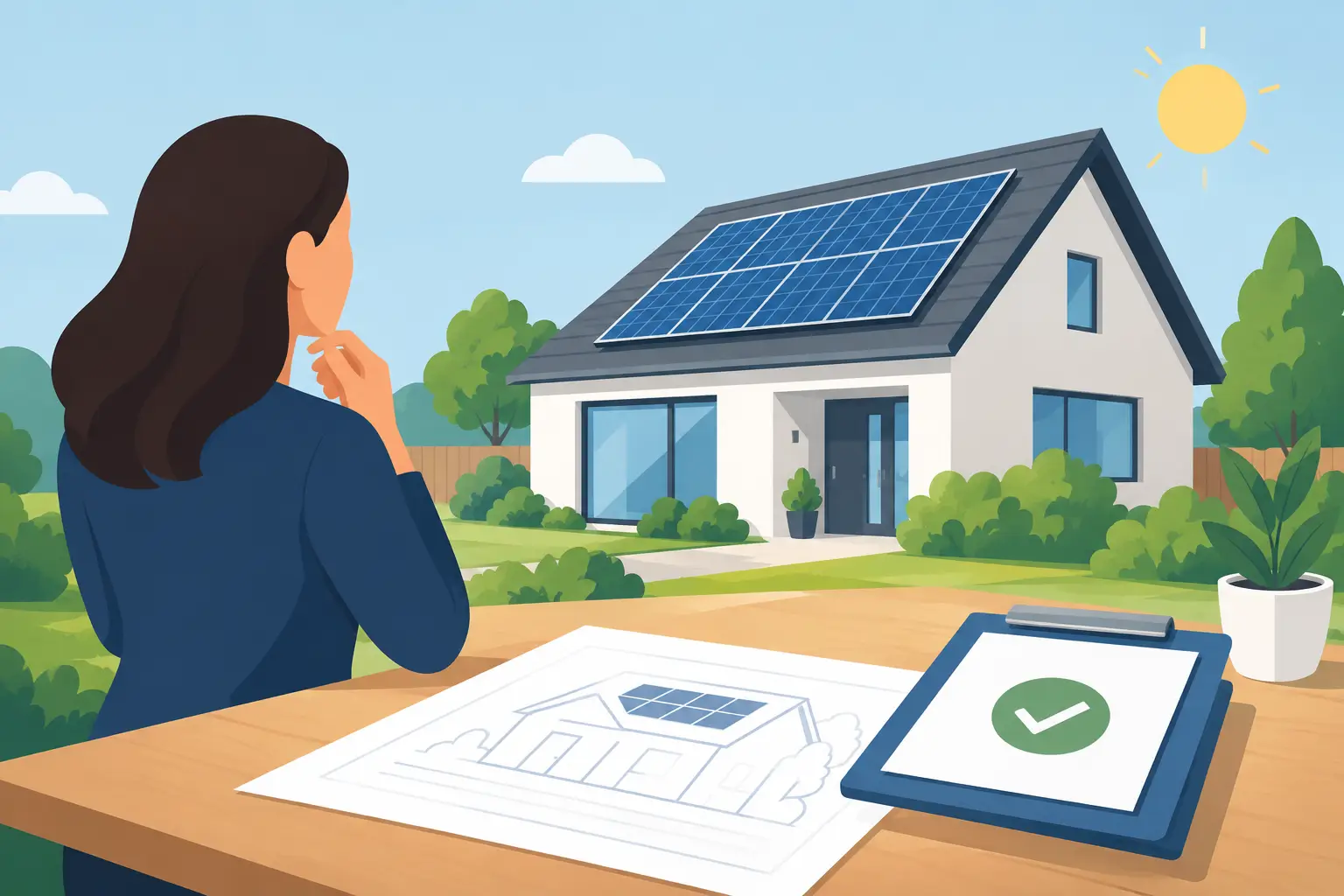
A solar installation should start with more than a quote and a roof measurement. Before panels are ordered, homeowners and property managers need to establish whether solar panel planning permission is required for their specific property. In many cases, it is not. However, listed buildings, conservation areas, ground-mounted arrays and unusual roof designs can change the answer quickly.
For properties across England, most domestic roof-mounted solar panels fall under permitted development rights. This means planning permission is usually not needed, provided the installation meets certain conditions. Those conditions matter. A system that is well designed electrically can still create a planning issue if it is positioned incorrectly or affects a protected building.
When solar panel planning permission is not usually needed
For a typical house, roof-mounted solar photovoltaic panels are normally permitted development. The panels must not protrude more than 200mm beyond the plane of the roof slope, excluding the chimney. They should also be installed as far as practicable below the highest part of the roof, and should not be fitted above the roof ridge.
The equipment should be sited to minimise its effect on the external appearance of the building and the visual impact on the local area. When the panels are no longer needed, they should be removed as soon as reasonably practicable.
These rules allow many straightforward installations to proceed without a planning application. They do not mean every roof can be treated in exactly the same way. A panel layout on a rear-facing pitched roof is generally less likely to raise concerns than a prominent array on a front elevation facing a road, particularly where the property is subject to additional planning controls.
Planning permission and building regulations are separate matters. Even when planning consent is not required, the electrical installation still needs to be safe, properly designed and certified. The roof structure, cable routes, inverter location, earthing arrangements and connection to the consumer unit all need professional consideration.
Properties where solar panel planning permission may be required
Permitted development rights are more limited in sensitive locations and for certain property types. A quick check before committing to an installation can prevent avoidable delays, redesign costs or enforcement action later.
Listed buildings and protected heritage assets
If a building is listed, listed building consent may be required for solar panels or associated equipment, even where the installation might otherwise meet permitted development conditions. The local planning authority will consider the effect on the building’s historic character and fabric.
This does not automatically rule solar out. It may affect where panels can be placed, the type of mounting system used, visibility from public areas and the location of associated equipment. Early advice is particularly worthwhile before making changes to slate roofs, older structures or buildings with historic features.
Conservation areas and Article 4 directions
In a conservation area, additional restrictions can apply. Roof-mounted panels on a roof slope facing a highway may need planning permission. The definition of a highway can include a road, footpath or public right of way, so it is not always as obvious as a front-facing roof.
Some councils also use Article 4 directions to remove particular permitted development rights in defined areas. If your property is in a conservation area or an area with distinctive local character, check the planning status with the relevant council before work is booked. Local rules can be more restrictive than the general national position.
Flats, commercial premises and non-domestic buildings
Solar panels on flats, offices, warehouses, schools and other commercial buildings can also benefit from permitted development rights, but the limits and conditions differ from those for houses. For example, there are rules on how far panels can project, where they can be placed and their impact on the roofline.
A commercial roof also requires careful technical planning. Its load capacity, roof condition, fire safety arrangements, access requirements and insurance obligations must be assessed. Where a landlord, managing agent or leaseholder is involved, written consent may be needed regardless of planning permission.
Ground-mounted solar panels
Ground-mounted panels are often possible without a full planning application, but the permitted development rules are tighter. For a domestic property, the array should generally be no more than nine square metres in area and no higher than four metres. It should be at least five metres from the boundary of the property’s curtilage and must not be installed within the grounds of a listed building.
Only one stand-alone solar installation is normally permitted within the curtilage of a house under these rights. Larger arrays, installations close to boundaries, or systems intended for significant commercial generation are more likely to need planning consent.
Ground-mounted panels can be a sensible option where a roof has poor orientation, is shaded or needs structural work. The trade-off is that they can be more visible, take up garden space and attract greater planning scrutiny.
Check the planning position before installation
The most reliable route is to check the planning guidance issued by your local planning authority and, where there is any doubt, ask for written confirmation. Homeowners may choose to apply for a lawful development certificate. This is not the same as planning permission. It is a formal confirmation from the council that the proposed work is lawful under permitted development rules.
A lawful development certificate can provide useful reassurance when selling a property, dealing with a mortgage provider or responding to questions from a future buyer. It may also be sensible where the installation is visible from the street, the property is in a sensitive area, or previous alterations have made the planning position less clear.
Before contacting the council, have the proposed panel location, roof elevations, dimensions, photographs and a site plan available. Clear information makes it easier for the planning team to assess the proposal. An experienced installer can help identify the practical details needed for the design, although the final planning decision rests with the local authority.
Do not overlook electrical approval and grid connection
Planning permission is only one part of a compliant solar project. A solar PV system must be installed to current electrical standards, tested properly and accompanied by the appropriate certification. Work involving a domestic electrical installation may also need to be notified under Building Regulations through the installer or local authority process.
The system will usually need to be registered with the local electricity network operator. Smaller installations are commonly notified after commissioning, while larger systems may need approval before they are connected. Export capacity, battery storage, existing electrical demand and the local network can all affect what is possible.
This is particularly relevant for homes adding an EV charger, heat pump or battery alongside solar. A property may benefit from a full review of its consumer unit, main earthing and electrical load rather than treating each upgrade as a separate job. Good planning at the outset supports a safer installation and avoids unnecessary repeat work.
Questions to ask before you accept a solar quote
A good solar proposal should be based on more than the number of panels that fit on a roof. Ask whether the installer has considered planning constraints, roof orientation, shading, structural condition and the proposed cable route. You should also understand where the inverter and any battery will be located, how the system will be isolated in an emergency, and what certification will be supplied on completion.
For landlords and property managers, it is worth checking lease terms, tenant access arrangements, insurance requirements and any obligations around fire risk assessments. For commercial buildings, maintenance access and future roof repairs should be considered before the array is fixed in place.
SDT Electrical Services can assess the electrical side of a proposed solar installation and provide practical advice before work begins. For homes and businesses in the Midlands, a site visit can help turn a general idea into a safe, compliant system designed around the building and its energy use.
If the planning position is unclear, pause before ordering equipment. A short conversation with the local authority and a properly considered electrical survey can provide the confidence to move ahead without unwelcome surprises.