
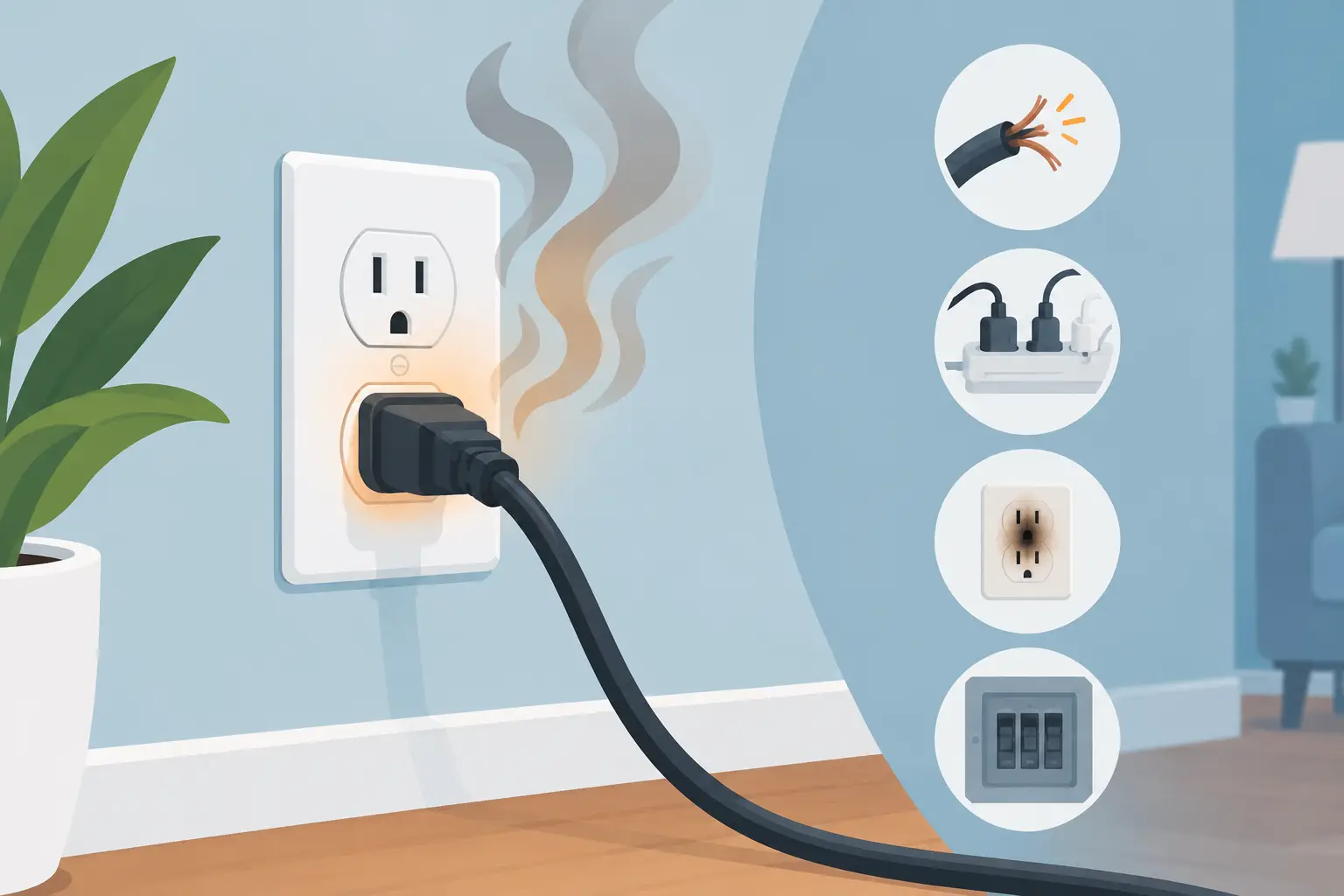
A burning electrical smell is not a household nuisance to mask with an air freshener. It can be an early warning that a cable, connection, appliance or electrical accessory is overheating. If you are asking what causes a burning electrical smell, treat it seriously from the outset, particularly if the smell is getting stronger, returns when equipment is used, or is accompanied by heat, discolouration, buzzing or smoke.
The smell is often described as burning plastic, hot rubber, fishy, acrid or metallic. It may appear briefly when a new appliance is first used, but an unexplained or persistent odour needs prompt attention from a qualified electrician. Electrical faults can develop behind walls, within consumer units and inside appliances, where the danger is not always visible.
What Causes a Burning Electrical Smell?
Electricity produces heat wherever it meets resistance. In a correctly installed and well-maintained system, that heat remains within safe limits. A loose connection, damaged cable or overloaded circuit can create too much resistance, however, causing insulation, plastic components or nearby materials to overheat.
The source is not always the nearest socket or switch. Electrical smells can travel through floor voids, cupboards, cable routes and ventilation gaps. That is why a professional investigation should look beyond the point where the smell is most noticeable.
Loose or deteriorating connections
Loose terminals in sockets, switches, light fittings, junction boxes or consumer units are a common cause. When a connection is not secure, electricity can arc across a small gap. This produces intense localised heat and can scorch insulation or the accessory itself.
Older properties, heavily used commercial premises and installations that have been altered over time are more likely to have deteriorated connections. Signs may include a warm socket faceplate, crackling, flickering lights or brown marks around a switch. Do not tighten terminals yourself unless you are competent and the circuit has been safely isolated and proved dead. The correct repair involves finding the cause, inspecting the cable and testing the circuit afterwards.
Overloaded sockets, extensions and circuits
Plugging several high-demand appliances into one extension lead or adaptor can overheat the plug, lead or socket. Heaters, kettles, microwaves, tumble dryers and portable air conditioning units draw significant power, so they should not be used together from an unsuitable extension arrangement.
Overload is not limited to homes. In offices, workshops and rented properties, years of added equipment can leave circuits serving more demand than they were designed for. A circuit may not trip immediately, but repeated heating can degrade connections and insulation over time. Purpose-designed additional circuits or a distribution upgrade may be a safer solution than adding more extensions.
Damaged cables and appliance faults
Cables can be damaged by trapped furniture, doors, rodents, drilling, wear and tear or repeated bending near a plug. The copper conductors may then become exposed or partially broken, increasing resistance and heat. A damaged appliance can create the same smell, especially where its motor, heating element, plug or internal wiring is failing.
If the smell appears only when one appliance is running, switch it off, unplug it if safe to do so, and do not use it again until it has been checked. Do not assume a fuse replacement solves the underlying problem. Repeatedly blowing fuses or tripping breakers are protective signs that require investigation.
Faulty light fittings and lamps
Overheating can occur in light fittings where an incorrect lamp type or wattage has been installed, insulation is too close to a recessed fitting, or wiring has deteriorated. Older halogen downlights can become very hot, while LED fittings can also fail if incompatible lamps, drivers or dimmers are used.
A burning smell near a ceiling fitting, loft hatch or light switch should be taken seriously. Turn off the lighting circuit where it is safe to do so and arrange an inspection. This is particularly relevant after a loft conversion, refurbishment or lighting upgrade, when new cables and fittings may have been added.
Consumer unit or circuit breaker problems
A burning smell from a consumer unit is an urgent warning. Heat damage can result from a loose connection, damaged breaker, overloaded circuit or fault within the board. You may notice warmth, a buzzing sound, a tripping circuit, melted plastic or visible discolouration.
Do not remove the consumer unit cover or attempt to reset breakers repeatedly. If you can do so without approaching a hot, damaged or smoking board, switch off the main isolator. If there is smoke, flames or an immediate fire risk, leave the property and call the emergency services. For any suspected electrical fault, a qualified electrician should inspect the installation before power is restored.
What to Do When You Smell Burning Electrical Wiring
Your priority is to reduce risk without putting yourself in danger. Avoid touching hot accessories, exposed cables or electrical equipment, and never use water on an electrical fire. If it is clearly safe, turn off and unplug the affected appliance. If you cannot identify the source, or the smell is coming from fixed wiring, isolate the relevant circuit at the consumer unit only if it is safe to reach and operate.
Take note of when and where the smell occurs. For example, does it start when the oven, shower, heating system, machinery or lighting is used? Are any sockets warm? Has a circuit tripped? These details can help an electrician trace an intermittent fault more efficiently, but do not keep turning equipment back on to test it.
Call for urgent professional help if you notice smoke, sparking, scorch marks, melted plastic, a hot consumer unit, repeated tripping, buzzing or a strong ongoing smell. SDT Electrical Services Ltd provides 24/7 emergency electrical assistance for faults that need a prompt, qualified response.
Why the Smell Can Come and Go
An intermittent smell can feel less urgent, but it can point to a connection that heats up only under load. A loose terminal may remain cool when nothing is running, then overheat when a shower, cooker, charger or machine starts drawing power. Temperature changes and vibration can also affect damaged connections.
New equipment deserves a measured approach. Some products may give off a slight manufacturing smell during their first use, especially heaters. That should be mild, short-lived and should not come with smoke, unusual heat, discolouration or electrical symptoms. If you have any doubt, stop using the item and have it checked.
How a Qualified Electrician Finds the Fault
A proper diagnosis is more than replacing a scorched socket. A qualified electrician will safely isolate circuits where required, inspect accessories and connections, assess the condition of cables and protective devices, and carry out appropriate electrical testing. The findings determine whether the fault is limited to an appliance, a single accessory, a circuit or a wider issue with the installation.
For landlords, businesses and property managers, an Electrical Installation Condition Report can identify deterioration and non-compliance before it develops into an emergency. An EICR is especially valuable in older buildings, rental properties, properties undergoing change of use and premises with high electrical demand. It does not remove the need to act on a burning smell immediately, but it provides a structured view of the installation’s condition.
Preventing Electrical Overheating
Simple habits make a difference. Use suitable sockets rather than daisy-chaining extensions, replace damaged leads, keep vents clear on appliances and avoid covering chargers or portable heaters. Have fixed wiring assessed after major alterations, before installing high-load equipment, or when buying an older property.
Commercial and industrial sites should also review whether circuits still match operational demand. New machinery, additional workstations, EV chargers and changes in building use can all require revised circuit design and protective measures. The safest solution is not always the quickest repair – it depends on the age, condition and intended load of the installation.
A burning electrical smell is your cue to stop, isolate what you safely can and seek qualified advice. Early action can turn a small repair into a straightforward visit rather than a serious disruption or fire risk.