
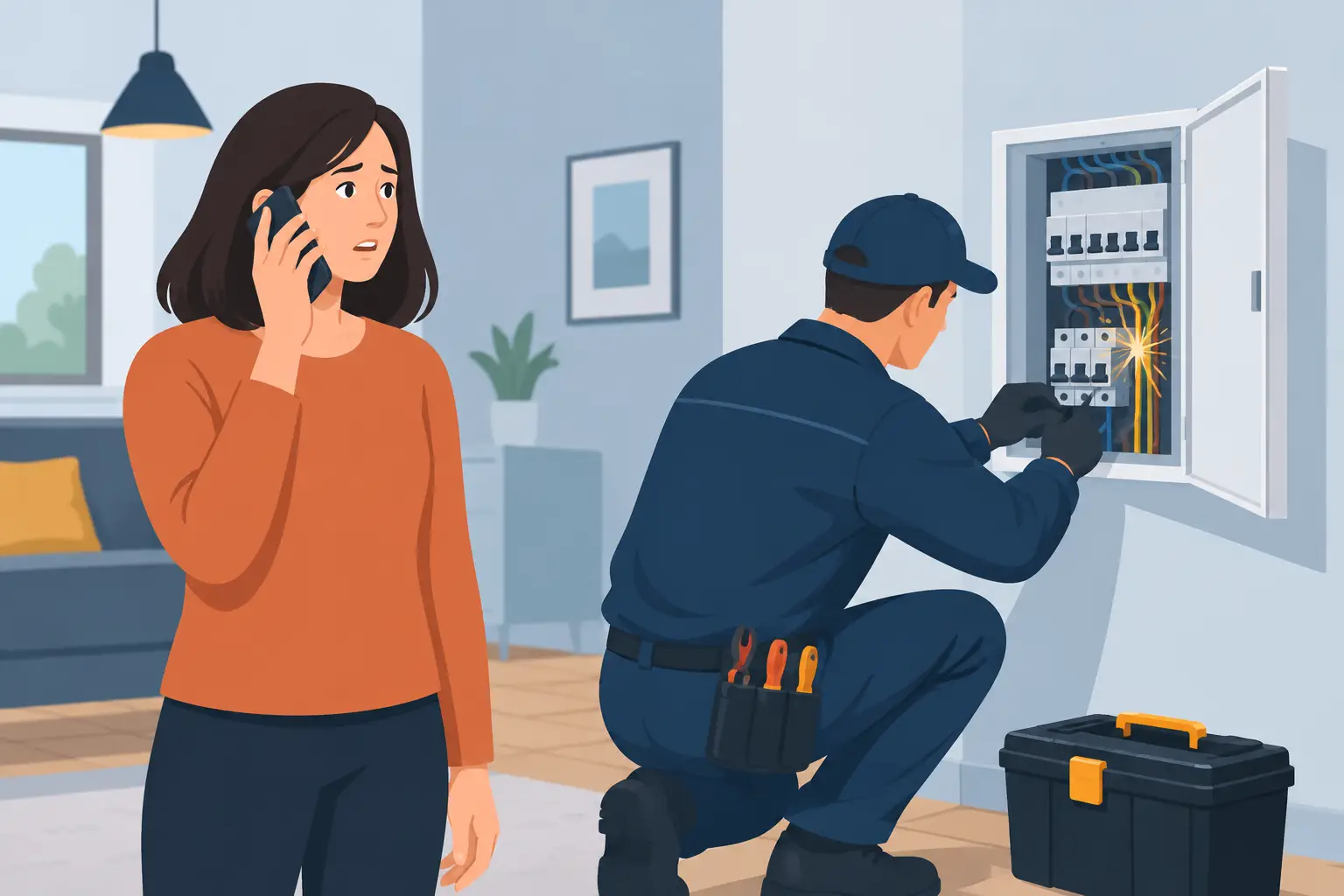
A burning smell from a socket, repeated tripping at the consumer unit or a sudden loss of power can turn a normal day into a safety concern quickly. An emergency electrician is there to make the situation safe, identify the cause and carry out appropriate repairs without exposing people or property to unnecessary risk.
Electrical faults are not always dramatic. A flickering light may be a loose connection, while a circuit that will not reset can point to a damaged appliance, water ingress, overloaded wiring or a fault within the installation. Knowing when to act – and what not to do while waiting for help – protects your household, tenants, staff and premises.
What counts as an electrical emergency?
An electrical emergency is any fault that presents an immediate risk of electric shock, fire, significant damage or loss of essential services. The right response depends on the symptoms, the type of property and whether people can be kept safely away from the affected area.
Call for urgent professional assistance if you notice smoke, scorching or a burning plastic smell from a socket, switch, consumer unit or electrical appliance. Sparks, buzzing, crackling, exposed live wiring and electric shocks from fittings also require immediate attention. Do not assume that a fault has passed simply because it stops temporarily.
A complete power failure can also need urgent investigation, particularly where it affects a business, communal area, heating controls, refrigeration, security systems, machinery or vulnerable occupants. First, check whether neighbouring properties have lost power too. If they have, the issue may be with the local electricity network rather than your own installation. If the fault is limited to your property, a qualified electrician can assess the circuits safely.
Water and electricity are another serious combination. Flooding, leaks near electrical fittings, water entering a consumer unit or damage following a storm should be treated with caution. Do not touch electrical equipment if the area is wet, and never attempt to isolate supplies while standing in water.
What to do before an emergency electrician arrives
Your priority is safety, not diagnosis. If you can do so without approaching damaged equipment or wet areas, switch off the affected circuit at the consumer unit. If there is visible smoke, fire or an immediate danger to life, leave the building and call the emergency services.
Do not remove socket fronts, open the consumer unit, reconnect a tripped circuit repeatedly or use makeshift repairs. A circuit breaker trips for a reason. Continually resetting it can worsen a fault, damage equipment or create a fire risk.
If an appliance appears to be responsible and it is safe to do so, unplug it rather than relying on the switch alone. Keep children, tenants, visitors and staff away from the affected area. For commercial and industrial sites, restrict access and make supervisors aware of the issue until it has been assessed.
It is helpful to make a note of what happened before the fault occurred. For example, did the circuit trip when a kettle was switched on, after heavy rain, during machinery use or when an EV charger began operating? This information can help the electrician trace the issue more efficiently, but only provide details that can be gathered safely.
When a fault can wait until normal working hours
Not every electrical issue needs an immediate call-out. A single failed light fitting, a non-essential socket that has stopped working or a planned upgrade may be suitable for a standard appointment, provided there are no signs of overheating, damage or electric shock.
That said, the decision is not always straightforward. A landlord may need to act faster where a defect affects tenant safety. A facilities manager may need urgent support if a minor-looking fault compromises emergency lighting, access control, alarms or business-critical equipment. In an industrial setting, unusual behaviour from machine wiring should be investigated promptly, even if production has not yet stopped.
If you are unsure, it is sensible to seek professional advice. Explaining the symptoms to a qualified electrical contractor can help establish whether the fault requires an emergency response or a booked inspection.
Why a tripping consumer unit should not be ignored
Modern consumer units are designed to disconnect power when they detect a fault. This is a protective feature, not an inconvenience to work around. An MCB may trip because a circuit is overloaded or short-circuited, while an RCD may operate when it detects current leaking to earth – a possible warning of damaged insulation, moisture or a faulty appliance.
The cause can be relatively simple, such as a failed kettle or outdoor socket affected by rain. It can also be more complex, including deteriorated cables, a damaged accessory, a fault in concealed wiring or an issue with equipment connected to the circuit.
An emergency electrician will use suitable testing methods rather than guesswork. The aim is to isolate the fault, confirm the condition of the circuit and restore power only where it is safe to do so. In some cases, a temporary safe solution may be appropriate before a more extensive repair or replacement is planned.
Electrical emergencies in rented and managed properties
Landlords, letting agents, housing providers and property managers carry particular responsibilities when electrical faults arise. A tenant reporting sparks, a burning smell, loss of lighting on a shared stairwell or exposed wiring should receive a prompt and safety-led response.
Electrical Installation Condition Reports, commonly known as EICRs, are valuable for identifying deterioration and non-compliance before they develop into urgent faults. However, an EICR does not remove the need to respond when a new problem is reported. Damage can occur between inspections, appliances can fail and water ingress can affect installations unexpectedly.
Clear reporting procedures help. Tenants should know how to report an urgent electrical concern, what immediate steps to take and when not to touch equipment. Property managers should retain records of reported faults, repairs and certification, particularly where remedial work has been completed.
Keeping commercial and industrial sites operating safely
For businesses, an electrical fault can have consequences beyond inconvenience. A loss of power may interrupt point-of-sale systems, refrigeration, lighting, network equipment, security or production. The pressure to restore operations quickly is understandable, but safety must remain the first consideration.
Temporary extension leads, unauthorised alterations and repeated resetting of protective devices often create further problems. A qualified electrician can assess the installation, machinery connection or distribution equipment and advise on the safest route back to operation.
Regular maintenance, inspection and appropriate machine installation reduce the likelihood of unexpected disruption. This is particularly important where sites have ageing infrastructure, high electrical loads, changing layouts or newly installed equipment. Planned electrical work is usually less disruptive and less costly than responding after a failure, though some faults are impossible to predict.
Choosing the right emergency electrical support
Urgent work should still be carried out to proper standards. Look for a contractor with qualified electricians, appropriate insurance, relevant accreditations and experience of the type of property involved. Domestic, commercial and industrial systems have different demands, and the response should reflect the risks on site.
Ask what will happen during the visit. A professional electrician should explain the immediate safety issue, the likely cause, any testing required and whether further remedial work is needed. You should also receive clear information about work completed and any recommendations for follow-up action.
For customers across the Midlands, SDT Electrical Services Ltd provides 24/7 emergency electrical assistance alongside inspections, repairs, rewiring, installations and planned electrical projects. This means a fault can be dealt with by a team that also understands the wider condition and future requirements of your property.
Preventing the next urgent call-out
Many emergencies cannot be predicted, but warning signs should never be ignored. Warm sockets, discoloured switches, lights that flicker without explanation, frequent tripping, damaged cables and persistent buzzing all justify investigation before they become more serious.
Avoid overloading extension leads and adaptors, especially with high-demand appliances. Use electrical equipment as intended, keep outdoor accessories suitable for their environment and arrange periodic inspection where required. Older properties, rental homes, busy commercial units and industrial premises can all benefit from a proactive review of their electrical installation.
When something does not look, sound or smell right, trust that instinct. Isolate the risk if it is safe to do so, keep people clear and arrange qualified help – acting early is often the simplest way to protect both people and property.