
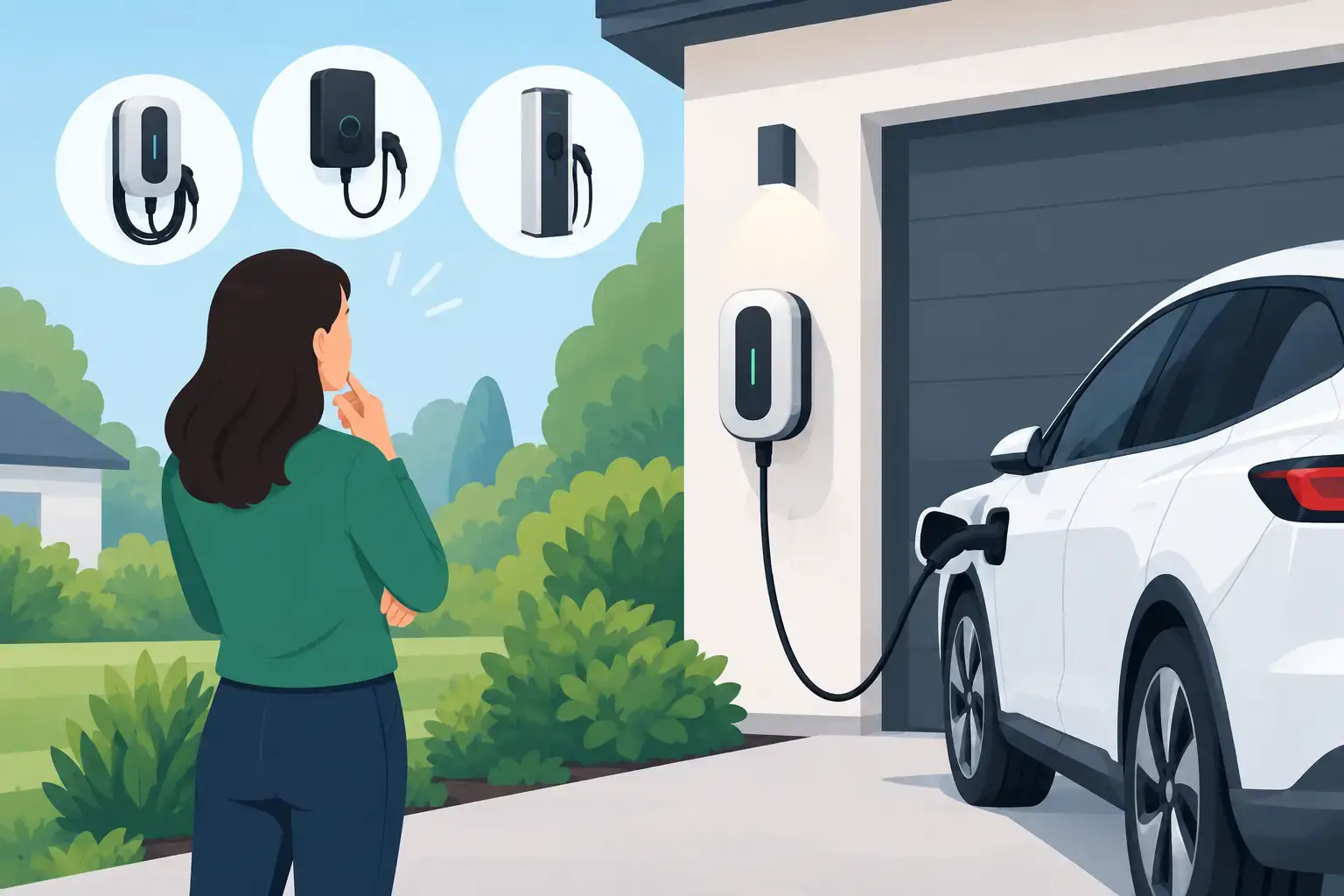
Arriving home with a low battery should not mean planning your evening around a public charging point. The right EV chargers make everyday driving simpler, but choosing one is about more than picking the highest power rating. Your vehicle, parking arrangement, incoming electrical supply and future plans all affect what will work safely and reliably.
For most drivers, a professionally installed home charge point is the most convenient and cost-effective way to charge an electric vehicle. It gives you a dedicated, properly protected connection where you park, with the controls needed to manage charging around your routine and electricity tariff. The best choice is usually the one that fits the property as well as the car.
Start with how you use your vehicle
Before comparing models, consider the mileage you cover in a typical week and how long the car is usually parked at home. A driver covering modest daily distances and parking overnight has very different needs from someone travelling long distances for work or running more than one electric vehicle.
A standard domestic charge point is commonly rated at 7kW. Subject to the vehicle and installation, this is suitable for overnight charging and will replenish a useful amount of range while the car is parked. It is a practical option for many households because it balances charging speed with the capacity normally available from a single-phase domestic supply.
Higher-powered charging is not automatically better. A vehicle can only accept electricity up to its own onboard charging limit, so installing a larger unit may not reduce charging times. Three-phase supplies can support faster AC charging in some properties and commercial settings, but they are not standard in every home. An electrician should assess the existing supply before recommending an option.
It also helps to think ahead. If you expect to replace your vehicle, add a second EV, install solar panels or move house within a few years, mention this during the survey. Planning for sensible future capacity can avoid unnecessary alterations later.
EV chargers and charging speeds explained
Home charge points use alternating current, or AC. The car converts this power for its battery, which is why the vehicle’s onboard charger has such an influence on real-world charging speed. Public rapid chargers generally use direct current, or DC, and serve a different purpose: quick top-ups on longer journeys rather than routine charging at home.
A 7kW unit does not add exactly 7kWh to the battery every hour in every situation. Battery condition, temperature, the car’s charging settings and losses during charging can all make a difference. Rather than focusing only on headline figures, ask what level of charge you can expect during the time the vehicle is normally parked.
The cable arrangement matters too. Tethered units have a cable permanently attached, making them convenient for daily use. Untethered units have a socket, allowing you to use the cable supplied with the vehicle and potentially keeping the front of the property tidier. Neither is inherently safer or better; it is largely a question of convenience, vehicle compatibility and how exposed the unit will be to everyday use.
Check whether your property is ready
The charging point needs a safe, practical position close enough to the parking space for the cable to reach without creating a trip hazard. A driveway or garage is straightforward in many cases. Properties with on-street parking, shared parking areas, leasehold restrictions or long cable routes require more careful consideration.
The installer will assess the consumer unit, earthing arrangement, cable route, existing electrical demand and the condition of the installation. Older properties may need upgrades before a charge point can be added safely. This is not an inconvenience for its own sake: EV charging is a sustained electrical load, and the protective devices and wiring must be suitable for the work they are being asked to do.
Where required, the local Distribution Network Operator may need to be notified or consulted about the proposed installation. A qualified installer will identify this during the process and make sure the work is completed in line with current requirements. If someone offers to fit a charge point without asking about the supply, consumer unit or parking location, it is sensible to be cautious.
For flats and communal sites, permission from the freeholder or managing agent may be needed. There may also be questions around metering, ownership, future maintenance and fair access for other residents. These projects can still be achievable, but they benefit from a planned approach rather than an individual installation being treated as an afterthought.
Smart charging can reduce running costs
Most new charge points offer smart functionality. This can allow you to schedule charging for off-peak periods, monitor usage and sometimes adjust charging in response to household demand. For drivers on a time-of-use tariff, setting the vehicle to charge overnight can make a meaningful difference to running costs.
Smart features are useful, but they should not become a source of confusion. Check that the app is straightforward to use, that it works with your preferred tariff arrangements and that the charge point can still perform its basic charging function if your internet connection drops. You should also understand which features are included and whether any optional services carry ongoing charges.
If the property has solar panels, an EV charge point can form part of a practical energy plan. Some systems can prioritise surplus solar generation, while others allow a mix of solar and grid power. The outcome depends on the inverter, battery storage, household consumption and the equipment selected. Solar-led charging is attractive, but it may not always provide the speed or certainty needed for a fully charged vehicle by morning, particularly in winter.
Safety and compliance should lead the decision
A charge point may look like a simple wall-mounted appliance, but the installation involves dedicated electrical design, suitable circuit protection, earthing considerations and testing. It should be carried out by a competent, properly qualified electrician who can inspect the property and provide the appropriate certification on completion.
The installation should be designed to avoid trailing leads across paths and should use equipment appropriate for its location. Outdoor units need suitable weather protection, while cable routes should be secured and protected against damage. A professional installation also considers how the unit will be isolated, inspected and maintained in future.
Avoid using a domestic extension lead for regular EV charging. It can overheat, suffer damage and may not be suitable for the continuous load involved. The portable charging lead supplied with some vehicles can be useful in specific situations, but it is not a substitute for a dedicated charge point where regular charging is required.
Questions to ask before accepting a quotation
A good quotation should make the scope of work clear. It should explain the selected charge point, cable route, likely location, protective devices, testing and certification. It should also state any assumptions, such as access to the consumer unit, the length of cable run or whether groundwork is included.
Ask whether the price includes all notification and certification requirements, what happens if the survey identifies an issue with the existing installation, and how the installer will leave the area once work is complete. For commercial premises, clarify who will control access, whether load management is recommended and how the installation can be expanded if staff or visitors need further charging points later.
It is worth comparing more than the initial price. A lower figure may omit necessary upgrades, certification or aftercare. Clear advice from a certified electrician gives you a better basis for deciding what is actually required, rather than paying for features that will not benefit your property or vehicle.
Plan the installation around everyday use
Think about the small details before the work begins: where the car normally sits, whether passengers will walk past the cable, where the app signal will come from and whether the charge point is easy to reach in poor weather. If the driveway is being resurfaced, a garage is being converted or solar panels are planned, coordinating the electrical work can make the installation neater and more economical.
For homeowners and businesses across Tamworth, Nottingham and the wider Midlands, SDT Electrical Services can assess the property, explain the practical options and install EV charging equipment with safety and compliance at the centre of the work. A free, no-obligation quotation is a useful first step towards a charging arrangement that suits the way you actually drive.